
Infrastructure Resilience in High-Risk Geographies: Investment Risks and Opportunities in China's Transportation Sector Post-Disaster


 Aime Summary
Immediate Impacts on Sichuan's Transportation Network
The Hongqi Bridge, part of National Highway 317 linking central China to Tibet, was a critical artery for trade and tourism. Its collapse disrupted regional connectivity, delaying the movement of goods and people through a corridor already prone to geological instability. According to a Reuters report, authorities had closed the bridge on November 10 after detecting cracks in the roadbed, but the subsequent landslide exacerbated the disruption. This incident highlights the vulnerability of infrastructure in mountainous regions, where climate-driven events like heavy rainfall and seasonal landslides increasingly threaten long-term durability, as shown in a Zoombangla video.
Investment Risks: A Sector Under Scrutiny
The collapse has intensified scrutiny on China's construction and engineering sectors. Experts warn that such failures could deter future investments until safety standards are reassessed. A Harvard-led analysis notes that the incident mirrors the 2024 collapse of Baltimore's Key Bridge, where regulatory oversights were cited as key factors. In China, the investigation into the Hongqi Bridge is examining design flaws, material quality, and construction oversight, all of which could reshape risk premiums for infrastructure projects, as noted in the Zoombangla video.
For investors, the event signals a potential re-rating of construction sector valuations. Companies operating in high-risk geographies may face higher borrowing costs and insurance premiums as lenders and insurers factor in climate vulnerability. A study from ResearchGate, Extreme Climate Risk and Financial Performance in the Construction Industry, further emphasizes that extreme climate risks, such as low-temperature extremes, have historically increased financial performance risks for Chinese construction firms. While the Hongqi Bridge collapse is not directly tied to temperature extremes, it reinforces a broader narrative of climate-related uncertainties affecting sector profitability.
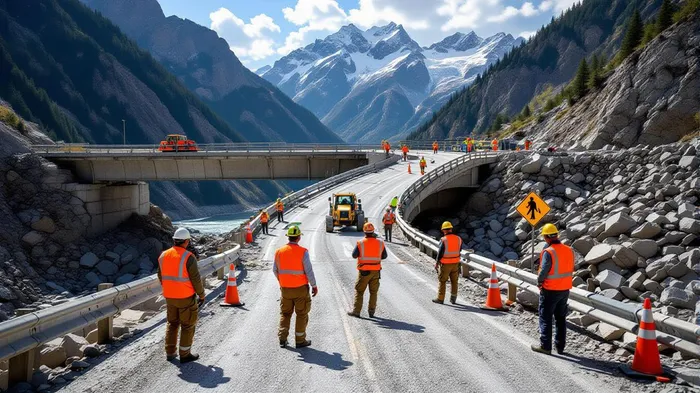
Climate Vulnerability and the Cost of Resilience
The collapse has reignited debates about climate adaptation in infrastructure planning. Sichuan's terrain, characterized by steep slopes and frequent seismic activity, demands engineering solutions that account for both immediate and long-term environmental stressors. As stated by the Sichuan provincial government in a Times Now News report, the incident underscores the need for real-time monitoring systems and resilient designs tailored to geologically unstable regions.
For the construction sector, this means higher upfront costs for advanced materials and adaptive technologies. However, these investments could mitigate long-term liabilities. A MDPI report highlights that incidents like the Hongqi Bridge collapse often lead to indirect economic losses, including project delays, legal liabilities, and reputational damage. Companies that proactively integrate climate resilience into their projects may gain a competitive edge, particularly as regulators push for stricter safety standards.
Opportunities in Resilience-Driven Innovation
While the collapse presents risks, it also opens opportunities for firms specializing in geotechnical engineering, real-time monitoring, and climate-adaptive materials. The demand for technologies like AI-powered landslide detection systems and modular bridge designs that can withstand seismic shifts is likely to surge. Additionally, the incident could accelerate public-private partnerships aimed at retrofitting aging infrastructure in high-risk areas.
For investors, the key lies in distinguishing between companies that merely comply with new regulations and those that innovate. Firms with expertise in geohazard mitigation, such as those leveraging IoT sensors for structural health monitoring, are well-positioned to benefit from the post-disaster rebuild. Conversely, contractors with a history of cost-cutting in safety-critical areas may see their valuations pressured.
Conclusion
The Hongqi Bridge collapse is a stark reminder of the interplay between infrastructure resilience, climate vulnerability, and investment risk. While the immediate economic impact on Sichuan's transportation sector is evident, the broader implications for China's construction industry are still unfolding. Investors must navigate a landscape where traditional metrics are increasingly intertwined with climate risk assessments and regulatory shifts. For those who can identify innovators in resilience-driven infrastructure, the post-disaster environment may present a unique opportunity to align financial returns with long-term sustainability.

Delivering real-time insights and analysis on emerging financial trends and market movements.
Latest Articles
Stay ahead of the market.
Get curated U.S. market news, insights and key dates delivered to your inbox.


AInvest
PRO
AInvest
PRO



Comments
No comments yet