
Infrastructure Resilience in a Fractured World: Water Crises and the Path to Sustainable Investment
 Aime Summary
The recent water main break in Prince George's County, Maryland—which left 11,200 residents under a boil water advisory—offers a stark reminder of the fragility of aging infrastructure. This incident, part of a broader pattern of infrastructure failures across the U.S., underscores a critical investment thesis: the growing urgency of infrastructure resilience. As climate volatility, aging systems, and population growth collide, the utility and water management sectors are poised for a seismic shift in capital allocation, regulatory focus, and technological innovation.
The Fragile Foundation: Aging Systems and Climate Stressors
Prince George's County is not an outlier. The Washington Suburban Sanitary Commission (WSSC), which serves the region, reports that 40% of its water mains are over 50 years old. Compounding this, extreme weather events—such as the January 2025 cold snap that triggered 220 water main breaks in just 13 days—accelerate infrastructure degradation. Freeze-thaw cycles, soil erosion, and corrosion create a perfect storm for disruptions. These vulnerabilities are not confined to the Northeast; similar patterns are emerging in regions from California to Texas, where droughts and wildfires strain water networks.
For investors, the implications are twofold. First, traditional utilities face rising operational costs and rate pressures. WSSC's $55 million revenue shortfall over six years—due to underfunded rate increases—reflects a systemic challenge: utilities are racing to maintain aging systems while absorbing climate-related costs. Second, these pressures create opportunities for companies specializing in smart water technologies and decentralized solutions.
Regulatory Catalysts: The Bipartisan Infrastructure Act and Beyond
The Bipartisan Infrastructure Law (BIL) represents a pivotal regulatory response to this crisis. Allocating $50 billion for water infrastructure—the largest federal investment in U.S. history—the law provides a lifeline for utilities and startups alike. Key components include:
- State Revolving Fund (SRF) expansions: $11.7 billion for drinking water and $11.7 billion for wastewater/stormwater infrastructure.
- Lead service line replacements: $15 billion over five years.
- Emerging contaminants: $4 billion for PFAS and other pollutants.
These funds are designed to be leveraged through grants and principal forgiveness, reducing the financial burden on utilities. However, as House Republicans propose a 25% cut to water infrastructure funding in FY2026, investors must weigh the BIL's temporary nature against the Biden administration's stalled WATER Act, which seeks a permanent trust fund for water infrastructure.
The New Frontier: Smart Water Technologies and Decentralized Systems
The future of water management lies in innovation. Smart water technologies—such as AI-driven leak detection, IoT-enabled sensors, and digital twins—are transforming how utilities operate. For example, AI systems can predict pipe failures with 90% accuracy, reducing repair costs by up to 30%. Decentralized systems, which treat and reuse water locally, offer resilience against grid failures and are gaining traction in water-scarce regions.
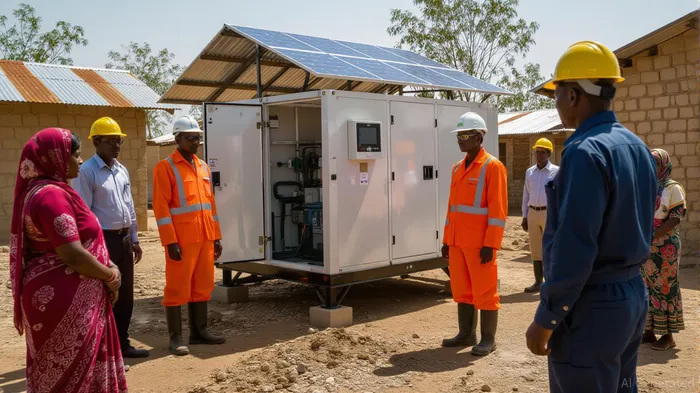
Startups like Nexus by Sweden and Soluwater are leading this shift. Nexus's plant-microbial systems enable sustainable wastewater treatment in diverse climates, while Soluwater's mobile plants comply with EU reuse standards. These innovations are not only environmentally sound but also economically viable, with decentralized systems reducing transmission losses and energy costs.
Investment Opportunities: Balancing Risk and Resilience
For investors, the path forward requires a nuanced strategy:
1. Smart Water ETFs and Firms: The AI in water and sanitation market is projected to grow at 26.8% CAGR through 2031. ETFs like the Global Water ETF (GWA) or individual stocks in AI-driven water analytics (e.g., XylemXYL-- or Ecolab) offer exposure to this trend.
2. Decentralized Solutions: Startups and established players in modular water systems are attracting venture capital. For example, Soluwater's recent Series B funding round valued its technology at $250 million.
3. Utility Holdings with Rate Hikes: While traditional utilities face risks, those with regulatory approval for rate increases (e.g., American Water Works) could see steady returns, provided they invest in modernization.
However, caution is warranted. Utilities with high debt burdens and exposure to climate hotspots (e.g., California's PG&E) remain vulnerable. Diversifying across sectors—utilities, tech, and construction—can mitigate these risks.
Conclusion: A Call for Resilience
The Prince George's County incident is a microcosm of a global challenge: infrastructure systems are ill-equipped for the 21st century. Yet, this crisis also presents a historic opportunity. By aligning capital with innovation, investors can help build a future where water is not a vulnerability but a cornerstone of resilience. The path forward demands both urgency and vision—qualities that define the most successful investment strategies in turbulent times.

Ofrecer información y análisis en tiempo real sobre las tendencias financieras y los movimientos del mercado que están surgiendo.
Latest Articles
Stay ahead of the market.
Get curated U.S. market news, insights and key dates delivered to your inbox.
AInvest
PRO
AInvest
PRO



Comments
No comments yet