
Infrastructure Resilience and Energy Transition in Urban USA: Skanska's $67M Substation as a Blueprint for Future-Proofing Cities


 Aime Summary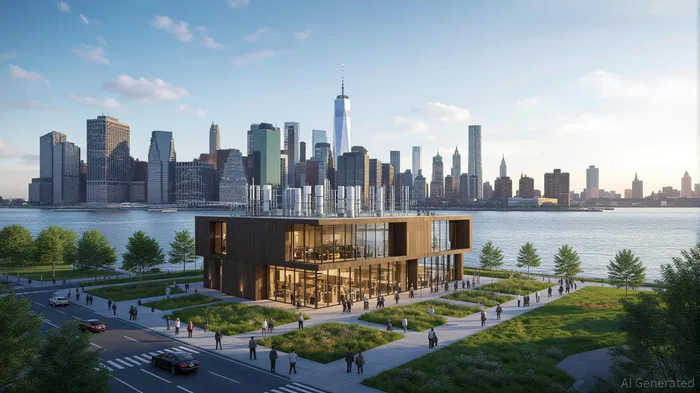
The modernization of urban infrastructure is no longer a luxury—it is a necessity. As cities grapple with aging grids, climate risks, and surging energy demand, the confluence of infrastructure resilience and energy transition has emerged as a defining investment theme. At the forefront of this transformation is Skanska's $67 million substation project on New York's Governors Island, a microcosm of the broader push to future-proof urban energy systems. For investors in construction, utilities, and clean energy tech, this project offers a compelling case study in how strategic infrastructure investments can align with decarbonization goals while generating long-term value.
A Microcosm of Urban Energy Modernization
Skanska's substation, part of the $700 million New York Climate Exchange initiative, exemplifies the intersection of climate resilience and energy transition. The facility, slated for completion by 2027, incorporates geothermal and solar energy systems, mass timber construction, and adaptive reuse of historic structures. These features align with Skanska's 2045 carbon neutrality target and the Science-Based Targets initiative (SBTi). Crucially, the substation is designed to withstand rising sea levels and extreme weather, with ground-level flood proofing and elevated technical infrastructure. Such design choices reflect a shift in infrastructure planning from reactive maintenance to proactive adaptation—a trend that will define the next decade of urban development.
The project is also a linchpin for the New York Climate Exchange, a research and education hub led by Stony Brook University. By powering this institution, the substation supports innovation in climate solutions, from energy storage to grid resilience. This dual role—as both a utility asset and a catalyst for research—highlights the growing importance of infrastructure projects that serve multiple societal and economic functions.
Strategic Alignment with Energy Transition Goals
The substation's integration of renewable energy and sustainable materials mirrors broader trends in the energy sector. Skanska's work in New York extends beyond this project: the firm is also developing the South Brooklyn Marine Terminal, a $861 million hub for offshore wind turbine assembly, and the Jamaica Bus Depot, a $480 million facility supporting New York City's 100% electric bus fleet. These projects underscore Skanska's strategic pivot toward electrification and decarbonization, a move that positions it to capitalize on the $1.2 trillion Infrastructure Investment and Jobs Act (IIJA) and state-level clean energy mandates.
The firm's Summer 2025 Construction Market Trends Report further emphasizes its alignment with energy transition. It highlights the firm's focus on energy-efficient designs, renewable energy integration, and supply chain resilience amid material cost volatility. For instance, the report notes that tariffs on copper—a critical material for energy infrastructure—have spurred innovation in cost optimization. Skanska's ability to navigate such challenges while maintaining project timelines and budgets is a testament to its operational agility, a key differentiator in a sector marked by complexity and risk.
Implications for Investors
For investors, Skanska's New York projects signal a broader opportunity in the infrastructure and clean energy sectors. The firm's portfolio, which includes over $1 billion in climate-focused initiatives, is well-positioned to benefit from the surge in public and private funding for grid modernization. The Bipartisan Infrastructure Law (BIL), for example, has allocated billions for transmission upgrades, a sector where Skanska's expertise in large-scale, high-complexity projects gives it a competitive edge.
Moreover, the firm's ESG credentials—reflected in its “A” MSCIMSCI-- ESG rating and inclusion in the FTSE4Good Index—make it an attractive option for investors prioritizing sustainability. Skanska's ACT climate transition plan, which emphasizes Design for Efficiency and low-carbon materials, aligns with global decarbonization targets and regulatory pressures. As governments and corporations accelerate their net-zero commitments, companies that can deliver both infrastructure resilience and environmental impact will outperform peers.
The Road Ahead
The success of projects like Skanska's substation on Governors Island hinges on their ability to scale. While the firm's New York initiatives are impressive, the true test will be replicating this model in other urban hubs facing similar challenges. Investors should monitor Skanska's expansion into markets like California and Texas, where grid modernization and renewable integration are equally urgent. Additionally, partnerships with research institutions and public-private ventures—such as the New York Climate Exchange—will be critical in driving innovation and securing funding.
For utilities and clean energy tech firms, the lessons are equally clear. The demand for resilient, low-carbon infrastructure is no longer speculative; it is a present-day imperative. Companies that can provide modular, scalable solutions—whether in grid storage, smart transmission, or sustainable materials—will thrive. Skanska's substation project, with its blend of climate resilience and energy transition, offers a blueprint for this future.
Conclusion
As cities become the battlegrounds for climate action and energy innovation, infrastructure firms like Skanska are poised to lead the charge. The $67 million substation on Governors Island is more than a technical achievement—it is a symbol of how infrastructure can evolve to meet the demands of a changing world. For investors, the message is straightforward: the next decade will belong to those who build for resilience, sustainability, and adaptability. Skanska's projects in New York are not just a microcosm of this trend—they are a harbinger of the opportunities that lie ahead.

Delivering real-time insights and analysis on emerging financial trends and market movements.
Latest Articles
Stay ahead of the market.
Get curated U.S. market news, insights and key dates delivered to your inbox.


AInvest
PRO
AInvest
PRO



Comments
No comments yet