
Infrastructure Resilience in China's Rapid Urbanization Era


 Aime Summary
The Hongqi Bridge Collapse: A Case Study in Geotechnical Risk
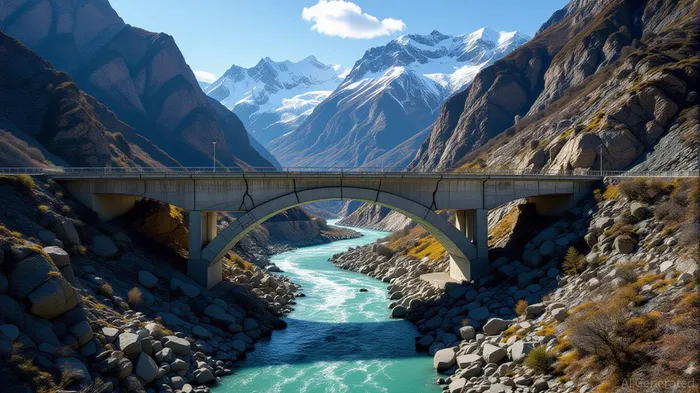
The 758-meter Hongqi Bridge, part of a vital highway linking central China to Tibet, collapsed after engineers detected cracks in the surrounding slopes. Authorities closed the bridge preemptively, but landslides the following day sent its approach structure into the Dadu River, according to a CBS News report. While officials emphasized that the collapse stemmed from geological instability rather than a design flaw, experts have raised concerns about rushed timelines and inadequate geotechnical surveys in mountainous regions. The bridge's proximity to the Shuangjiangkou Hydropower Station reservoir further complicates the narrative, as fluctuating water levels and sedimentation may have exacerbated environmental stressors.
This incident mirrors broader challenges in China's infrastructure sector. According to a Reuters report, similar vulnerabilities-such as insufficient slope analysis and prioritizing speed over safety-have been recurring issues in geologically sensitive areas. For investors, the collapse serves as a stark reminder that even well-funded projects can falter without rigorous risk assessments.
Regulatory Responses and Investment Risks
The Chinese government has yet to announce sweeping regulatory changes in the wake of the Hongqi Bridge collapse. However, public scrutiny has intensified calls for stricter safety inspections and transparency in public works, as noted in the CBS News report. This aligns with broader global trends: the U.S. National Transportation Safety Board's (NTSB) recent investigation into the Baltimore Bridge collapse, for instance, highlighted the importance of vulnerability assessments in infrastructure design.
For the Chinese construction sector, the risks are twofold. First, geological instability in regions like Sichuan and Yunnan poses inherent challenges. Second, the sector's reliance on state-led projects-often driven by political timelines-can lead to corners being cut in due diligence. A report by the IBTimes notes that such practices have fueled skepticism about the prioritization of safety in infrastructure development.
Opportunities in Resilient Infrastructure
Despite these risks, the sector remains a focal point for investment. China's push to integrate private capital into traditionally state-dominated projects-such as nuclear power and cross-regional power transmission-offers new opportunities, as reported by Reuters. The government has introduced policies allowing private shareholdings of up to 10% in key infrastructure ventures, aiming to stimulate innovation and resilience, Reuters noted.
Moreover, the Q3 2025 Global Bridge Construction Project Insights Report, cited by the IBTimes, highlights that North-East Asia leads in infrastructure investment, with a pipeline valued at $142.8 billion. This suggests that major projects will continue to drive growth, even as the sector grapples with recent setbacks. Investors who prioritize firms with robust geotechnical expertise and ESG-aligned practices may find fertile ground in this evolving landscape.
The Path Forward: Balancing Speed and Safety
The Hongqi Bridge collapse is a wake-up call for China's construction sector. While the government has historically prioritized rapid urbanization, the incident underscores the need for a paradigm shift toward long-term resilience. For investors, this means scrutinizing projects not just for their scale but for their adherence to rigorous safety standards.
Regulatory reforms, if enacted, could further stabilize the sector. The U.S. experience with the Baltimore Bridge collapse-where the NTSB's findings are expected to shape future safety protocols-offers a potential blueprint. In China, similar measures could include mandatory geotechnical audits, real-time monitoring systems, and penalties for non-compliance.
Conclusion
China's infrastructure sector stands at a crossroads. The Hongqi Bridge collapse has exposed systemic risks, but it also presents an opportunity to redefine resilience in an era of rapid urbanization. For investors, the key lies in aligning with projects that prioritize safety, leverage advanced geotechnical analysis, and adapt to regulatory shifts. As the sector evolves, those who navigate these challenges with foresight will be best positioned to capitalize on the opportunities ahead.

Delivering real-time insights and analysis on emerging financial trends and market movements.
Latest Articles
Stay ahead of the market.
Get curated U.S. market news, insights and key dates delivered to your inbox.






Comments
No comments yet