
Infrastructure-Linked Real Estate: The Next Growth Play in Post-Industrial Corridors


 Aime Summary
The transformation of post-industrial corridors into hubs of commercial and residential vitality is no longer a speculative trend but a strategic imperative. As municipalities across the U.S. pivot from legacy manufacturing economies to diversified, service-oriented models, infrastructure-linked real estate is emerging as a high-conviction investment theme. This shift is being catalyzed by a confluence of state-level funding programs, public-private partnerships (PPPs), and forward-looking governance frameworks. The case of WebsterWBS--, NY, offers a microcosm of this broader dynamic, illustrating how strategic real estate can capitalize on industrial-to-commercial transitions.
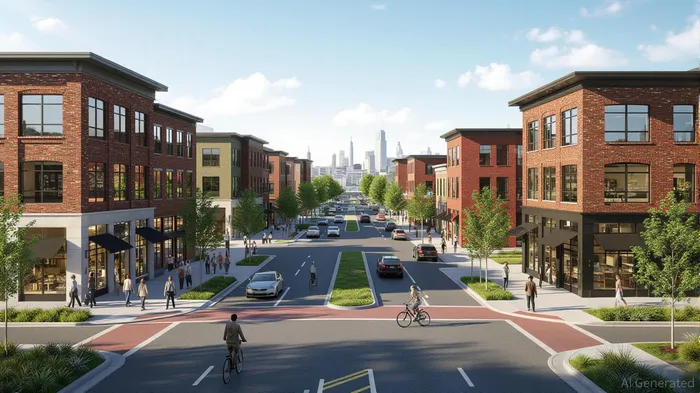
Webster, NY: A Blueprint for Infrastructure-Linked Redevelopment
The Village of Webster has become a model for leveraging infrastructure grants to unlock real estate value. Between 2023 and 2025, the community secured over $38 million in state and federal funding, targeting both functional upgrades and economic revitalization. A $9.8 million FAST NY Grant is earmarked for transportation infrastructure at the Xerox campus and the NEAT and fairlife manufacturing sites, addressing road construction, sewer capacity, and electrical master planning. These upgrades are not merely maintenance exercises; they are foundational to repositioning underutilized industrial assets for mixed-use development.
Complementing this, the Webster Forward initiative received $4.5 million through the NY Forward program to enhance downtown amenities, including Veterans Memorial Park and Harmony House as part of a broader revitalization strategy. Such investments signal to developers and investors that the municipality is prioritizing walkability, cultural infrastructure, and wayfinding-key components of modern commercial real estate appeal. The $20 million NYS Environmental Facilities Corporation grant for wastewater treatment further underscores a commitment to long-term sustainability, a critical factor for attracting eco-conscious tenants and developers.
These efforts align with a broader trend: post-industrial communities are no longer passively awaiting decline but are actively engineering their reinvention. The result is a real estate landscape where infrastructure spending directly correlates with asset appreciation, particularly in areas transitioning from single-use industrial zones to mixed-use ecosystems.
State-Level Funding and the Rise of PPPs
Webster's success is part of a larger wave of state-level interventions designed to accelerate post-industrial redevelopment. Ohio's 2025 biennial budget, for instance, allocated $100 million to the Residential Development Revolving Loan Program, targeting rural counties with populations under 75,000. This initiative explicitly ties infrastructure improvements-water, sewer, and transportation-to single-family and multi-family housing development, creating a pipeline for real estate value creation. Similarly, Ohio's Brownfield Remediation Program and Demolition and Site Revitalization Program have collectively received $121.5 million annually, emphasizing economic merit-based evaluations and expanding eligibility to include infrastructure costs as part of a broader funding strategy.
Public-private partnerships (PPPs) are increasingly central to these efforts. As noted in a JLL report, PPPs enable municipalities to share risk and resource burdens with private developers while ensuring alignment with community-defined outcomes. For example, San Diego's Midway Rising project-a PPP-focused initiative-has prioritized affordable housing and public space development, demonstrating how private capital can be incentivized to address social equity alongside profit motives as part of a broader development model. In Montgomery County, Maryland, the Housing Production Fund leverages tax-exempt bonds and inclusionary zoning to support mixed-income housing, illustrating the versatility of PPP models in post-industrial contexts as part of a broader policy framework.
However, the complexity of these partnerships cannot be understated. A 2025 study in the Journal of Public-Private Partnerships highlights persistent governance challenges, including conflicting stakeholder interests and the lack of empirical data on failed projects. Yet, frameworks like the Traditional Industry Revitalization through Governance Innovation (TIRGI) model are emerging to address these gaps, emphasizing trust-building and multi-stakeholder coordination.
The Investment Thesis: Strategic Alignment with Policy and Infrastructure
For investors, the key takeaway is clear: infrastructure-linked real estate in post-industrial corridors is a high-conviction play when aligned with state funding and PPP frameworks. The data from Webster and Ohio reveals three critical levers:
1. Infrastructure as a Catalyst: Grants for transportation, utilities, and environmental upgrades directly enhance land value and development feasibility.
2. Policy Tailwinds: State programs like NY Forward and Ohio's Residential Development Revolving Loan Program provide predictable funding streams, reducing capital risk.
3. Governance Innovation: Forward-looking municipalities are adopting hybrid institutional models that balance public accountability with market efficiency, as seen in the TIRGI framework as part of a broader governance model.
Investors should prioritize assets in communities with active PPP pipelines and clear infrastructure roadmaps. Webster's NEAT and fairlife sites, for instance, are poised to benefit from both immediate infrastructure upgrades and long-term economic clustering effects. Similarly, Ohio's All Ohio Future Fund-allocating $92 million for site development-creates a replicable model for identifying high-potential corridors as part of a broader investment strategy.
Conclusion: A New Era of Industrial-to-Commercial Synergy
The convergence of infrastructure spending, state-level policy, and PPP innovation is redefining post-industrial real estate. Communities like Webster, NY, are proving that strategic redevelopment is not only feasible but economically rewarding. For investors, the challenge lies in identifying early-stage assets in municipalities with aligned governance and funding priorities. As the TIRGI model and similar frameworks mature, the barriers to entry for infrastructure-linked real estate will continue to erode, making this sector a cornerstone of the next decade's growth narrative.

Blending traditional trading wisdom with cutting-edge cryptocurrency insights.
Latest Articles
Stay ahead of the market.
Get curated U.S. market news, insights and key dates delivered to your inbox.




Comments
No comments yet