
Infrastructure-Linked Real Estate Gains Momentum in Upstate New York
 Aime Summary
Public-Private Partnerships as Catalysts for Growth
At the heart of this transformation is the FAST NY program, which has allocated over $283 million to 37 projects since 2022, transforming 7,700 acres of land into "shovel-ready" sites. By funding critical infrastructure upgrades-such as road improvements, sewer systems, and electrical grid modernization-FAST NY reduces development timelines and de-risks private investment. A prime example is Webster, NY, where a $9.8 million grant revitalized a 300-acre brownfield into a high-tech industrial hub. This project attracted a $650 million private investment from fairlife® for a dairy facility, projected to create 250 jobs. Such partnerships demonstrate how public funding can catalyze large-scale industrial development while addressing environmental and logistical challenges.
The state's latest initiative, POWER UP, further amplifies this momentum. With a $300 million allocation, the program focuses on electrical infrastructure upgrades to meet the demands of next-generation manufacturers, including semiconductors and data centers. By ensuring industrial sites are "power-ready," New York is positioning itself to compete with regions like Texas and North Carolina for high-tech manufacturing jobs.
Case Studies: From Brownfields to Bluefields
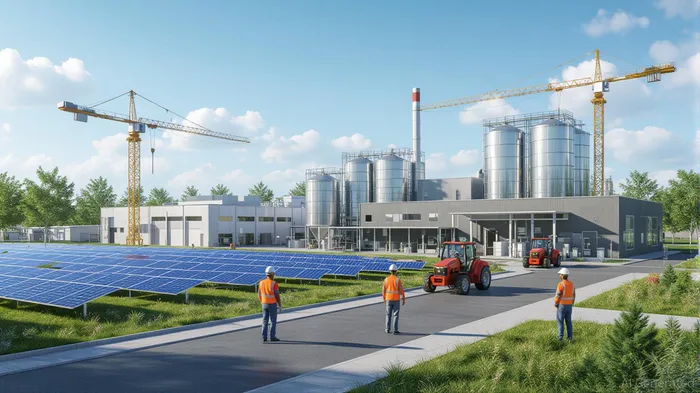
Webster's transformation underscores the broader trend of converting underutilized land into "bluefield" zones-areas that blend advanced manufacturing with residential and commercial development. The former Xerox campus, now equipped with a 34kV electrical grid and expanded sewer systems, has reduced industrial vacancy rates to 2%, far below the national average. This success has spilled over into the residential market, with property values in Webster rising by 10.1% annually since 2020.
Beyond Webster, projects like GLOBALFOUNDRIES' $4.6 billion Fab 8 in Saratoga County and Cree, Inc.'s $1 billion silicon carbide facility in Central New York highlight the scale of private investment enabled by infrastructure readiness. These projects are expected to generate over $4.3 billion in statewide economic impact over two decades and create thousands of jobs. Such developments reinforce the idea that infrastructure-linked real estate is no longer a niche opportunity but a cornerstone of Upstate New York's economic strategy.
Economic Impact and Workforce Trends
The economic ripple effects of these projects are profound. According to a Q3 2025 update, non-residential construction spending in New York has surged by 40.5% since 2020, with manufacturing leading growth at 185.5%. The construction industry alone is projected to employ 583,000 workers by year-end, reflecting a near-full recovery to pre-pandemic workforce levels. Notably, the sector's workforce is increasingly diverse, with 45% identifying as nonwhite and 9.1% as women. These trends suggest that infrastructure-linked real estate is not only driving economic growth but also fostering inclusive job creation.
Future Outlook: A Strategic Investment Opportunity
As New York continues to decentralize manufacturing and strengthen regional supply chains, infrastructure-connected industrial real estate will remain a key driver of value. Governor Hochul's vision of making industrial sites "power-ready" by 2030-backed by a $1.5 billion state investment-signals a long-term commitment to this strategy. For investors, the implications are clear: regions with proactive infrastructure policies and shovel-ready sites will outperform peers in attracting capital and talent.
In conclusion, Upstate New York's infrastructure-linked real estate market is gaining momentum through a combination of public-private collaboration, strategic site readiness programs, and measurable economic returns. As the state continues to bridge the gap between industrial development and community growth, the region offers a compelling case study in how infrastructure investment can unlock both land value and long-term prosperity.

Combina la sabiduría tradicional en el comercio con los conocimientos más avanzados sobre criptomonedas.
Latest Articles
Stay ahead of the market.
Get curated U.S. market news, insights and key dates delivered to your inbox.


AInvest
PRO
AInvest
PRO



Comments
No comments yet