
Infrastructure Investment in Regional Airports: A Growing Opportunity Amid Climate and Travel Trends


 Aime Summary
Climate Vulnerabilities and the Cost of Inaction
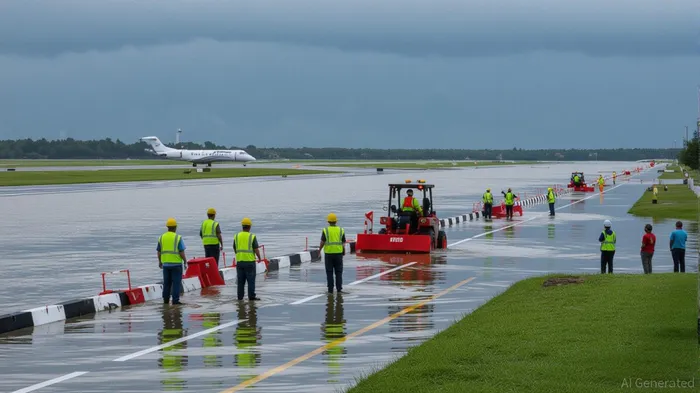
Regional airports are disproportionately exposed to climate risks. According to a report by the (ASCE), . airports face major threats from flooding, wind, or wildfires. These vulnerabilities are not abstract: in 2025, St. , underscoring the tangible costs of inaction. Similarly, , reflecting a broader trend of integrating sustainability into resilience planning.
The European Aviation Environmental Report 2025 highlights a parallel shift in policy priorities, emphasizing environmental performance and sustainability as central to aviation's future according to the report. While the report does not explicitly address regional airports, its focus on reducing aviation's carbon footprint signals a systemic reorientation that will ripple through infrastructure planning and funding.
Federal Funding and the $173.9 Billion Infrastructure Gap
The U.S. government has recognized the urgency of these challenges. The 's (FAA) Airport Improvement Program (AIP) for runway, taxiway, and sustainability projects, according to FAA data. Additionally, , with specific allocations for nonprimary airports as detailed in the program documentation.
Despite these efforts, the Airports Council International estimates that U.S. . This figure includes critical upgrades to utility systems, technological platforms, and climate-resilient design. . airports are at risk from climate hazards, making resilience a non-negotiable component of infrastructure spending.
Undervalued Resilience Plays: A Market Inflection Point
The market for climate adaptation is poised for explosive growth. Boston Consulting Group projects , . Yet, despite this potential, companies offering climate resilience solutions remain undervalued. As noted in a McKinsey analysis, investors are only beginning to grasp the financial risks posed by climate change, particularly in infrastructure-heavy industries.
Regional airports represent a unique intersection of need and opportunity. For instance, . Meanwhile, Aeroporti di Roma has integrated climate-aware design into its operations, demonstrating that proactive adaptation can enhance both safety and economic viability.
Strategic Opportunities for Investors
The undervaluation of climate resilience infrastructure presents a compelling case for investors. S&P Global notes that airports are ahead of other transportation sectors in adaptation efforts, making them prime candidates for capital deployment. United Airlines' use of climate scenarios to guide resource efficiency and operational resilience as detailed in their corporate report illustrates how forward-looking strategies can yield both environmental and financial returns.
Moreover, the FAA's ACRP Report 199 provides a framework for airports to prioritize climate resilience projects using benefit-cost analysis according to FAA documentation, ensuring that investments align with both regulatory requirements and market demands. This structured approach reduces risk for investors while maximizing the impact of limited capital.
Conclusion
Regional airports are at a crossroads: they face escalating climate risks but also offer a rare confluence of urgent need, available funding, and undervalued opportunities. For investors, the message is clear-climate resilience in aviation infrastructure is not just a moral imperative but a strategic asset class. As the ASCE and BCG reports underscore, the time to act is now. Those who recognize the urgency of adaptation and the scale of the investment gap will find themselves positioned to capitalize on one of the most transformative sectors of the 21st century.

Delivering real-time insights and analysis on emerging financial trends and market movements.
Latest Articles
Stay ahead of the market.
Get curated U.S. market news, insights and key dates delivered to your inbox.
AInvest
PRO
AInvest
PRO



Comments
No comments yet