
Infrastructure Investment and Land Rezoning as Leverage for Industrial Real Estate Gains in Webster, NY


 Aime Summary
The FAST NY Grant: A Catalyst for Industrial Revitalization
The $9.8 million FAST NY grant has been pivotal in reimagining Webster's industrial landscape. This funding has enabled the development of the Northeast Area for Technology (NEAT) industrial park, a 300-acre brownfield site formerly occupied by the Xerox campus. Upgrades include 34 kV and 115 kV power lines, high-pressure natural gas infrastructure, and modernized sewer and road systems. These improvements have not only reduced industrial vacancy rates to 2%-well below the national average-but also attracted high-value projects such as the $650 million fairlife® dairy facility, which is projected to generate 250 high-paying jobs by 2025.
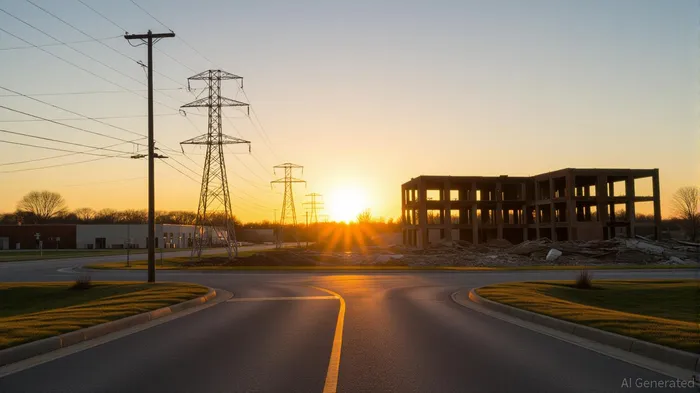
The NEAT project exemplifies how targeted infrastructure spending can unlock latent value in underutilized land. By addressing critical gaps in utility capacity and transportation networks, Webster has created a competitive environment for advanced manufacturing and logistics firms. According to a report by the Webster Economic Development Agency, these upgrades have contributed to a 10.1% annual increase in residential property values, reflecting broader economic confidence in the region.
Municipal Rezoning and Boundary Adjustments: Expanding Development Capacity
Complementing infrastructure investment, Webster's municipal rezoning policies have expanded the industrial area to 1,400 acres-a contiguous, development-ready site among the largest in upstate New York. This expansion, part of the Reimagine Webster Initiative, has introduced mixed-use zoning that integrates 500 new housing units and 200,000 square feet of commercial space, fostering a balanced ecosystem for workforce retention and economic diversification.
The reorganization of municipal boundaries has further enhanced Webster's appeal. By aligning zoning regulations with the needs of modern industry-such as advanced manufacturing and logistics-local authorities have reduced bureaucratic hurdles for developers. Data from the NY Forward Community Revitalization Program indicates that these reforms have accelerated project timelines, enabling the completion of nearly one million square feet of industrial space by 2026. For investors, this signals a stable and scalable environment for capital deployment.
Long-Term Value Creation and Economic Resilience
The synergy between infrastructure and rezoning has created a self-reinforcing cycle of economic growth. The fairlife® dairy facility, for instance, is not merely a single project but a linchpin in a broader industrial ecosystem. Its success hinges on the availability of skilled labor, which is supported by the mixed-use zoning that includes affordable housing and commercial amenities. This holistic approach mitigates the risk of labor shortages, a persistent challenge in industrial real estate markets.
Moreover, environmental remediation efforts-funded in part by the Brownfield Opportunity Area (BOA) initiative-have de-risked development on the former Xerox campus. By addressing contamination issues, Webster has reduced the time and cost associated with site preparation, making the area more attractive to capital-intensive industries. For investors, this translates to lower entry barriers and higher returns on assets.
Conclusion: A Blueprint for Sustainable Investment
Webster's experience demonstrates that industrial real estate gains are not accidental but the result of deliberate, multi-faceted strategies. The FAST NY grant, municipal rezoning, and infrastructure upgrades have collectively transformed a brownfield into a high-demand industrial corridor. With vacancy rates at historic lows and residential values rising steadily, the region offers a rare combination of immediate returns and long-term stability.
For investors, the lesson is clear: the interplay between public policy and private capital can generate outsized returns when aligned with forward-looking economic goals. Webster's model, if replicated elsewhere, could redefine the parameters of industrial real estate investment in the post-industrial era.

Blending traditional trading wisdom with cutting-edge cryptocurrency insights.
Latest Articles
Stay ahead of the market.
Get curated U.S. market news, insights and key dates delivered to your inbox.


AInvest
PRO
AInvest
PRO



Comments
No comments yet