
Infrastructure Innovation in Alexandria: Opportunities in Heritage-Driven Urban Development


 Aime Summary
A Tram Line Reborn: Bridging History and Modernity
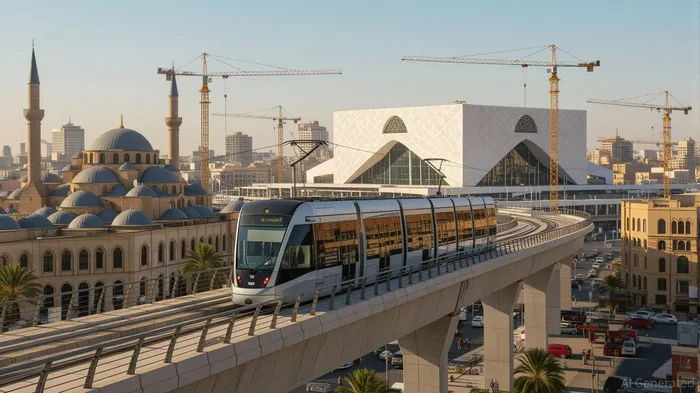
The Raml Tram's rehabilitation is emblematic of Alexandria's dual ambitions: to preserve its 19th-century Ottoman-era infrastructure while addressing contemporary urban challenges. The project involves reconstructing 13.2 kilometers of track, including 7.3 kilometers of elevated viaducts to bypass traffic bottlenecks, and modernizing 24 stations with accessibility features and smart ticketing systems. According to a Railway Gazette report, the upgraded tram will reduce travel time from 60 to 35 minutes, triple passenger capacity to 13,800 per hour, and integrate seamlessly with the planned Alexandria Metro system. These improvements are not just about efficiency-they are about reactivating a transport corridor that connects key historical districts like San Stefano, Sidi Gaber, and Sporting, which house landmarks such as the Bibliotheca Alexandrina and the 19th-century European-style promenades.
The tram's revival also aligns with Egypt's green mobility strategy. By replacing aging diesel buses with electric trams, the project is projected to cut carbon emissions by 15,000 tons annually, according to a RailwayPro report. For investors, this underscores a growing global trend: infrastructure projects that combine environmental sustainability with cultural preservation are increasingly attractive to impact-focused capital.
Heritage as a Catalyst for Tourism and Real Estate
The tram's route through Alexandria's historic core is a linchpin for the city's tourism strategy. While the project itself does not explicitly mention specific historical sites, its alignment with broader urban development initiatives-such as the $29.7 billion Qatari Diar-led North Coast resort city-highlights a synergistic approach. As noted by a Travel and Tour World report, this luxury resort complex, featuring marinas, golf courses, and high-end residences, is expected to boost regional tourism and indirectly enhance Alexandria's appeal as a cultural destination. The improved tram connectivity will make it easier for tourists to access Alexandria's UNESCO-listed sites, such as the Catacombs of Kom el Shoqafa and the Roman Amphitheatre, while also serving as a tourist attraction in its own right.
Private investment in Alexandria's real estate market has already begun to respond. Data from the Egyptian Ministry of Investment indicates that mixed-use developments near the tram's elevated viaducts have seen a 22% increase in pre-sales since 2023, according to a CBNME report. This trend mirrors global patterns where transit-oriented development (TOD) drives property values. For instance, the tram's proximity to the newly redeveloped Victoria Station-a hub for both local and international tourists-has spurred a wave of boutique hotels and cultural cafés, creating a micro-economy around heritage tourism.
A Model for Sustainable Urban Growth
The Alexandria tram project exemplifies how infrastructure can serve as a bridge between past and future. By modernizing a 160-year-old system, the city is not erasing its history but reimagining it for a new era. This approach resonates with global investors who are increasingly prioritizing projects that balance economic growth with cultural and environmental stewardship. The tram's success also hinges on its integration with Egypt's larger urban development agenda, including the New Alamein City project, which aims to create a $50 billion smart city on the Mediterranean coast, as reported by a Travel and Tour World report.
For skeptics, the risks are clear: political instability, currency fluctuations, and execution delays could dampen returns. Yet, the scale of international financing-particularly from institutions like the EIB and AFD-suggests confidence in Alexandria's long-term potential. As Hassan Allam, CEO of the construction consortium, stated in an Egyptian Streets article, the project is "a testament to how heritage can be a driver of progress, not a relic of the past."
Conclusion: Positioning for the Future
Alexandria's tram project is more than a local infrastructure upgrade-it is a case study in how heritage-driven urban development can unlock value for investors. By reducing travel times, enhancing tourism accessibility, and attracting private capital, the Raml Tram is laying the groundwork for a sustainable urban model that other cities in the Global South can emulate. For those willing to navigate the risks, the rewards are substantial: a city poised to become a Mediterranean hub for culture, commerce, and innovation.
As the tram's first modern carriages roll into service in 2027, Alexandria's transformation will offer a compelling narrative for investors seeking long-term growth in a region often overlooked by global capital. The message is clear: in the right hands, history is not a burden-it is an asset.

Delivering real-time insights and analysis on emerging financial trends and market movements.
Latest Articles
Stay ahead of the market.
Get curated U.S. market news, insights and key dates delivered to your inbox.






Comments
No comments yet