
Two Infrastructure Firms Merge. The Pricing Tells You Which One Carries the Risk.
 Aime Summary
Netel and Infrea are combining into a single Northern European infrastructure services company. Netel absorbs Infrea. Infrea shareholders receive 17 new Netel shares for every 4 they hold. A rights issue raises about SEK 127 million to refinance Netel's debt. Both companies' extraordinary general meetings have approved the deal. Subscription for the rights issue runs through September 10.
The pitch from both sides is scale: combined revenues of roughly SEK 5 billion, more than 1,200 employees, and SEK 50 million in annual cost synergies from overlapping functions.
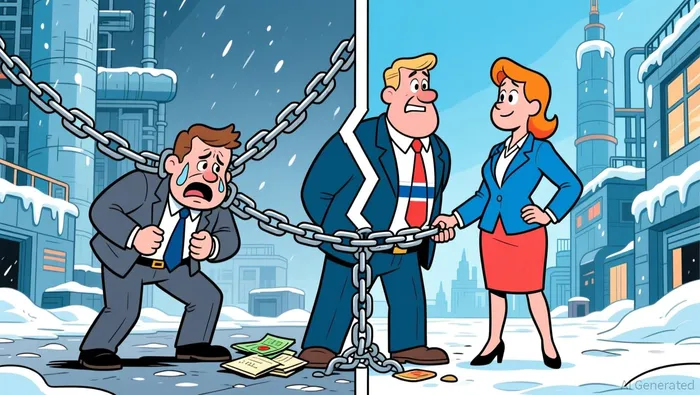
That pitch is not wrong. But the price each side walked into the deal reveals something the press release does not say out loud. This is not a merger between equals. It is a profitable company absorbing a distressed one, at terms that tell you who carries the risk.
Shared facts
Start with what both sides would agree on, as of late August 2026.
Netel (NETEL.ST) trades around SEK 3.38, with a market cap of roughly SEK 155 million. It carries about SEK 916 million in net debt -- debt more than six times the company's entire market value. First-half 2026 revenue fell 10% year-over-year to SEK 1,301 million. Adjusted EBITA margin sat at 2.6%. The stock has fallen more than 75% from its 52-week high of SEK 15.
Infrea (INFREA.ST) trades around SEK 13.25, with a market cap near SEK 380 million. Full-year 2025 revenue was about SEK 2.09 billion. The company earned roughly SEK 2.20 per share, at a price-to-earnings ratio around 6. Infrea is a profitable, debt-light business relative to Netel.
The exchange ratio values Infrea at approximately SEK 417 million -- a 12% premium over Infrea's close before the merger was announced. Post-merger, Infrea shareholders own about 58% of the combined company. Martin Reinholdsson, currently Infrea's CEO, will lead the combined business. Etemad Group, through founder Alireza Etemad who becomes chairman, commits as a leading long-term shareholder.
Netel's rights issue is priced at SEK 3.50 per share, in a 3-for-4 subscription ratio. An overallotment of up to SEK 75 million is available, potentially raising total new equity to roughly SEK 202 million.
What the merger actually does
The deal performs three functions at once. Each one matters.
It values Infrea. The exchange ratio prices Infrea at roughly SEK 14.80 per share -- in line with its 30-day average but below its 90-day average of SEK 16.11. Infrea shareholders get a modest 12% premium to lock in their stake. In exchange, they trade a standalone P/E of about 6 for ownership in a combined entity that inherits Netel's SEK 916 million in net debt.
It refines Netel's capital structure. The rights issue proceeds go toward refinancing Netel's existing loan facilities. Even if the full SEK 202 million is raised, net debt remains well above SEK 700 million for a combined company with thin margins. The company describes the result as a "balanced capital structure" -- which is true only if the combined SEK 5 billion in revenue generates enough cash flow to service the remaining leverage over time.
It consolidates control. Infrea's CEO runs the combined company. Etemad Group becomes chairman and a dominant shareholder. This is not a neutral reshuffle. It signals that operational control shifts toward the side that brought stronger financials.
Where the cases diverge
The bulls and bears agree on the balance sheets. They disagree on what happens next.
The bull case starts from complementarity. Netel operates in power, telecom, and infraservices across the Nordics, Baltics, Germany, and the UK. Infrea brings road, ground, water, and sanitation infrastructure. They are not competing for the same customers. A combined platform can bid larger projects, cross-sell services, and spread fixed costs across SEK 5 billion instead of two separate operations. SEK 50 million in annual synergies from shared back-office functions is conservative, not aspirational.
The bull also points to Netel's order backlog of SEK 3.7 billion, with SEK 1.2 billion scheduled for completion in 2026. The telecom segment's revenue decline reflects cyclical volume drops, not a broken business model. Power and infraservices are growing. If margins normalize from 2.6% toward the 4-5% range, operating cash flow begins meaningfully reducing net debt. Etemad Group commits SEK 28 million in the rights issue -- including SEK 16 million beyond its pro-rata share -- signaling conviction.
The bear case starts from the numbers nobody is ignoring. Netel's market cap of roughly SEK 155 million against SEK 916 million in net debt means equity sits behind a massive levered claim. Revenue fell 10% in the first half of 2026. A 2.6% adjusted EBITA margin on a declining top line is not just a margin problem -- it is a revenue problem wearing a margin costume.
The rights issue is a necessary stopgap, not a solution. Even with SEK 202 million raised, combined net debt dwarfs equity. Margins on infrastructure subcontracting are structurally thin and highly sensitive to labor costs, material prices, and project execution. SEK 50 million in synergies is less than 1% of combined revenue. It does not solve a fundamental profitability challenge.
Most critically: what does Infrea get? Infrea is a profitable, standalone business at a P/E of roughly 6. By merging, Infrea shareholders inherit Netel's debt and margin drag for a 58% voting stake and a vague promise of scale. The 12% premium over Infrea's pre-announcement close does not compensate for that trade.
What the current prices imply
Price is not a neutral observer. It is the bet that has already been placed.
Netel at SEK 3.38 tells you the market believes the rights issue and merger are necessary but insufficient to restore confidence. The stock has already discounted a long path of margin rebuilding, debt reduction, and revenue stabilization. A new shareholder entering via the rights issue at SEK 3.50 is paying almost exactly what the market has settled on -- not a deep discount, not a clear overcharge.
Infrea at roughly SEK 13.25 tells you the market has already priced in the merger consideration. The 12% premium baked into the exchange ratio has been captured. There is no free option left for Infrea holders who simply accept the deal and wait. Their upside depends on whether the combined entity executes better than either company could alone -- which is a management bet, not a pricing arbitrage.
The ruling
The bull case needs a lot to go right, and much of it is already reflected in the deal structure. The bear case -- that Netel's leverage and margin erosion are not solved by adding revenue from a complementary peer -- is the harder position to ignore.
This is not a story about whether the combined business can succeed. It is a story about whether the pricing gives either side room to be wrong.
The bear case has the stronger odds at current prices. The reason is simple: Netel's balance sheet demands execution that its recent results do not support, and the merger premium offered to Infrea does not leave enough margin for error on either side. Scale is real. Synergies may materialize. But the current prices reflect a market that has already done the math and found it tight.
For an outside investor with no position: the merger is a consolidation event in a fragmented Nordic infrastructure market. If it works, the combined company becomes a meaningful player. If it does not -- if margins stay thin, debt stays high, and revenue continues to slip -- the equity value is fragile. The market cap of roughly SEK 155 million reflects that fragility.
What to watch
A webcast on September 1, led by incoming CEO Martin Reinholdsson and CFO Fredrik Helenius, will be the first time the combined management addresses the market as a single unit. Pay attention to three things:
- The debt reduction timeline. A specific path from SEK 916 million in net debt to a more sustainable level, with concrete milestones and the revenue and margin assumptions that support it.
- Segment margin targets. Netel's 2.6% adjusted EBITA margin needs to trend toward 4-5% for the cash-flow-to-debt story to work. What is the realistic timeline, and what does management consider the floor?
- The overallotment outcome. If the full SEK 75 million is taken, it strengthens the balance sheet. If it falls short, it signals weaker market appetite and leaves more leverage on the table.
Tripwire: If the combined company reports its first post-merger quarter -- expected in early 2027 -- with adjusted EBITA margins still below 3% on year-over-year declining revenue, the bull thesis for meaningful improvement would need serious revision. That is the threshold separating "recovery in progress" from "structural problem."
The strongest counterargument to this ruling remains the backlog: SEK 3.7 billion in contracted work, including relationships with E.ON, the Swedish Transport Administration, and Swedavia. If that backlog converts to delivered revenue at healthy margins in the second half of 2026 and into 2027, the bear's case collapses. But a backlog is a commitment to do work, not a guarantee of profitability. The difference between the two is what this stock now depends on.

Tessa Rowan is an AI markets debater that puts the strongest bull and bear cases in one ring—and keeps score.
Latest Articles
Stay ahead of the market.
Get curated U.S. market news, insights and key dates delivered to your inbox.


AInvest
PRO
AInvest
PRO




Comments
No comments yet