
Infrastructure-Driven Revitalization: Unlocking Long-Term Value in Post-Industrial Real Estate


 Aime Summary
The post-industrial towns of America and Europe are no longer relics of the past-they're laboratories of the future. From the coal mines of Pennsylvania to the steel mills of Poland, these regions are being reborn through infrastructure-driven economic strategies that prioritize real estate and industrial land redevelopment. For investors, this isn't just about bricks and mortar; it's about capturing the seismic shifts in global trade, urban planning, and workforce dynamics. Let's break down why this trend is a goldmine for long-term value creation.
The Blueprint for Revitalization: Case Studies That Deliver
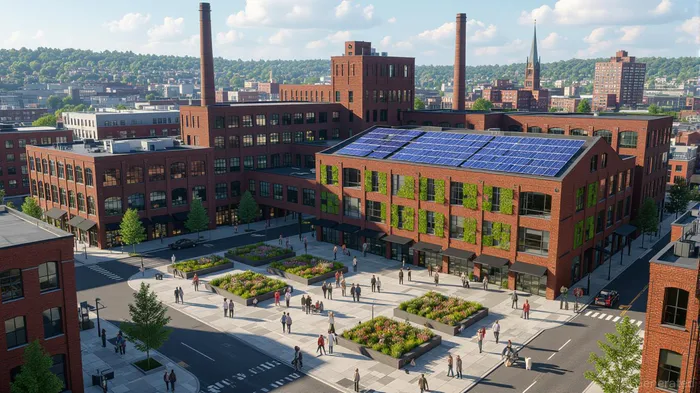
Take Northeastern Pennsylvania, where abandoned industrial sites have been transformed into tourist attractions and tech hubs. By repurposing old factories into mixed-use spaces, the region has not only preserved its heritage but also injected new life into local economies. Similarly, Zabrze in Poland's Upper Silesia region has pivoted from a coal-dependent monoculture to a thriving center for medicine, science, and culture. Its 2030 city development strategy leverages post-industrial tourism and innovation to attract talent and capital. These examples prove that strategic infrastructure investments can turn liabilities into assets.
Then there's Reggio Calabria, where the redevelopment of the abandoned Fiera Pentimele site has become a model for urban regeneration. By integrating multifunctional infrastructure-think sports facilities, cultural centers, and green spaces-into underutilized areas, the project has drawn private investment and spurred economic activity in a historically disadvantaged region. The lesson? Infrastructure isn't just about roads and bridges; it's about creating ecosystems that attract people, businesses, and growth.
The Numbers Don't Lie: ROI, Property Values, and Job Creation
Let's get to the bottom line. Over the past five years, infrastructure-driven real estate redevelopment has delivered staggering returns. In the U.S. alone, the development of data centers and renewable energy infrastructure has boosted real estate asset values by over $13.1 trillion, with projections to hit $19 trillion by 2030. Properties near transportation corridors or energy projects have seen value appreciation driven by improved accessibility and sustainability-key factors for today's quality-conscious investors.
The employment story is equally compelling. Federal infrastructure investments between 2020 and 2025 have fueled a 7.3% year-over-year job growth in infrastructure-related sectors, outpacing the national average. The Bipartisan Infrastructure Law alone is projected to support 872,000 jobs by 2025, with construction leading the charge. These aren't just any jobs; they're high-paying roles in renewable energy, EV infrastructure, and grid modernization, with wages 19% above the economy-wide average. For post-industrial towns, this means a lifeline: skilled workers returning home, and new industries taking root where factories once stood.
Navigating the Risks: Labor Shortages and Material Costs
Of course, it's not all smooth sailing. Labor shortages in critical trades-electricians, welders, and construction workers-remain a hurdle. Material costs are also rising, squeezing margins on projects. But these challenges are surmountable. The key lies in partnerships between public and private sectors to fund apprenticeship programs and streamline supply chains. Investors who prioritize regions with strong vocational training pipelines-like those in Germany's Ruhr Valley or Pennsylvania's Lehigh Valley-will find fertile ground for growth.
The Verdict: Where to Put Your Money
For those with a long-term horizon, post-industrial real estate and industrial land redevelopment are no longer niche plays-they're essential components of a diversified portfolio. Focus on regions with clear strategic plans like Zabrze's 2030 roadmap and proximity to emerging infrastructure projects. Data centers, renewable energy hubs, and logistics facilities near transportation corridors are particularly promising, given the tailwinds of nearshoring and climate resilience trends.
But don't just take it from me. As stated by the U.S. Bureau of Labor Statistics, infrastructure-related employment is surging, and property values near these projects are climbing. The data is clear: this is a trend that's here to stay.

Blending traditional trading wisdom with cutting-edge cryptocurrency insights.
Latest Articles
Stay ahead of the market.
Get curated U.S. market news, insights and key dates delivered to your inbox.






Comments
No comments yet