
Infrastructure-Driven Real Estate and Economic Development in Webster, NY


 Aime Summary
Strategic Infrastructure as a Catalyst for Investment
The Xerox campus redevelopment, now branded as the Northeast Area for Technology (NEAT), exemplifies how infrastructure investments can reposition underutilized assets. By addressing critical gaps in transportation, utilities, and environmental remediation, Webster has created a competitive edge for industrial developers. For instance, the $283 million state investment in the area has not only enhanced the site's viability for high-tech manufacturing but also attracted specialized industries such as food processing and semiconductor supply chains. These upgrades align with broader trends in the industrial real estate market, where tenants increasingly prioritize modern facilities with robust infrastructure to support automation and supply chain resilience.
Public-private partnerships have further amplified the project's impact. The $650 million fairlife® dairy plant, a flagship tenant of the NEAT site, is projected to create 250 jobs and inject significant economic activity into the region. Such collaborations underscore Webster's ability to leverage public funding to attract private capital, a strategy that has drawn institutional investors to the area. According to a Q3 2025 CBRE report, the Northeast U.S. industrial market saw 16.3 million square feet of leasing and user sale activity, with third-party logistics (3PL) providers accounting for 26% of demand-a testament to the sector's enduring relevance. Webster's low vacancy rates and strategic location near I-390 and the Rochester International Airport position it as a prime beneficiary of this demand.
Economic Diversification and Long-Term Stability
The redevelopment of the Xerox campus is not merely an industrial project but a blueprint for economic diversification. The mixed-use zoning strategy, which includes 500 housing units and 200,000 square feet of commercial space, addresses workforce retention challenges by integrating residential and industrial development. This approach aligns with national trends where municipalities are rethinking traditional zoning to create more resilient local economies. For investors, the combination of industrial and residential growth offers a dual-income stream, reducing exposure to sector-specific risks.
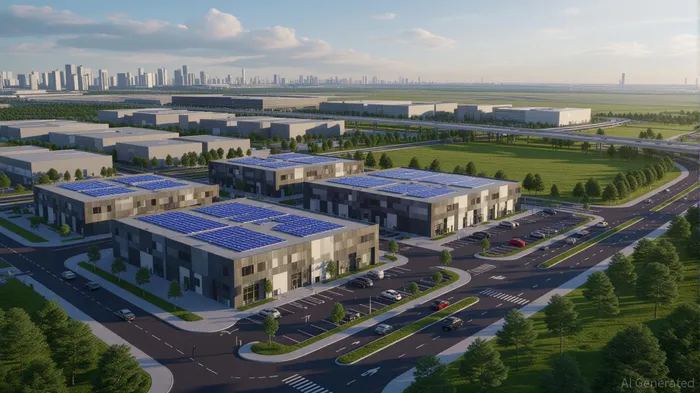
Moreover, the environmental remediation of the brownfield site-funded in part by the Brownfield Opportunity Area (BOA) initiative-has enhanced the area's appeal. By mitigating environmental liabilities, Webster has accelerated development timelines and reduced costs for prospective tenants. As noted in a JLL analysis, the "flight-to-quality" trend in industrial real estate is expected to persist in 2025, with occupiers favoring sites that offer modern amenities and sustainable infrastructure. The NEAT site's compliance with these standards makes it a magnet for forward-thinking firms.
Market Validation and Future Projections
Recent market data validates the potential of Webster's industrial real estate. The Q3 2025 CBRE report highlights that while overall leasing activity in the Northeast U.S. declined by 16% quarter-over-quarter, demand for Class A logistics facilities remained strong. Webster's industrial properties, now equipped with upgraded infrastructure, are well-positioned to capture this demand. Additionally, the town's proximity to Rochester's tech and healthcare sectors provides a secondary market for industrial tenants seeking to serve a diversified customer base.
Looking ahead, Webster's economic projections are equally compelling. The NEAT site is expected to reach full readiness by 2026, with nearly one million square feet of industrial space available for immediate occupancy. This timeline coincides with national forecasts predicting continued growth in e-commerce and retail/wholesale sectors, both of which are expanding their footprint in the Northeast according to market analysis. For investors, the alignment of supply-side upgrades with demand-side trends creates a rare window of opportunity.
Conclusion
Webster, NY, demonstrates how strategic infrastructure investments can transform underutilized assets into high-value industrial hubs. By prioritizing brownfield redevelopment, public-private partnerships, and mixed-use planning, the town has created a resilient economic ecosystem that appeals to both industrial tenants and residential buyers. For investors, the combination of low vacancy rates, tax incentives, and proximity to major transportation corridors makes Webster an attractive destination in a market increasingly defined by quality and connectivity. As the NEAT site reaches full capacity in 2026, Webster's model may well serve as a template for other municipalities seeking to balance economic growth with sustainable development.

Blending traditional trading wisdom with cutting-edge cryptocurrency insights.
Latest Articles
Stay ahead of the market.
Get curated U.S. market news, insights and key dates delivered to your inbox.




Comments
No comments yet