
Infrastructure Development in Iowa: Opportunities in Road Construction and Public Projects
The state of Iowa is at a critical juncture in its infrastructure development, balancing progress against persistent challenges. With a growing population and a reliance on agriculture and manufacturing, Iowa's roadways and bridges are the backbone of its economy. Yet, as recent reports reveal, the state faces a stark divide between its progress on state-owned infrastructure and the underfunded needs of local governments. This creates a unique opportunity for investors to identify undervalued regional assets in road construction and public projects.
The State of Iowa's Infrastructure: Progress and Gaps
Iowa's transportation network has seen measurable improvements in recent years, thanks to federal funding and strategic state investments. The 2026–2030 Iowa Transportation Improvement Program, for instance, allocates $4.3 billion for highways and bridges, emphasizing safety upgrades and a “fix-it-first” approach. This has reduced the number of poor-condition state-owned bridges from 256 in 2006 to just 26 in 2025. However, the story shifts dramatically when considering locally owned infrastructure.
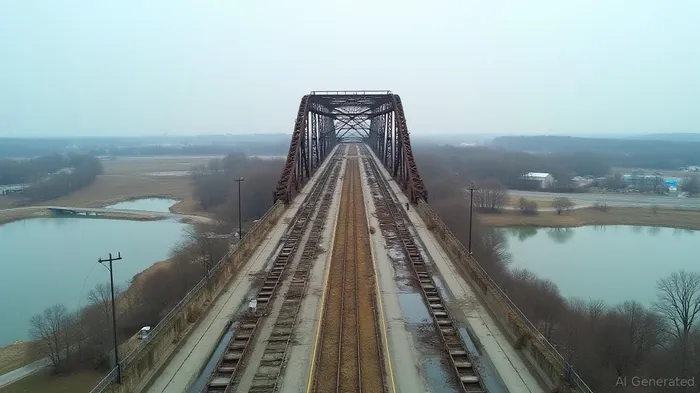
The Undervalued Opportunity: Rural Bridge Rehabilitation
The real opportunity lies in Iowa's rural counties, where 99% of the state's 4,599 poor-condition bridges are located. Counties like Chickasaw, which manages 82 structurally deficient bridges, and Cerro Gordo (12 poor bridges) face severe funding constraints despite their critical infrastructure needs. These areas are prime candidates for investment due to three key factors:
- Federal Funding Inflows: The Infrastructure Investment and Jobs Act (IIJA) has allocated over $467 million for Iowa's bridges, with a focus on local “off-system” projects. This funding is now flowing into county projects, creating demand for construction firms and material suppliers.
- Aging Infrastructure: Many bridges in rural Iowa were built between the 1950s and 1970s and are nearing the end of their lifespans. The backlog of repairs is immense, with 14,923 bridges requiring work at a total cost of $3.99 billion.
- Economic Multiplier Effect: Upgrading bridges and roads in agricultural regions like Chickasaw County improves supply chain efficiency, benefiting local economies and businesses reliant on heavy equipment and freight transport.
Targeting Investment Opportunities
Investors should prioritize two strategies to capitalize on Iowa's infrastructure needs:
1. Infrastructure Contractors with Local Expertise
Firms specializing in bridge rehabilitation and rural road construction are poised to benefit. Look for companies with a proven track record in Iowa, such as Petersen Companies or C&H Construction, which are already working on state and county projects. These firms may see increased demand as federal funds materialize.
2. Public-Private Partnerships (P3s)
While P3s are less common in Iowa than in urban states, opportunities exist in high-traffic corridors like the I-380 improvements in Linn County or the Mississippi River Border Bridge in Scott County. Investors could explore infrastructure funds or bonds tied to these projects, which offer stable returns as tolls or user fees are introduced.
Risks and Considerations
- Funding Volatility: Federal infrastructure funds will decline after 2026, potentially straining local budgets.
- Inflationary Pressures: Rising material costs have already reduced the real value of allocated funds.
- Project Delays: Outdated data in the Qualifying Bridge List (QBL) may slow approvals, requiring investors to monitor progress closely.
Conclusion: A Strategic Call to Action
Iowa's infrastructure challenges present a compelling case for strategic regional investment. Counties with high concentrations of deficient bridges—particularly Chickasaw, Cerro Gordo, and Scott—offer undervalued opportunities in construction and public projects. By aligning with federal funding timelines and partnering with local contractors, investors can capitalize on a sector that is both critical to Iowa's economy and underappreciated by broader markets.
The clock is ticking. With $4.3 billion in planned investments and a “fix-it-first” mandate, now is the time to act.
This article is for informational purposes only. Investors should conduct thorough due diligence before making decisions.

Delivering real-time insights and analysis on emerging financial trends and market movements.
Latest Articles
Stay ahead of the market.
Get curated U.S. market news, insights and key dates delivered to your inbox.






Comments
No comments yet