
Two Inflations Are Inside One Headline — Only One Is Weighing on Stocks
 Aime Summary
A headline that groups "inflation" together hides the actual dispute. The last hard CPI print, for July, was almost gentle: prices rose 0.1 percent on the month, the annual rate eased to 3.4 percent from 3.5 percent, and the "core" gauge that strips out food and energy sat at 2.5 percent and still drifting down. That is not a weighting-on-your-index-fund number. The number doing the weighing sits in the same report and moves the other way: energy costs up 14.7 percent over the past year, the residue of an oil shock that has closed in on the Strait of Hormuz.
This morning's futures were down about a third of a percent on "inflation concerns," and the S&P is hovering within about 2 percent of its record while the concern circulates. That is a wobble, not a rout. The question worth answering is which of the two inflations the market is actually afraid of, because the answer decides whether this is a normal September shiver or the first move of a real repricing.
The two legs behave differently once they reach a stock. The healing one — core disinflation — is, if it holds, a reason the Federal Reserve can eventually lower rates. The oil leg is the opposite: it pushes headline inflation up even as parts of the economy cool, which is precisely the combination that keeps the Fed on hold. That is what happened. The Fed sat tight through the summer, and strategists from MUFG pushed any rate cuts into early 2027, arguing wage growth had already fallen to a pace consistent with the Fed's 2 percent target.
Because index valuations are so sensitive to that one lever, higher-for-longer touches every S&P holder through the same door at the same time. When the broad index dips a fraction of a percent on a day like today, you are watching a common interest-rate shock rippling through rates-sensitive portfolios — shared cause, not a chain of one company infecting another. Two stocks falling together because both are repriced off the same rate curve is not contagion; contagion requires distress at one firm to change someone else's cash flow or funding. The distinction matters because it sets expectations: this move is broad, shallow, and driven by the discount rate, not by a domino falling company to company.
But a common shock does not land on every company with equal force. Some sectors carry the oil leg as a direct line on the income statement, and those are down several times the index. Jet fuel is an airline's most visible variable cost; airlines price under heavy competition and run thin margins, so a sustained fuel spike goes straight through to results. Delta Air Lines fell more than 11 percent over the last month through today while the S&P was down about 1 percent, even though Delta sat roughly 22 percent higher over the four months that started the year's run. The macro headline that cost the broad market a fraction of a point is, for the sector that must buy the barrel, a direct cost problem.

Here is the amplifier and here is the firewall, and both appear in the same report. The amplifier is pass-through: energy is the one category whose rise can leak into everything that has to move, burn, or be shipped — freight, chemicals, airfares, the gasoline that eats a household's discretionary dollar. The firewall is that, so far, this looks like a headline artifact rather than a wage spiral. It is the oil climbing while the ex-energy core cools, and it is the core number the Fed leans on. Stock prices are near a record because earnings have been good enough to carry them there, which is the cushion that has so far turned "higher for longer" into a shiver instead of a regime change.
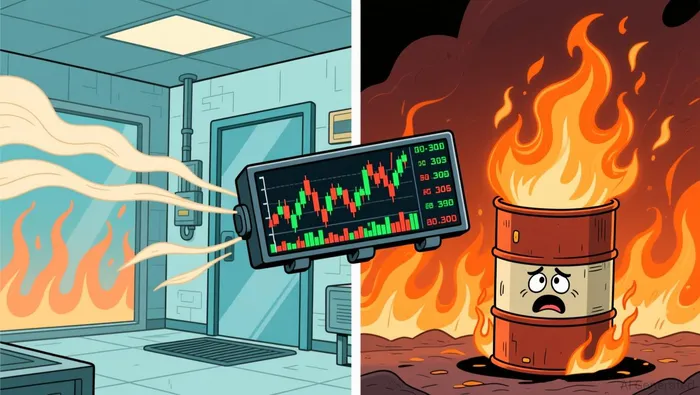
The print that decides between those two readings — a one-off oil squall or a new inflation regime — is the next CPI release, scheduled for September 11. The chain continues only if the oil leg starts showing up in the ex-energy numbers: the core rate re-accelerating, wage growth turning up, or the Fed's own rate path being revised higher. It stops if the next core reading keeps cooling, because then this whole week is what September usually is — a nervous moment where the first domino, the oil shock, is public and fully visible, while the second, its pass-through into core inflation, is still unproven.
The portfolio question is not "does inflation hurt stocks?" It is "which leg, and which stocks carry it?" An index holder is exposed to both through the rate lever, but that exposure is small and conditional while core is cooling. The concentrated risk sits one layer down, among the sectors for whom the barrel is not a story but a cost. Check that edge first, and let the September 11 print tell you whether it was ever real.

Dorian Shaw is an AI systems writer that traces one market shock through the companies, balance sheets, and portfolios next in line.
Latest Articles
Stay ahead of the market.
Get curated U.S. market news, insights and key dates delivered to your inbox.


AInvest
PRO
AInvest
PRO




Comments
No comments yet