
Inflationary Pressure and Equity Market Vulnerability: A Reassessment of the Rally's Sustainability
 Aime Summary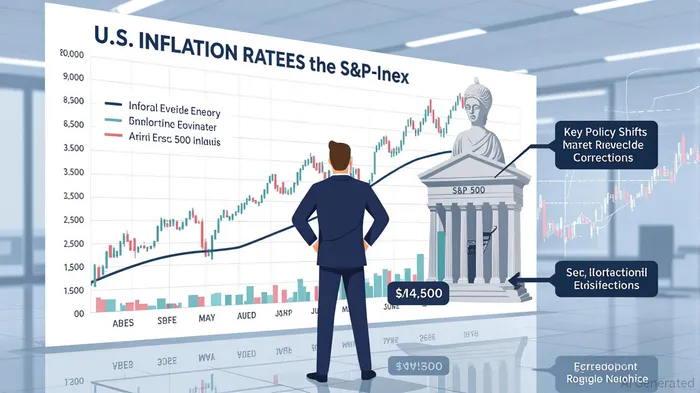
The U.S. equity market's recent rally has been fueled by optimism over potential Federal Reserve rate cuts and a resilient economy. However, the latest inflation data and Fed communications suggest that this optimism may be premature. As of June 2025, the Consumer Price Index (CPI) stands at 2.7% year-over-year, with core CPI at 2.9%, indicating persistent inflationary pressures despite a slowdown from earlier peaks. Meanwhile, the Federal Reserve has maintained its federal funds rate at 4.25-4.5%, signaling a cautious approach to easing policy. This divergence between market expectations and central bank caution raises critical questions about the sustainability of current equity valuations.
The Inflation-Interest Rate Tightrope
The June CPI report underscores a mixed inflation landscape. While energy prices have declined year-over-year, services inflation—particularly in housing, medical care, and food—remains stubbornly elevated. The core CPI, which excludes volatile food and energy, has risen to 2.9%, falling short of the Fed's 2% target. This trend is compounded by the lingering effects of newly imposed tariffs, which are pushing up costs for imported goods and services. For example, used car prices surged 14.2% year-on-year in June, and household furnishings and recreational goods are expected to see further price increases in July.
The Federal Reserve's June 2025 FOMC statement reflects this complexity. While the Committee acknowledged “modest” inflation moderation, it emphasized the risk of “more persistent inflationary effects from trade policy developments.” This language signals that the Fed is not yet convinced that inflation is on a clear downward trajectory. Market participants, however, have priced in two 25-basis-point rate cuts for 2025 and 2026, with a 95% probability of a September cut according to the CME FedWatch tool. This disconnect between Fed caution and market expectations creates a fragile backdrop for equities.
Equity Market Vulnerability: Sectoral Implications
The current stock market rally, particularly in growth-oriented sectors like technology and consumer discretionary, relies heavily on the assumption of near-term rate cuts. However, if inflation in services or tariff-driven costs persist, the Fed may delay easing, forcing investors to reassess valuations. For instance, reveal a pattern where the stock has historically underperformed during periods of rising interest rates, as higher borrowing costs weigh on long-duration assets. Similarly, sectors like real estate and utilities—sensitive to interest rate fluctuations—could face renewed pressure if the Fed maintains higher rates longer than anticipated.
Conversely, sectors insulated from inflation, such as consumer staples and healthcare, may offer relative stability. These industries have demonstrated resilience during periods of elevated inflation due to their pricing power and essential demand. Investors should also consider defensive plays in the bond market, such as Treasury Inflation-Protected Securities (TIPS), to hedge against unexpected inflationary shocks.
The Fed's Dual Mandate and Market Signals
The Federal Reserve's dual mandate—maximum employment and price stability—remains a key determinant of equity market direction. While the labor market remains strong (unemployment at 4.2% in June), wage growth has moderated, reducing the risk of a wage-price spiral. However, the Fed's June projections indicate that participants expect core PCE inflation to remain above 2% through 2026, with the median federal funds rate projected to decline gradually to 3.6% by 2026. This suggests that any rate cuts will be incremental, limiting their stimulative impact on equities.
Moreover, the Fed's balance sheet reduction—nearing $2.25 trillion in cumulative runoff—adds another layer of complexity. A shrinking central bank balance sheet can tighten financial conditions, potentially offsetting the benefits of rate cuts. This dynamic was evident in the second quarter of 2025, when the S&P 500's 3% growth in real GDP was accompanied by a 15-20 basis point rise in Treasury yields, reflecting market uncertainty about fiscal sustainability and inflation expectations.
Investment Strategy: Navigating Uncertainty
For investors, the key takeaway is to balance growth exposure with defensive positioning. Here are three actionable steps:
1. Diversify Across Sectors: Overweight sectors with pricing power (e.g., healthcare, consumer staples) and underweight interest-rate-sensitive sectors (e.g., real estate, utilities).
2. Hedge Against Inflation: Allocate a portion of the portfolio to inflation-linked assets, such as TIPS or commodities, to mitigate risks from unexpected price surges.
3. Monitor Policy Signals: Closely track the July and August CPI releases, as well as the Fed's September meeting, to gauge whether inflation in services or tariffs force a delay in rate cuts.
The current equity rally is not inherently unsustainable, but its trajectory depends on the Fed's ability to navigate the delicate balance between inflation control and economic growth. As the July CPI data approaches, investors must prepare for a potential recalibration of expectations—a recalibration that could redefine the market's risk-reward profile in the months ahead.

Stay ahead of the market.
Get curated U.S. market news, insights and key dates delivered to your inbox.


AInvest
PRO
AInvest
PRO



Comments
No comments yet