
The Inflationary Impact of Trump's Tariff Policies on Key Sectors
 Aime Summary
The Trump administration's aggressive tariff policies, particularly on steel, aluminum, and Chinese imports, have left a lasting imprint on the U.S. economy. While the rhetoric centered on “economic independence” and “rebuilding American industry,” the macroeconomic reality tells a different story. For investors, understanding this disconnect is critical to navigating the inflationary pressures and sector-specific risks that persist.
Tariffs as a Double-Edged Sword
The 2018–2020 tariffs on steel (25%) and aluminum (10%) were justified under national security grounds, with the administration claiming they would protect jobs and revitalize manufacturing. However, the Tax Foundation General Equilibrium Model estimates these tariffs reduced long-run U.S. GDP by 0.2% and raised consumer prices by an average of $1,219 per household in 2025. The ripple effects extended to downstream industries: appliances, automobiles, and construction all faced higher input costs, which were passed on to consumers.
For example, NucorNUE-- (NUE), a major U.S. steel producer, saw its stock price surge during the initial tariff rollout, reflecting short-term gains for domestic producers. Yet, the broader manufacturing sector faced headwinds. The average effective tariff rate on imports rose to 11.4%—the highest since 1943—reducing competitiveness for U.S. firms reliant on global supply chains.
The China Trade War and Retaliatory Measures
The administration's 2018–2019 tariffs on $360 billion of Chinese goods, framed as a fight against “unfair trade practices,” further complicated the inflationary landscape. Retaliatory tariffs from China, the EU, and Canada hit U.S. exports, including agricultural products and machinery, reducing export volumes by $330 billion by 2025. This not only dampened GDP growth but also forced businesses to absorb higher costs, which were ultimately passed to consumers.
The Federal Reserve's 2019 report noted that trade tensions contributed to elevated inflation, particularly in sectors like electronics and machinery. For instance, tariffs on Chinese-made semiconductors and components drove up production costs for tech firms, squeezing profit margins and pushing prices upward.
Rhetoric vs. Reality: The “Economic Independence” Mirage
President Trump's April 2025 speech, declaring tariffs as a “declaration of economic independence,” echoed his 2018–2020 narrative that tariffs would incentivize domestic manufacturing. Yet, the data suggests otherwise. The Tax Foundation model projects that the 2025 steel and aluminum tariff hikes (raising aluminum tariffs to 25%) will reduce GDP by 0.7% when combined with other tariffs. Meanwhile, the number of full-time equivalent jobs in the steel sector fell by 41,000, and pre-tax wages declined by 0.05%.
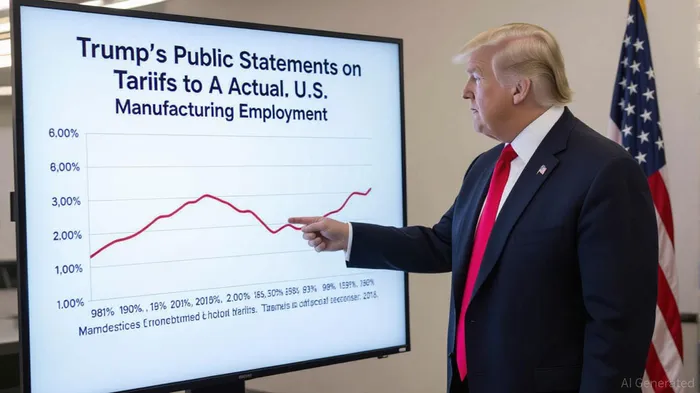
The administration's claim that tariffs would “supercharge domestic industrial base” ignored the reality of supply chain disruptions. For example, the 2025 expansion of steel tariffs to household appliances like dishwashers and refrigerators directly increased consumer prices, eroding purchasing power for lower-income households.
Investment Implications
For investors, the key takeaway is to hedge against inflationary pressures in sectors most exposed to tariffs. Here's how to position portfolios:
- Defensive Sectors: Overweight industries less reliant on imported materials, such as software or services. Tech stocks like MicrosoftMSFT-- (MSFT) and AmazonAMZN-- (AMZN) have shown resilience despite broader inflation.
- Inflation-Linked Assets: Consider Treasury Inflation-Protected Securities (TIPS) or commodities like gold to offset rising prices.
- Tariff-Benefit Plays: Short-term gains may still exist in domestic steel producers (e.g., U.S. Steel (X)) but these come with long-term risks as global supply chains adjust.
- Retaliatory Risk Mitigation: Avoid overexposure to export-heavy sectors like agriculture or machinery, which face ongoing trade tensions.
Conclusion
Trump's tariff policies, while rhetorically framed as a path to economic rebirth, have instead created a landscape of inflationary pressures and sector-specific vulnerabilities. For investors, the lesson is clear: macroeconomic outcomes often diverge from political narratives. By focusing on inflation-linked assets and sectors insulated from trade volatility, investors can navigate the lingering effects of these policies while positioning for long-term growth.

Stay ahead of the market.
Get curated U.S. market news, insights and key dates delivered to your inbox.
AInvest
PRO
AInvest
PRO



Comments
No comments yet