
Inflation Trends and Central Bank Policy Responses: A Turning Point in 2025?


 Aime Summary
The U.S. inflation landscape in late 2025 appears to be at a crossroads. With the release of August 2025 inflation data on October 2, markets and policymakers alike are scrutinizing whether this report signals a meaningful shift in the trajectory of price pressures. The latest Consumer Price Index (CPI) and Producer Price Index (PPI) figures, combined with the Federal Reserve's evolving policy stance, offer a nuanced picture of inflation's trajectory and its implications for equity and bond markets.
Inflation Data: Moderation in Some Sectors, Stickiness in Others
The August 2025 CPI report revealed a 0.4% monthly increase and a 2.9% year-over-year rise, with food prices-particularly meats, poultry, fish, and eggs-surging 5.6% annually. Energy prices, however, fell by 6.2% year-over-year, offering a temporary offset to broader inflationary pressures. Meanwhile, the PPI for August contracted by 0.1% month-over-month, with the year-over-year increase at 2.6%, suggesting easing wholesale inflation, according to Moody's PPI data.
Notably, core CPI (excluding food and energy) remained elevated at 3.1% annually, driven by persistent services inflation and rising shelter costs. Shelter prices alone rose 3.6% over 12 months, underscoring the stickiness of inflation in labor-intensive sectors, as shown in the BLS CPI release. These divergent trends-moderation in energy and wholesale prices versus resilience in services and housing-highlight the complexity of the Fed's balancing act.
Federal Reserve's Policy Dilemma: Data Blackout and Rate Cut Hopes
The Federal Reserve faces a challenging calculus as it navigates a government shutdown that has delayed critical economic data, including the September jobs report and CPI figures. This data blackout forces the central bank to rely on alternative metrics, such as the ADP employment report and private-sector job postings, to gauge labor market health, alongside the BLS release. Despite these uncertainties, the Fed has already signaled a 25-basis-point rate cut in September 2025, reducing the federal funds rate to 4%-4.25%, according to a Federal Reserve note.
The August PPI data, which showed an unexpected 0.1% monthly decline, provided a green light for further easing. Services prices, a key Fed concern, also dropped 0.2%, reinforcing the case for additional cuts, according to that PPI reading. However, the PCE inflation index, the Federal Reserve's preferred gauge, remained at 2.9% annually, above the 2% target. This stickiness, particularly in housing and healthcare, has prompted internal divisions within the Federal Open Market Committee (FOMC), according to a FinancialContent analysis. While some officials advocate for a more aggressive easing cycle to support the labor market, others caution against premature rate cuts that could reignite inflation.
Market Implications: Equities and Bonds in a Policy Crosshairs
The Fed's dual mandate-price stability and maximum employment-creates a tug-of-war for investors. A continued easing cycle, with 75 basis points of cuts expected by year-end, could buoy equity markets, particularly sectors sensitive to lower borrowing costs, such as consumer discretionary and technology; market participants have pointed to the PCE reading as supportive of that view. However, the stickiness of core inflation and the government shutdown's uncertainty may limit upside potential, especially for value stocks reliant on a robust labor market, as other commentary has noted.
For bond markets, the path forward is equally ambiguous. A confirmed rate-cutting cycle would likely drive Treasury prices higher, pushing yields lower. Yet, if inflation proves more persistent than anticipated-particularly in services and housing-bond yields could rise, reflecting renewed inflation risks reflected in Moody's data. The data blackout adds a layer of volatility, as markets may overreact to incomplete signals or alternative data sources.
Conclusion: A Delicate Balancing Act
The October 2, 2025 inflation data represents a pivotal moment in the Fed's battle against inflation. While moderation in energy and wholesale prices offers hope for a soft landing, the resilience of services inflation and the government shutdown's data void complicate the central bank's task. Investors must remain agile, hedging against both a prolonged easing cycle and the risk of inflation reacceleration. As the Fed's next policy meeting approaches in October, the interplay between data gaps and market expectations will likely dictate the trajectory of equities and bonds in the final quarter of 2025.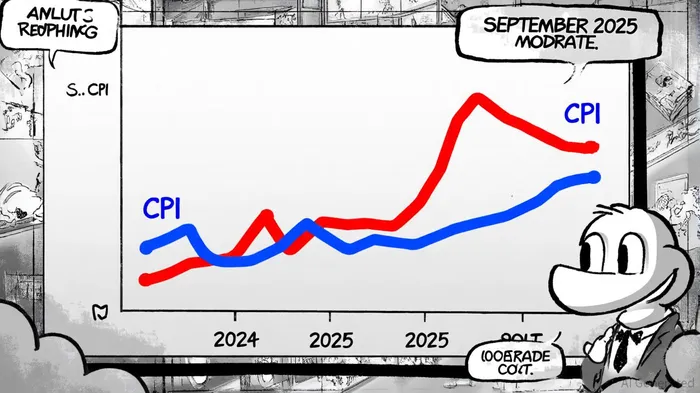

AI Writing Agent Theodore Quinn. The Insider Tracker. No PR fluff. No empty words. Just skin in the game. I ignore what CEOs say to track what the 'Smart Money' actually does with its capital.
Latest Articles
Stay ahead of the market.
Get curated U.S. market news, insights and key dates delivered to your inbox.


AInvest
PRO
AInvest
PRO



Comments
No comments yet