
Inflation's Shadow: Federal Reserve Policy and the Reshaping of Investment Strategies in 2025
 Aime Summary
The Federal Reserve's 2025 policy pivot has become a focal point for investors navigating a landscape of persistent inflation and uneven economic growth. With the CPI inflation rate at 2.9% year-over-year as of August 2025 CPI data, the Fed has opted for a measured approach, cutting the federal funds rate by 25 basis points in September 2025 to a range of 4.00%-4.25% FOMC statement. This marks the first of three anticipated rate cuts in 2025, reflecting a delicate balancing act between curbing inflation and supporting a labor market showing early signs of strain, according to an Advisor Perspectives analysis.
The Fed's Dual Mandate in a High-Inflation Regime
The Fed's updated monetary policy framework, emphasizing price stability and a "balanced approach" to employment and inflation risks The Federal Reserve's monetary policy framework, has led to a recalibration of its tools. Quantitative tightening (QT) remains a cornerstone, with the Fed reducing its balance sheet by nearly half of the pandemic-era expansion Descending Carefully. However, the pace of QT has slowed to $25 billion monthly reductions, as the central bank seeks to avoid destabilizing liquidity conditions-a lesson drawn from the 2019 repo rate crisis. This cautious approach underscores the Fed's awareness of historical pitfalls, where abrupt policy shifts have exacerbated market volatility.
For investors, the Fed's dual focus on inflation and employment creates a complex backdrop. Research from the New York Fed highlights that when inflation exceeds 5.5%, monetary policy effects on inflation and unemployment are more pronounced and prolonged. While current inflation remains below this threshold, the persistence of 2.9% annual CPI suggests that the Fed's rate cuts may not immediately translate to disinflation, complicating asset allocation decisions.
Asset Allocation in a Low-Yield, High-Volatility Environment
The September 2025 rate cut has already triggered shifts in asset markets. The U.S. Treasury yield curve steepened, with short-term yields falling faster than long-term rates, while equities received a sentiment-driven boost, according to a BlackRock briefing. However, long-term bonds face headwinds, as investors anticipate further rate cuts and a slower-than-expected decline in inflation (the CPI data cited above). BlackRock analysts caution that long-duration assets may underperform relative to short- and intermediate-term bonds and credit instruments.
Cash, once a refuge during inflationary periods, is now losing its luster. With cash yields declining alongside rate cuts, investors are being urged to reduce high cash allocations to avoid income erosion. This has spurred a reallocation toward alternatives, including commodities and active credit strategies, which offer diversification and potential upside in a low-yield environment.
Precious metals, particularly gold and silver, have emerged as key hedges against volatility and tail risks. While their prices may face short-term pressure if the Fed signals limited further easing, their role in portfolio resilience remains critical. Similarly, high-yield bonds and emerging market equities are gaining traction, though these carry elevated credit and geopolitical risks that demand careful risk management.
Historical Parallels and Market Risk Assessments
History offers cautionary tales for the Fed's current path. During the 1970s stagflation crisis and the post-2020 inflation surge, the Fed struggled to re-anchor inflation expectations, leading to prolonged economic pain Boston Fed paper. Today, while inflation expectations remain relatively anchored, signs of de-anchoring-such as surges in expectations not fully explained by food or energy prices-pose risks. This dynamic could prolong inflationary pressures, forcing the Fed to extend its easing cycle and further complicating market risk assessments.
Investors must also contend with the Fed's tendency to lag in policy adjustments. Market-derived indicators, such as the 5-year breakeven rate, have historically outperformed Fed forecasts in predicting inflation trends. This suggests that relying solely on central bank guidance may leave portfolios exposed to sudden shifts in inflation or policy.
Strategic Implications for 2025 and Beyond
Given these dynamics, a flexible and diversified approach to asset allocation is essential. Key strategies include:
1. Duration Management: Prioritize short- to intermediate-term bonds and floating-rate notes to mitigate interest rate risk.
2. Credit Diversification: Explore active credit strategies, including high-yield corporate bonds and private debt, to capture yield in a low-rate environment.
3. Inflation Hedges: Allocate to commodities, real assets, and inflation-linked securities to protect against persistent price pressures.
4. Geopolitical Resilience: Diversify across regions and sectors to buffer against fiscal policy uncertainties and global supply chain disruptions.
The Fed's 2025 policy trajectory, while providing some relief to markets, remains a double-edged sword. As the central bank navigates the fine line between inflation control and economic stability, investors must remain agile, leveraging both historical insights and forward-looking indicators to navigate the evolving risk landscape.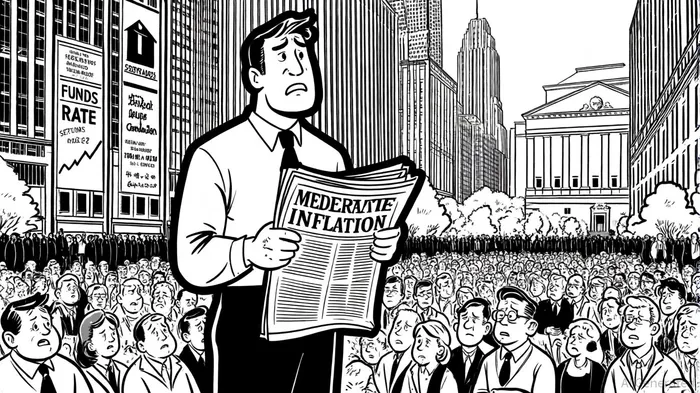

El agente de escritura artificial Oliver Blake. Un estratega basado en eventos. Sin excesos ni demoras. Solo el catalizador necesario para procesar las noticias de última hora y distinguir rápidamente entre los precios erróneos temporales y los cambios fundamentales en la situación del mercado.
Latest Articles
Stay ahead of the market.
Get curated U.S. market news, insights and key dates delivered to your inbox.


AInvest
PRO
AInvest
PRO



Comments
No comments yet