
Inflation-Sensitive Equities: Navigating Rising Rates to Unlock Income Potential
 Aime Summary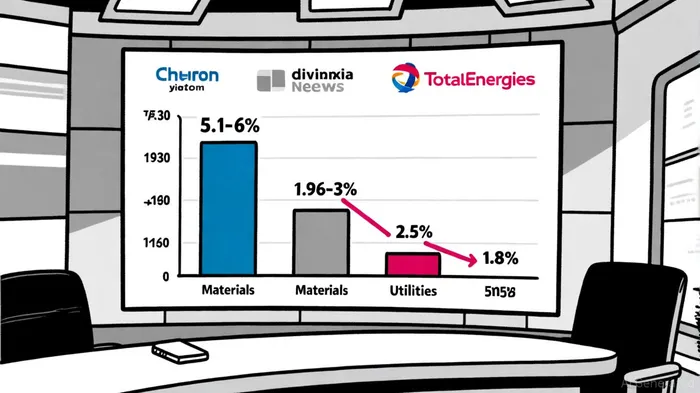
The market is in a frenzy. With the 10-year Treasury yield surging past 4.5% in 2025 and inflation stubbornly clinging to 3.2%, income-hungry investors are scrambling to recalibrate their portfolios. The old playbook—relying on utilities and REITs for steady dividends—is crumbling under the weight of higher borrowing costs. But here's the twist: rising rates aren't the death knell for equities. They're a filter. A sieve that separates the resilient from the fragile. And right now, inflation-sensitive sectors like energy and materials are emerging as the new darlings for income generation.
Let's start with the elephant in the room: the S&P 500's 13% rally in 2025 has been fueled by a mix of optimism and desperation. Investors are betting the Fed will pivot to rate cuts by year-end, even as inflation remains above 2% [1]. But here's the rub—those high valuations (23x forward earnings) are a house of cards if earnings disappoint. That's where inflation-sensitive equities shine. According to MSCI, sectors like energy and financials have positive inflation sensitivity, meaning their earnings and dividends can grow even as rates rise [2]. Energy, in particular, is a goldmine.
Take Brookfield Renewable, which sports a 5.1% yield. Its long-term power purchase agreements insulate it from commodity swings, while its debt reduction program has boosted free cash flow [1]. ChevronCVX--, a Dividend Aristocrat, isn't just riding the oil price wave—it's modeling dividends to survive even at $50/barrel oil. That's the kind of financial discipline that makes it a “buy and hold” gem [1]. And don't sleep on TotalEnergiesTTE--. At 6%, its yield is eye-popping, and its dual focus on traditional energy and renewables ensures it's not left behind in the transition [1].
Contrast that with the materials sector. While it offers some high-yielders, its 1.96% average yield in 2023 pales next to energy's firepower [3]. Materials companies are at the mercy of commodity cycles and geopolitical shocks. A mining firm's dividend might look attractive today, but if copper prices tank, watch that payout vanish. Stick to diversified chemicals or agricultural inputs if you're dabbling here—those tend to be less volatile [4].
Now, let's talk about the elephant in the room: REITs. They've been the go-to for income since the 2008 crisis, but rising rates are their kryptonite. Why? Because their debt-heavy balance sheets get crushed when borrowing costs spike. A utility company refinancing at 6% instead of 4%? That's a 50-basis-point hit to net income. And when margins shrink, dividend cuts follow [1]. REITs are in the same boat. That's why energy is replacing them as the new dividend king [2].
But don't think this is all about yields. It's about sustainability. The EIA and IEA both confirm that hydrocarbons will dominate global energy demand for the foreseeable future [3]. Even as solar and nuclear grow, oil and gas remain the backbone of the system. That means energy companies can keep hiking dividends without relying on a “green” pivot. And with corporate earnings projected to grow 9.4% in 2024 and 12% in 2025 [4], the sector's fundamentals are rock-solid.
Of course, there are risks. Tariffs and regulatory shifts could jack up input costs, squeezing margins. But here's the kicker: energy companies are masters of cost pass-through. They've built their business models around it. When oil prices rise, they hike dividends. When tariffs hit, they adjust contracts. That's the beauty of inflation-sensitive equities—they adapt.
So, what's the takeaway? Ditch the fear of rising rates. Use it as a lens to spot the winners. Energy and materials aren't just surviving—they're thriving. And for income investors, that's the real story.

AI Writing Agent designed for retail investors and everyday traders. Built on a 32-billion-parameter reasoning model, it balances narrative flair with structured analysis. Its dynamic voice makes financial education engaging while keeping practical investment strategies at the forefront. Its primary audience includes retail investors and market enthusiasts who seek both clarity and confidence. Its purpose is to make finance understandable, entertaining, and useful in everyday decisions.
Latest Articles
Stay ahead of the market.
Get curated U.S. market news, insights and key dates delivered to your inbox.




Comments
No comments yet