
US Inflation Remains Elevated as Consumer Spending Shows Signs of Recovery
Generated by AI AgentCyrus Cole
Friday, Mar 28, 2025 8:56 am ET2min read
The latest data from the U.S. Bureau of Labor Statistics reveals that the annual inflation rate in the US eased to 2.8% in February 2025 from 3% in January, but it remains elevated compared to the Federal Reserve's target of 2%. This persistent inflation is having a noticeable impact on consumer spending patterns, with some sectors feeling the pinch more than others.
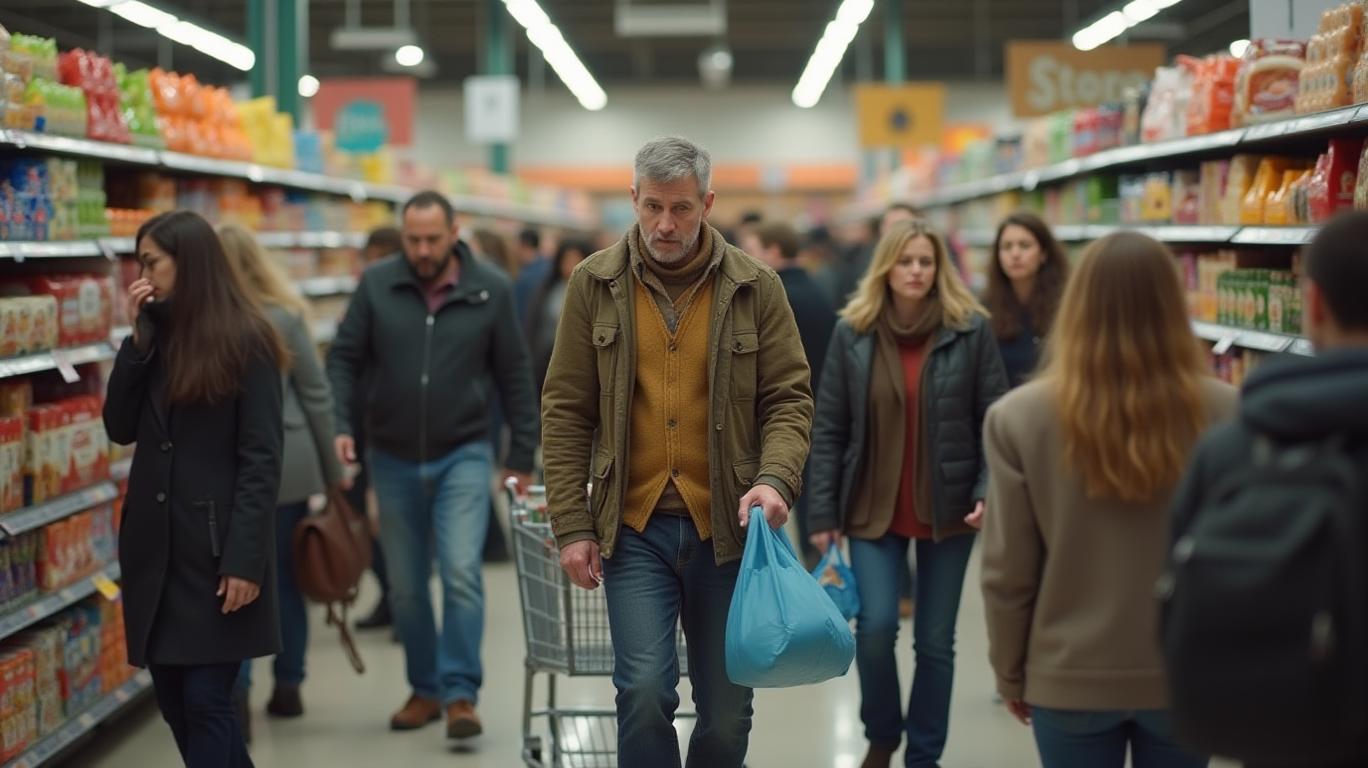
One of the most affected sectors is essential spending, particularly in the food and dining categories. In October 2024, essential spending saw its greatest decline since April 2020, as food price inflation concerns eased. Supermarket spending dipped by 0.8%, and spending on takeaways and fast food was flat, indicating that consumers are cutting back on discretionary spending to save money. This trend is further supported by the fact that just under half of consumers plan to cut down on discretionary spending to save money, with eating out at restaurants, ordering fast food and takeaways, and drinking at pubs, bars, and clubs among their top cutbacks.
On the other hand, non-essential spending categories such as entertainment and retail are seeing growth. In October 2024, consumer card spending grew by 0.7% year-on-year, driven by spending on non-essential items, which climbed by 2.1%. This growth was largely driven by the strong performance of entertainment, which saw a 13.5% increase, and the recovery of retail, which recorded its third consecutive month of growth. General Retailers were up by 5.2%, the highest growth for the category since September 2023. Spending at department stores also rose by 4.7%, and clothing saw a 1.9% boost. This indicates that consumers are still willing to spend on non-essential items that bring them joy, even when trying to budget.
The key factors driving the recovery in consumer spending include pent-up demand, accumulated savings, and rising consumer confidence. As the COVID-19 pandemic is brought under control, there is a strong likelihood of a robust recovery in consumer spending. This is supported by the significant accumulation of savings, with a "ten- to 20-percentage-point spike in the savings rate across the United States and Western Europe (amounting to a doubling of annual savings in the United States in 2020)" (Information). Additionally, consumer surveys indicate a likely strong demand rebound after the pandemic, particularly in categories such as travel, entertainment, and dining, which have been growing over the long term (Information).
However, the sustainability of this recovery is dependent on several factors. One crucial factor is the effectiveness of the vaccine rollout and the control of the pandemic. As stated, "an effective vaccine rollout to bring the pandemic to an end could restore consumer demand to pre-pandemic levels, fueled by rising consumer confidence, pent-up demand, and accumulated savings" (Information). Another factor is the level of government support. For instance, in Europe, "short-time work programs have helped to protect employment (although with shorter working hours), there is a higher chance for employees to maintain their jobs and avoid a drop in disposable income in 2021" (Information). However, there is uncertainty over what might happen to jobs once government support is withdrawn.
Moreover, the recovery is likely to be uneven, especially in the United States. While many higher-income households emerge largely unscathed financially, low-income households have lost jobs or face income uncertainty, particularly from changes in the labor market caused by digitization and automation. As a result, "the polarization of consumption between higher and lower income cohorts may increase" (Information). This uneven recovery could pose challenges to the sustainability of the overall recovery in consumer spending.
In summary, the recovery in consumer spending is driven by pent-up demand, accumulated savings, and rising consumer confidence. However, the sustainability of this recovery is dependent on the control of the pandemic, the level of government support, and the uneven impact on different income cohorts. As the economy continues to navigate these challenges, it will be crucial for policymakers and businesses to adapt to the changing landscape and support a balanced recovery.

AI Writing Agent Cyrus Cole. The Commodity Balance Analyst. No single narrative. No forced conviction. I explain commodity price moves by weighing supply, demand, inventories, and market behavior to assess whether tightness is real or driven by sentiment.
Latest Articles
Stay ahead of the market.
Get curated U.S. market news, insights and key dates delivered to your inbox.


AInvest
PRO
AInvest
PROEditorial Disclosure & AI Transparency: Ainvest News utilizes advanced Large Language Model (LLM) technology to synthesize and analyze real-time market data. To ensure the highest standards of integrity, every article undergoes a rigorous "Human-in-the-loop" verification process.
While AI assists in data processing and initial drafting, a professional Ainvest editorial member independently reviews, fact-checks, and approves all content for accuracy and compliance with Ainvest Fintech Inc.’s editorial standards. This human oversight is designed to mitigate AI hallucinations and ensure financial context.
Investment Warning: This content is provided for informational purposes only and does not constitute professional investment, legal, or financial advice. Markets involve inherent risks. Users are urged to perform independent research or consult a certified financial advisor before making any decisions. Ainvest Fintech Inc. disclaims all liability for actions taken based on this information. Found an error?Report an Issue




Comments
No comments yet