
US Inflation and Federal Reserve Policy: A Timeless Guide to Economic Stability and Opportunities

- US inflation has shown signs of cooling, with the November 2025 CPI rising just 2.7% year-over-year, below expectations and fueling hopes for further Federal Reserve rate cuts.
- The Federal Reserve targets a 2% inflation rate measured by the Personal Consumption Expenditures (PCE) price index, using tools like interest rate adjustments to balance price stability with maximum employment.
- Key performance indicators (KPIs) for inflation include the Consumer Price Index (CPI) and PCE, which guide Fed decisions; core measures exclude volatile food and energy prices for a clearer trend.
- A potential change in Fed leadership in 2026 could introduce shifts in policy emphasis, particularly under a new chair influenced by political priorities like lower rates.
- Cooling inflation and easing monetary policy present investment opportunities in equities, fixed-income securities, and sectors sensitive to interest rates, such as real estate and technology.
The landscape of US inflation and Federal Reserve policy remains a cornerstone of global economics, influencing everything from consumer spending to investment strategies. This evergreen guide explores the current state of inflation, the Fed's enduring framework, key metrics, potential leadership transitions, and emerging opportunities for investors. While recent data provides timely context, the principles discussed here transcend short-term fluctuations.
Recent Inflation Trends: November 2025 CPI Surprise and Easing Expectations

In a development that caught markets off guard, the US Consumer Price Index (CPI) for November 2025 rose by only 2.7% year-over-year, marking a sharper-than-expected slowdown from prior months.
Based on CNBC reports, Core CPI, which excludes volatile food and energy components, advanced just 2.6%—the slowest pace in four years—despite some data distortions from external factors like government shutdowns. This unexpected cooling has bolstered expectations for a more accommodative Federal Reserve stance, with traders anticipating additional rate cuts to support economic growth amid softening consumer sentiment and retail sales. As of December 2025, headline inflation hovers near the Fed's target, but persistent pressures in services and shelter costs remind us that the path to stability is rarely linear.
The Current State of US Inflation
According to PBS, US inflation has moderated significantly from its post-pandemic peaks, but it remains a focal point for policymakers. As of late 2025, the annual inflation rate stands at approximately 2.7%, down from 3% in September, reflecting declines in categories like recreation and hospitality. However, economists caution that some figures may be skewed by temporary disruptions, and Americans continue to feel the pinch from elevated prices in essentials. Globally, this trend aligns with broader disinflationary forces, including supply chain normalization and energy price stabilization, yet risks like geopolitical tensions could reignite upward pressures.
The Federal Reserve's Inflation Target and Policy Framework
At the heart of the Fed's mandate is price stability, defined as a 2% average inflation rate over the long run, primarily measured by the PCE price index, reported by WSJ. This target, adopted in 2012 and refined in 2020 to allow for temporary overshoots, aims to anchor expectations and foster sustainable growth. The Fed's dual mandate—maximum employment and stable prices—guides its actions through the Federal Open Market Committee (FOMC), which employs tools like the federal funds rate, open market operations, and reserve requirements to influence economic conditions. Independence from political interference ensures decisions are data-driven, though external pressures can test this autonomy.
Updates to the Monetary Policy Framework from Jackson Hole 2025

In his August 2025 address at the Jackson Hole Economic Symposium, Federal Reserve Chair Jerome Powell unveiled a revised Statement on Longer-Run Goals and Monetary Policy Strategy, marking a significant evolution in the Fed's approach to navigating economic uncertainties. Key changes include shifting away from the 2020 "makeup" strategy—where inflation was allowed to overshoot 2% to compensate for undershoots—back to a more traditional flexible inflation targeting regime, as post-pandemic dynamics rendered the makeup approach less effective.
According to Bloomberg, the framework now de-emphasizes the effective lower bound on interest rates, promoting tools for a broader range of conditions, and redefines maximum employment to recognize levels that can exceed real-time estimates without triggering inflation. Powell highlighted rising downside risks to employment amid slowing job growth and upside risks to inflation from factors like tariffs, emphasizing a balanced response to tensions between the dual mandate goals. This updated framework aligns with recent policymaker sentiments, such as New York Fed President John Williams' December 2025 remarks that monetary policy is "well positioned" for 2026 following a quarter-point rate cut to 3.5%-3.75%, with growth expected to accelerate to 2.25% and inflation declining toward the 2% target by 2027, amid roughly balanced risks to inflation and employment.
Key Performance Indicators: CPI and PCE
The Fed relies on two primary KPIs to gauge inflation: the CPI and PCE. Below is a comparison table highlighting their differences and recent trends (data as of November 2025):
These metrics help the Fed calibrate policy, with core versions stripping out volatility for better trend analysis.
Potential Impact of a 2026 Fed Chair Transition
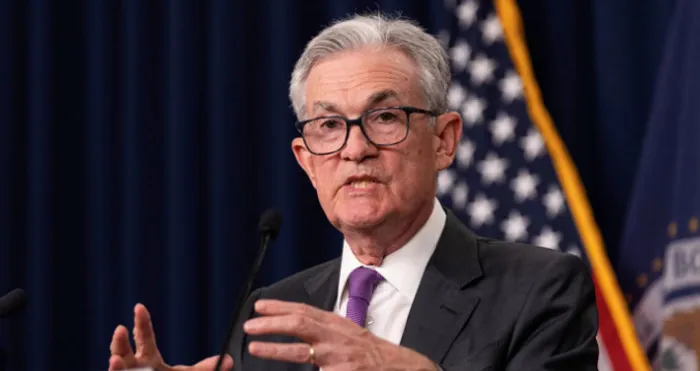
Jerome Powell's term as Fed Chair ends in May 2026, opening the door for a new appointee amid a politically charged environment. Candidates like Kevin Hassett, Kevin Warsh, and others are under consideration, with a potential emphasis on loyalty and dovish policies favoring lower rates. A shift could erode the Fed's independence, leading to more aggressive easing or tighter controls if inflation resurges, potentially amplifying market volatility. Historically, chair transitions have influenced policy tone—think Volcker's anti-inflation hawkishness versus Greenspan's growth focus—though the framework's continuity often mitigates drastic changes.
Investment Opportunities in a Cooling Inflation Environment
With inflation easing and the Fed signaling further rate reductions, investors can capitalize on several avenues. Lower rates typically boost equities, particularly in growth sectors like technology and consumer discretionary, as borrowing costs decline. Fixed-income assets, such as Treasury bonds and corporate debt, become attractive for yield seekers, while real estate investment trusts (REITs) benefit from cheaper financing. Diversification into commodities or international markets can hedge against residual risks, but caution is advised amid uncertainties like trade policies. Overall, a balanced portfolio emphasizing quality assets positions investors for sustained returns in this evolving landscape.
Frequently Asked Questions (FAQs)
How does the Fed's flexible average inflation targeting (FAIT) framework differ from strict inflation targeting, and what implications does it have for long-term economic volatility?
The FAIT framework, introduced in 2020, allows inflation to temporarily exceed 2% to compensate for prior undershoots, promoting fuller employment without rigid caps. Unlike strict targeting, it reduces policy whiplash, potentially lowering volatility by anchoring expectations, though it risks entrenching higher inflation if not managed carefully.
In what ways could a politically influenced Fed chair appointment in 2026 challenge the central bank's independence and affect global financial markets?
A nominee prioritizing executive preferences, such as aggressive rate cuts, might undermine credibility, leading to higher risk premiums and currency fluctuations. Globally, this could trigger capital flows away from the US, impacting emerging markets and amplifying spillovers in interconnected economies.
What are the limitations of using CPI and PCE as KPIs, and how might alternative metrics like trimmed-mean inflation improve Fed decision-making?
CPI overweights housing and can lag real-time changes, while PCE better captures substitution effects but is revised frequently. Trimmed-mean measures, which exclude extreme price swings, offer a more stable signal, potentially enhancing policy precision in volatile environments.
How do disinflationary trends interact with fiscal policy, and what risks do they pose for investors in a high-debt environment?
Cooling inflation can ease debt burdens through lower rates, but if paired with expansive fiscal spending, it risks reacceleration. Investors face yield curve inversions or asset bubbles, necessitating hedges like inflation-linked bonds to mitigate fiscal-monetary mismatches.

The AInvest News Editorial Team consists of experienced financial journalists and editors who oversee all published content. While our newsroom leverages advanced AI tools to assist in data gathering and draft generation, every article is reviewed, fact-checked, and approved by human editors to ensure accuracy, clarity, and transparency.
Latest Articles
Stay ahead of the market.
Get curated U.S. market news, insights and key dates delivered to your inbox.


AInvest
PRO
AInvest
PRO



Comments
No comments yet