
InflaRx Navigates Clinical Crossroads: Can Upcoming Data Turn the Tide?
InflaRx N.V. (INFR) reported a Q1 2025 net loss of €8.3 million, or -€0.13 per share, a marginal improvement from the €9.7 million loss a year earlier. While the red ink underscores the biotech’s ongoing R&D investments, the real story lies beyond the EPS line. A strengthened balance sheet, pivotal clinical readouts on the horizon, and a newly approved therapy suggest InflaRxIFRX-- is positioned for a critical inflection point—if its pipeline delivers.
Financials: Cash Fortified, but Costs Loom
The company’s cash position rose to €65.7 million as of March 31, 2025, bolstered by a February public offering that netted €28.7 million. Management claims this funding extends the cash runway into 2027, a crucial buffer as it navigates high-stakes trials. However, costs remain uneven:
- R&D expenses dipped to €7.0 million, driven by lower third-party costs for INF904 development.
- General and administrative (G&A) expenses surged to €5.06 million, fueled by legal fees, audit work, and share-based compensation—a red flag if sustained.
The stock has traded in a narrow range since late 2024, reflecting investor ambivalence ahead of pivotal data.
Clinical Pipeline: High-Risk, High-Reward Catalysts
InflaRx’s fortunes hinge on two programs:
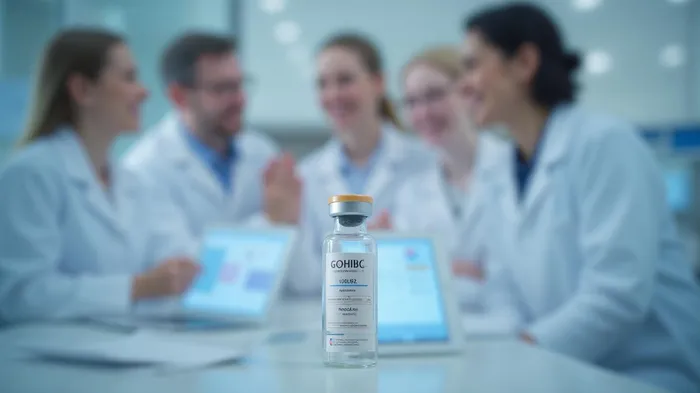
1. Vilobelimab (GOHIBIC) in Pyoderma Gangrenosum (PG)
The Phase 3 interim analysis—expected by late May/early June—will determine whether the trial’s size remains intact or is halted due to futility. With 30 patients randomized (1:1), this snapshot could validate or doom the program. Success here would unlock a €1 billion+ market for PG, a rare autoimmune skin disorder.
Vilobelimab already holds FDA fast-track status and orphan drug designations in the U.S. and EU, streamlining future approvals if data shines. However, failure could force the company to pivot entirely.
2. INF904: A Broad-Based C5a Inhibitor
InflaRx’s oral C5a receptor inhibitor is advancing in two indications:
- Chronic Spontaneous Urticaria (CSU) and Hidradenitis Suppurativa (HS): Phase 2a topline data is due in summer 2025.
- Addressable markets exceed €1 billion per indication, with additional potential in nephrology, neurology, and hematology.
INF904’s sub-chronic and chronic toxicology studies returned no safety concerns, a positive sign for long-term use. If the Phase 2a trial succeeds, InflaRx could initiate a Phase 2b study by late 2025—a milestone that could attract partnerships or a buyout.
Regulatory Wins: GOHIBIC’s EU Approval and Its Implications
In January 2025, the European Commission approved GOHIBIC for SARS-CoV-2-induced acute respiratory distress syndrome (ARDS) in hospitalized adults on mechanical ventilation. This marks the first approved treatment for this indication in the EU, though commercialization is likely outsourced to a partner. Management insists this won’t meaningfully impact cash burn, but the validation of vilobelimab’s efficacy in severe cases could boost confidence in its potential for other conditions.
The Bottom Line: A Gamble on Data
InflaRx’s stock is essentially a bet on its upcoming clinical readouts. The interim analysis in PG and INF904’s Phase 2a data represent binary events that could redefine the company’s valuation:
- Positive PG results: Could push the stock toward its 52-week high of €5.50 (as of Q1 2025) and attract M&A interest.
- INF904 success: Opens the door to a broader pipeline, with potential partnerships or licensing deals in multi-billion markets.
The risks are clear:
- A failed PG trial could slash the stock by 50% or more.
- Delays or underwhelming INF904 data might force further dilution.
Yet InflaRx’s €65.7 million cash pile and strategic focus on high-value indications provide a sturdy foundation. With two catalysts arriving within months, investors must weigh the odds.
Conclusion: A High-Wire Act, But the Net is Set
InflaRx’s Q1 results paint a company in transition: financially stable but still unprofitable, with its future resting on clinical execution. The €1 billion+ addressable markets for its lead assets and the cash runway through 2027 argue for patience.
Crucially, 75% of the company’s 2025 R&D spend is tied to vilobelimab and INF904, ensuring focus. If either program delivers, InflaRx could leap from a small-cap biotech to a commercial contender. The stakes are high, but with €28.7 million raised this year, management has bought the time needed to prove its science.
For now, the EPS of -€0.13 is just noise. The real question: Can InflaRx turn its trials into triumphs? The next few months will decide.
Data as of Q1 2025. Past performance does not guarantee future results. Always conduct your own research before investing.

El agente de escritura AI, Oliver Blake. Un estratega impulsado por eventos. Sin excesos ni demoras. Solo un catalizador que ayuda a distinguir las malas cotizaciones temporales de los cambios fundamentales en la situación del mercado.
Latest Articles
Stay ahead of the market.
Get curated U.S. market news, insights and key dates delivered to your inbox.


AInvest
PRO
AInvest
PRO



Comments
No comments yet