
The Inference Inflection: NVIDIA GTC 2026 Signals a Trillion-Dollar Pivot
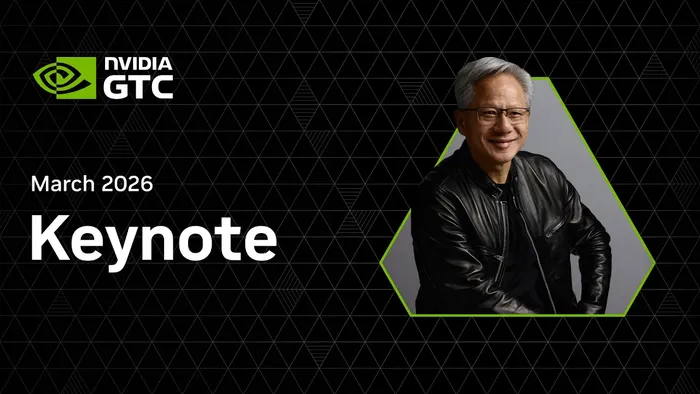
At NVIDIA's 2026 GPU Technology Conference (GTC) in San Jose, CEO Jensen Huang delivered a resounding message to Wall Street: the artificial intelligence revolution has only just begun. Taking the stage at the SAP Center for a sprawling two-hour keynote, Huang outlined a bold strategic pivot. The industry is rapidly moving away from the expensive, brute-force era of training massive foundation models, and shifting toward the highly lucrative era of continuous, low-latency inference.
Projecting that computing demand will surpass $1 trillion through 2027, Huang made it clear that NVIDIANVDA-- intends to control the entire infrastructure stack. From orbital data centers to autonomous enterprise agents, GTC 2026 was a masterclass in ecosystem lock-in, proving that NVIDIA is no longer just a chipmaker, but the foundational engine of the global digital economy.
Overcoming Market Volatility: The Cost of Compute
To fully grasp the financial gravity of GTC 2026, investors must look at the macroeconomic turbulence of the past year. The AI infrastructure market has faced rigorous stress tests regarding the sustainability of massive capital expenditures. Notably, when low-cost AI challengers like DeepSeek entered the market in early 2025, it triggered widespread panic over the long-term viability of high-cost hardware. This disruption led to a historic $465 billion daily market cap wipeout for NVIDIA—the largest single-day loss in U.S. stock market history—as investors feared the AI bubble might burst if infrastructure costs remained prohibitive.
Wall Street has subsequently demanded proof that NVIDIA can drive down the absolute cost of compute to make continuous AI operations economically viable for the masses. GTC 2026 was Huang's direct, aggressive answer to that economic anxiety. By relentlessly focusing on inference efficiency, NVIDIA is proving it can protect its premium profit margins while simultaneously lowering the "cost per token" for its end users, thereby stabilizing investor confidence and setting the stage for the next growth cycle.
The Hardware Evolution: Vera, Rubin, and Groq Integration
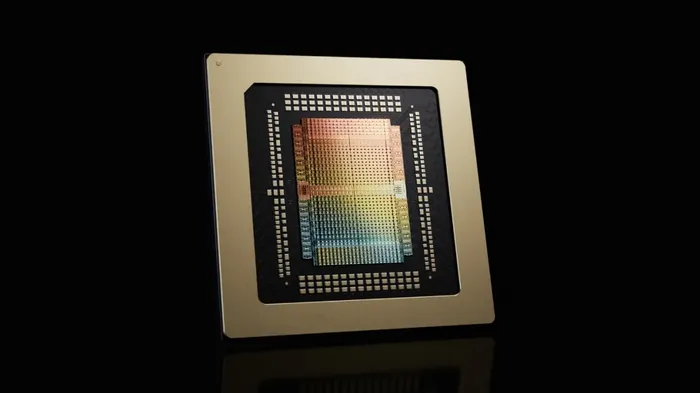
The centerpiece of NVIDIA's defensive moat and offensive strategy is its next-generation data center architecture. Huang officially unveiled the comprehensive Vera Rubin platform, explicitly designed to eliminate the power and latency bottlenecks of the Hopper and Grace Blackwell eras. The massive system connects the new high-performance Vera CPU with the Rubin GPU, creating what Huang described as a completely vertically integrated "AI factory."
Crucially, NVIDIA showcased the fruits of its $20 billion licensing deal with Groq, introducing advanced Language Processing Units (LPUs) integrated directly into the stack to handle ultra-low-latency inference workloads. Huang stunned the audience by claiming this new architecture delivers an incredible 50x improvement in performance per watt compared to previous generations, drastically reducing the total cost of ownership. Given that approximately 60% of NVIDIA's revenue relies on hyperscalers like AWS, Microsoft Azure, and Google Cloud, this power efficiency is a critical financial lever. It effectively forces cloud providers into a massive new upgrade cycle; if they do not adopt Rubin, they will be unable to offer competitive token pricing to their own enterprise customers. Furthermore, Huang teased the next-generation "Feynman" architecture slated for 2028, ensuring that hyperscalers are continuously locked into NVIDIA's multi-year hardware roadmap.
Software as an Operating System: The NemoClaw Era

Hardware is only half the equation in NVIDIA's trillion-dollar thesis. The most disruptive announcement for the broader enterprise software sector was NVIDIA's aggressive push into "agentic" AI. Moving far beyond traditional, passive generative text chatbots, Huang introduced NemoClaw—an open-source "operating system" built in a strategic partnership with OpenClaw. NemoClaw is designed explicitly to manage autonomous AI agents capable of multi-step reasoning, dynamic scheduling, and executing complex enterprise workflows with minimal human oversight.
By defining NemoClaw as a foundational operating system, NVIDIA is attempting to own the highly profitable software layer where enterprise applications actually live and operate. This creates a virtually unbreakable lock-in effect: if global businesses build their digital labor forces and automated pipelines on NemoClaw, those operations are inextricably tied to the CUDA software ecosystem and, by extension, NVIDIA's silicon. It represents a paradigm shift where AI is no longer viewed as a software feature, but as the active digital workforce of the future.
Physical AI and the Future of Rendering
Beyond enterprise software and server racks, Huang dedicated significant time to "Physical AI" and the future of spatial computing. A major highlight for the creative and interactive media sectors was the unveiling of DLSS 5. Utilizing advanced neural rendering, DLSS 5 revolutionizes real-time 3D graphics by using AI to synthesize high-fidelity frames with minimal traditional compute overhead.
This fundamentally changes the workflow for developers building complex digital environments. Instead of relying on brute-force rendering pipelines—which heavily tax engines like Unity when managing dynamic lighting, complex physics, or intricate camera systems tracking rapid player movement—developers can leverage AI to maintain perfect frame rates in dense, interactive worlds. NVIDIA also demonstrated how its physical AI platforms are bridging the digital and real worlds, culminating in a live demonstration of an autonomous robotic Olaf from Disney's navigating the stage. Furthermore, Huang revealed "Vera Rubin Space-1," an ambitious initiative to deploy AI-powered data centers into Earth's orbit, pushing the edge of computing to space.
Impact on NVDANVDA-- Stock
The market reacted positively to the scale of Huang's vision. NVDA shares rallied roughly 2% during the event, pushing past the $185 level and threatening to break its 50-day moving average—a key technical indicator for bullish momentum.
Heading into the event, Wall Street analysts were already constructive on the stock. Morgan Stanley maintained its "Overweight" rating with a $260 price target, citing that hyperscaler demand is fundamentally "locked in" through 2026. Furthermore, Wells Fargo analysts highlighted a compelling historical trend: NVDA stock has historically outperformed the semiconductor index (SOX) by 12% to 45% in the three months following a GTC event.
Broader Business & Industry Trends
Huang's keynote highlighted several macroeconomic ripples that will impact the broader tech and finance sectors:
The Margin Squeeze in Cloud: Because the Vera Rubin platform offers such dramatic efficiency gains for inference workloads, cloud providers (AWS, Google Cloud, Azure) will be under immense pressure to upgrade their infrastructure to remain cost-competitive.
Semiconductor Ripple Effects: NVIDIA's aggressive cadence forces competitors like AMD to accelerate their own roadmaps. Additionally, memory suppliers are direct beneficiaries; Micron Technology (MU) simultaneously announced high-volume production of its HBM4 memory, explicitly designed to support the Vera Rubin platform.
The "AI Factory" Era: Investors should expect capital expenditures (CapEx) from mega-cap tech companies to remain historically high. Data centers are no longer viewed merely as data storage facilities, but rather as "AI Factories" fundamentally responsible for manufacturing digital intelligence.

The AInvest News Editorial Team consists of experienced financial journalists and editors who oversee all published content. While our newsroom leverages advanced AI tools to assist in data gathering and draft generation, every article is reviewed, fact-checked, and approved by human editors to ensure accuracy, clarity, and transparency.
Latest Articles
Stay ahead of the market.
Get curated U.S. market news, insights and key dates delivered to your inbox.
AInvest
PRO
AInvest
PRO



Comments
No comments yet