
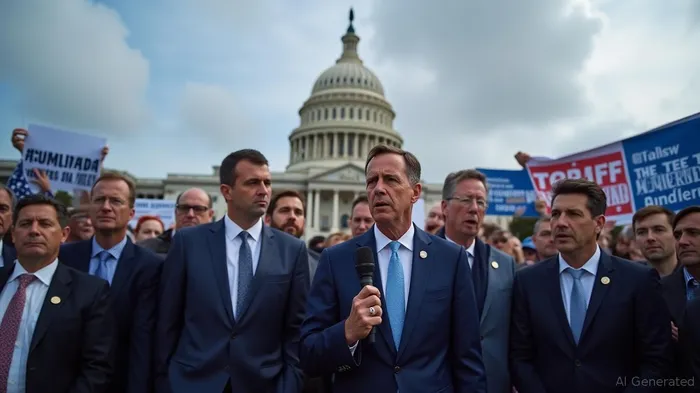
Industry Giants Oppose Trump's 25% Semiconductor Tariffs
President Donald Trump’s proposal to impose tariffs on imported semiconductors has sparked widespread opposition from various industries, including automotive, marine, technology, and even cryptocurrency sectors. The potential tariffs, which could reach up to 25%, have united competitors such as TeslaTSLA-- Inc., General MotorsGM-- Co., and Ford MotorF-- Co., as well as industry groups ranging from the Crypto Council for Innovation to the National Marine Manufacturers Association. The concern is that semiconductors are integral to a vast array of products, from household appliances to advanced technology, and tariffs could disrupt supply chains and increase consumer costs.
JoAnne Feeney, a partner and portfolio manager at Advisors Capital Management, highlighted the disparity between the U.S. demand for semiconductors and domestic supply. She warned that imposing tariffs on imports would only increase costs for consumers without addressing the underlying supply issue. The National Marine Manufacturers Association, for instance, cautioned that higher expenses for essential components like propulsion technology, engines, and GPS systems would significantly impact over 1,300 manufacturers, as these components are often not available domestically or are supplied by a limited number of overseas providers.
The Commerce Department received comments from 154 stakeholders, including tech giants like Taiwan Semiconductor Manufacturing Co. and Intel Corp., as well as a diverse range of sectors and trading partners. While many supported the idea of strengthening U.S. manufacturing, they expressed concerns about the potential economic repercussions of the tariffs. Trump has largely dismissed these concerns, pointing to investments by companies like TSMC in the U.S. However, TSMC itself warned that import levies could delay their projects and hinder U.S. efforts to expand domestic chip production for critical technologies like 5G, AI, and autonomous driving.
Tesla, in its submission, emphasized the need for government-industry coordination to avoid supply chain disruptions, given its global partnerships. Intel cautioned that retaliatory measures from trading partners could exclude American products, urging the administration to exempt U.S.-made wafers and chips produced abroad using American technology. A common worry among semiconductor companies was the potential tariffs on chipmaking equipment from foreign suppliers, which could significantly increase the cost of setting up new U.S. facilities.
Feeney noted the challenges of replacing foreign-produced semiconductors with domestic output, given the years required to build the necessary industrial infrastructure. She argued that imposing tariffs on semiconductors, a critical input for AI data centers, would be counterproductive at a time when the U.S. is trying to enhance its AI capabilities. Major trading partners, already affected by Trump’s reciprocal tariffs, objected to targeting chips, with Taiwan highlighting the interdependence between its semiconductor industry and leading U.S. chip designers.

Stay ahead of the market.
Get curated U.S. market news, insights and key dates delivered to your inbox.




Comments
No comments yet