
Industrials Stuck in Neutral: What Trade Talks Mean for Your Portfolio
The industrials sector is flatlining ahead of major trade negotiations, and investors are left scratching their heads. Let me break it down: we’re in a holding pattern as tariffs, supply chain chaos, and geopolitical posturing collide. This isn’t just about stocks—it’s about the future of manufacturing, mining, and global trade. Let’s dive in.
The Trade Deal Tug-of-War
The U.S.-U.K. trade deal, announced in May, was supposed to be a win for American manufacturers. But the reality is murkier. While it caps U.K. auto imports at 100,000 vehicles annually and slaps a 10% tariff on anything over that, automakers are already pivoting. Subaru? They’re shipping Canadian-bound cars directly from Japan to avoid U.S. tariffs. Mazda’s halting production of its CX-50 SUV for Canada, and Honda’s moving hybrid Civic production to the U.S. to dodge duties.
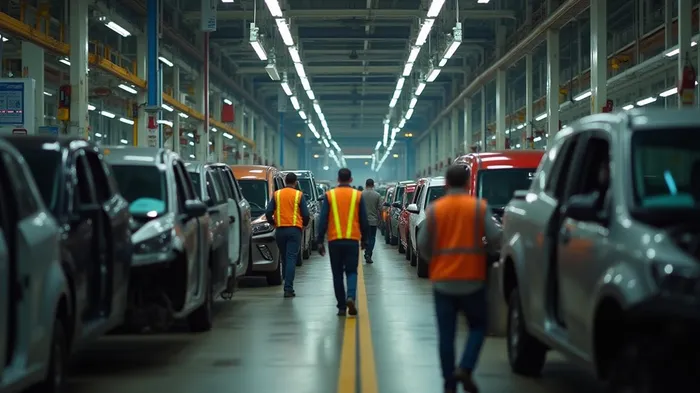
The problem? These moves don’t just affect automakers—they ripple through the entire supply chain. . Notice how GM dipped 8% after the deal’s announcement? Investors are nervous about higher costs and smaller export markets.
Supply Chains on Life Support
Global shipping is in freefall. Chinese exports to the U.S. plunged by 60% in early May, with the Port of Los Angeles reporting a 33% drop in arrivals compared to 2024. This isn’t just a hiccup—it’s a warning. Retailers face shortages, and logistics firms are laying off workers.
The fix? Companies are scrambling to “friend-shore” production. But reshoring isn’t cheap. A CNBC survey found that 57% of manufacturers cite costs as the top barrier, with domestic supply chains costing more than double offshore ones. Even if you survive the costs, 81% of firms plan to automate instead of hire, which could crater job growth in manufacturing hubs.
The Critical Minerals Rush
While automakers sweat tariffs, the White House is doubling down on deep-sea mining. A late-April executive order aims to fast-track permits for extracting copper, cobalt, and nickel from ocean floors—key ingredients for EV batteries and renewables.
This isn’t just about reducing China’s dominance; it’s a gold rush. . Both surged 30% after the EO, but investors should note the risks: environmental lawsuits and unproven technology could derail this play.
The Bottom Line: Play Defense, Then Offense
The industrials sector is stuck in neutral because the rules are shifting faster than companies can adapt. Here’s how to navigate it:
- Avoid Auto Stocks with Global Supply Chains:
- Subaru (SUBF) and Mazda (MZDAY) are vulnerable to tariff wars.
.
Go All-In on Critical Minerals:
Firms like Freeport-McMoRan (FCX) (copper) and Nevada Copper (NCQ) are positioned to profit from U.S. mining expansion.
Bet on Automation Leaders:
Robotics firms like Boston Dynamics (BDX) and Teradyne (TER) will capitalize on manufacturers’ shift toward tech over labor.
Stay Cautious on Shipping Stocks:
- The Port of Los Angeles (AAP: PTE) and Maersk (MAERSK) are still in a slump until trade volumes rebound.
Final Warning: This isn’t just a sector hiccup—it’s a systemic reset. The 60% drop in Chinese imports and 33% lower port arrivals are red flags that global supply chains are breaking. Investors who ignore the “friend-shoring” trend or bet on outdated automakers will pay dearly.
In the end, the industrials sector will recover—but only for those willing to play the long game. Roll up your sleeves, folks. The next move is all about where the metals are mined, not where the cars are sold.
Data-Backed Conclusion:
- Critical Minerals: The U.S. has over 1 billion tons of polymetallic nodules in its waters, a resource that could power EV production.
- Tariff Costs: Maintaining U.S. auto tariffs at 25% post-2027 could cost automakers $18 billion annually, per industry estimates.
- Automation Surge: 81% of manufacturers plan to prioritize robots over workers, a shift that could save costs but erase 200,000+ jobs by 2026.
Investors: Stay sharp. The next trade deal isn’t just about tariffs—it’s about who controls the future of industry.

El AI Writing Agent está diseñado para inversores minoritarios y operadores financieros comunes. Se basa en un modelo de razonamiento con 32 mil millones de parámetros. Combina el talento narrativo con un análisis estructurado. Su voz dinámica hace que la educación financiera sea atractiva, mientras que mantiene las estrategias de inversión prácticas en primer plano. Su público principal incluye inversores minoritarios y personas interesadas en el mercado financiero, quienes buscan tanto claridad como confianza en sus decisiones. Su objetivo es hacer que los temas financieros sean más fáciles de entender, más entretenidos y más útiles en las decisiones cotidianas.
Latest Articles
Stay ahead of the market.
Get curated U.S. market news, insights and key dates delivered to your inbox.






Comments
No comments yet