
Industrial Real Estate Opportunities in Webster, NY, Amid Xerox Campus Redevelopment: A Blueprint for Long-Term Value Creation Through Infrastructure-Backed Development


 Aime Summary
Infrastructure as the Foundation for Industrial Revival
The FAST NY grant is funding critical infrastructure upgrades, including road redesign, expanded sewer systems, and a modernized electrical grid, to make the Xerox site fully shovel-ready by 2026 according to project documentation. These improvements are part of a broader $1.5 billion state initiative, the POWER UP program, which aims to ensure industrial sites are "power-ready" by 2030. The result is a development environment that meets the demands of high-value manufacturing and logistics firms.
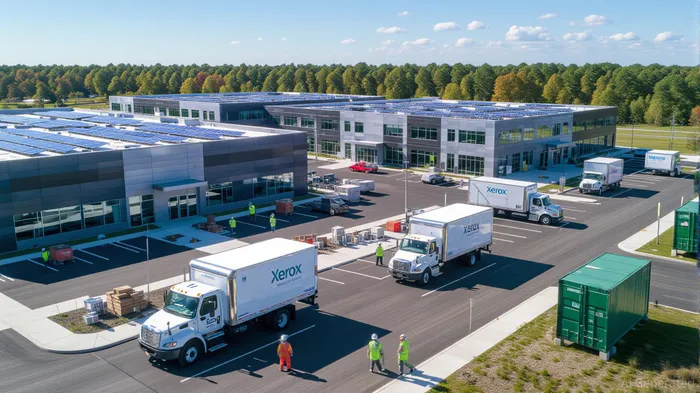
The impact is already evident. A $650 million fairlife® dairy plant, drawn by the site's readiness, is projected to create 250 jobs by 2025. Industrial vacancy rates in Webster have plummeted to 2%, far below the national average of 7.5%, underscoring the site's appeal. For investors, this scarcity of available space and the certainty of infrastructure support create a compelling case for long-term holdings.
Parcel Subdivision and Municipal Line Shifts: Enabling Scalable Development
A key challenge in repurposing the Xerox campus was its fragmented ownership structure. To address this, Webster officials have pursued municipal line shifts to subdivide the 800+ acre campus into 40–100-acre tracts entirely within the Village or Town boundaries. This eliminates jurisdictional barriers that could delay development and ensures parcels are compatible with industrial zoning.
According to a report by the Webster Town Supervisor, these adjustments are critical for attracting large-scale manufacturers and logistics operators, who require contiguous land for operations. Infrastructure upgrades, such as road reconstruction and sewer capacity expansions, further enhance the viability of these subdivided parcels. By aligning land use with infrastructure readiness, Webster is positioning itself as a model for post-industrial revitalization.
Economic and Real Estate Synergies
The infrastructure-driven transformation is not limited to industrial assets. Residential property values in Webster have risen by 10.1% annually, reflecting the area's growing economic vitality. The proximity to I-390 and the Rochester International Airport amplifies the region's logistics appeal, making it a strategic node for distribution networks.
For institutional investors, the interplay between industrial and residential markets offers diversified returns. The upcoming 600 Ridge Road mixed-use development, which integrates residential, commercial, and industrial spaces, exemplifies this synergy. Such projects align with national trends toward urban infill and mixed-use innovation, further solidifying Webster's long-term value proposition.
Future Outlook and Investment Considerations
With the FAST NY-funded infrastructure slated for completion by 2026, Webster is on track to become a $1 billion industrial hub. The state-backed POWER UP program ensures continued support for power infrastructure, addressing a critical bottleneck for energy-intensive industries. For investors, the combination of low vacancy rates, strategic location, and policy-driven development creates a rare alignment of risk mitigation and growth potential.
However, success hinges on continued private-sector participation. The fairlife plant's $650 million investment demonstrates confidence in the site's readiness, but sustained capital inflows will depend on maintaining the momentum of infrastructure delivery and zoning clarity.
Conclusion
Webster's Xerox campus redevelopment illustrates how infrastructure-backed site development can unlock industrial real estate value. By leveraging the FAST NY grant, parcel subdivision strategies, and municipal line shifts, the region is creating a blueprint for post-industrial revitalization. For investors focused on long-term horizons, Webster offers a compelling case study in aligning public and private interests to drive economic and real estate growth.

Combina sabiduría tradicional de negociación con perspectivas a la vanguardia de criptomonedas.
Latest Articles
Stay ahead of the market.
Get curated U.S. market news, insights and key dates delivered to your inbox.
AInvest
PRO
AInvest
PRO



Comments
No comments yet