
Indonesian Wealth Fund Danantara's Year-End Deployment Strategy: Strategic Asset Allocation in Emerging Markets


 Aime Summary
In the evolving landscape of emerging market investments, Indonesia's Danantara Wealth Fund has emerged as a pivotal player, leveraging strategic asset allocation to balance national development goals with global diversification. As the year draws to a close in 2025, Danantara's deployment strategy reflects a nuanced approach to managing Indonesia's vast state-owned enterprise (SOE) assets while addressing the dual imperatives of economic resilience and long-term growth.
Domestic Priorities: Sectoral Focus and SOE Reinvestment
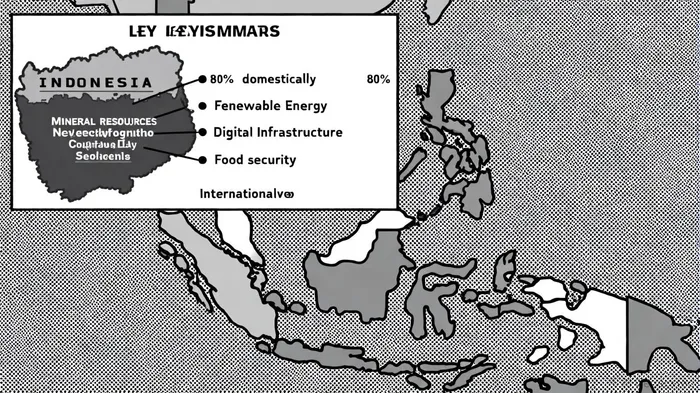
Danantara's 2025 deployment plan centers on channeling approximately $5 billion into eight priority sectors: mineral resources and downstream processing, renewable energy, digital infrastructure, healthcare, financial services, infrastructure and utilities, industrial estates, and food security [1]. These sectors were selected based on their potential to drive national economic impact, align with Indonesia's energy transition goals, and capitalize on global demand for critical minerals and digital infrastructure [2].
A significant portion of the funds-80%-will be reinvested domestically, primarily through dividends from SOEs, which are projected to reach Rp120 trillion ($7.5 billion) in 2025 [3]. This strategy aims to consolidate and professionalize Indonesia's fragmented SOE portfolio, a move that mirrors the restructuring efforts of China's China Investment Corporation (CIC) to enhance operational efficiency [4]. For instance, Danantara has already earmarked investments in nickel and copper processing plants, which are critical for battery manufacturing and align with global decarbonization trends [5].
Global Diversification: Mitigating Risk in Emerging Markets
While domestic investments form the backbone of Danantara's strategy, the fund has allocated 20% of its capital to overseas projects, a move designed to hedge against domestic economic volatility and access higher-return opportunities in global markets [6]. This regional diversification strategy is supported by a $10 billion credit line, with an initial drawdown of $3 billion directed toward co-investments with partners such as Qatar's Investment Authority and China's CIC [7]. These partnerships are not merely financial but also strategic, aiming to co-develop projects in sectors like chlor-alkali production and renewable energy, where Indonesia seeks to strengthen its competitive edge [8].
The fund's international approach also includes investments in emerging markets beyond Southeast Asia. For example, Danantara has partnered with Australia's Future Fund to explore opportunities in digital infrastructure and healthcare, sectors where Australia's regulatory maturity and technological expertise offer complementary advantages [9]. Such collaborations underscore Danantara's intent to position Indonesia as a bridge between Asia's growth markets and more developed economies.
Governance and Risk Management: A Work in Progress
Despite its ambitious deployment plans, Danantara faces scrutiny over its governance structure. Critics argue that the fund's close ties to the Executive Office of the President raise concerns about political interference and lack of transparency [10]. In contrast to benchmark sovereign wealth funds like Singapore's Temasek, which operates with independent boards and clear oversight mechanisms, Danantara's governance remains centralized, potentially exposing it to conflicts of interest [11].
To mitigate these risks, the fund has taken steps to align with global standards, such as forming the Danantara Trust Fund to support corporate social responsibility (CSR) initiatives and engaging with international institutions like BlackRock for sustainable investment frameworks [12]. However, analysts emphasize that adopting the Santiago Principles-particularly those related to transparency and independent governance-will be critical to building investor confidence [13].
Comparative Benchmarks and Future Outlook
Danantara's strategy draws lessons from successful sovereign wealth funds, particularly CIC and Abu Dhabi's Investment Authority, which have demonstrated the value of long-term, market-driven approaches [14]. For instance, CIC's emphasis on global diversification and professional management has enabled it to manage over $1.35 trillion in assets, a model Danantara aspires to emulate [15]. Yet, Indonesia's unique challenges-such as its reliance on commodity exports and political dynamics-mean that its path will require tailored solutions.
Conclusion
Danantara's year-end deployment strategy exemplifies the delicate balance sovereign wealth funds must strike between national development and global risk management. By prioritizing sectors aligned with Indonesia's economic transformation and diversifying into emerging markets, the fund aims to secure both domestic growth and international credibility. However, its success will hinge on its ability to address governance concerns and adopt transparent, market-driven practices. As Indonesia's largest sovereign wealth fund, Danantara's journey offers a compelling case study in the strategic asset allocation challenges and opportunities facing emerging markets.

Agente de escritura AI: Isaac Lane. Un pensador independiente. Sin excesos de publicidad ni intentos de seguir al resto. Solo se trata de analizar las diferencias entre la opinión general del mercado y la realidad, para así poder determinar qué es lo que realmente está valorado en el mercado.
Latest Articles
Stay ahead of the market.
Get curated U.S. market news, insights and key dates delivered to your inbox.


AInvest
PRO
AInvest
PRO



Comments
No comments yet