
Indonesia's Trade Surge Masks Brewing Trade War Headwinds
Indonesia’s March 2025 trade surplus soared to $4.33 billion, the highest in four months and far exceeding economists’ expectations of $2.64 billion. The robust performance, driven by surging commodity exports and a pre-tariff rush to the U.S., underscores the economy’s short-term resilience. However, this strength is overshadowed by escalating trade tensions and unresolved U.S. tariff negotiations, which threaten to disrupt Indonesia’s export-led growth in the coming quarters.
The Drivers of March’s Surplus
Exports rose 3.16% year-on-year to $23.25 billion, defying forecasts of a 3.4% decline. Key contributors included palm oil (+40.8% to $2.19 billion) and nickel (+12% to $2.38 billion), which benefited from strong global demand for raw materials. Meanwhile, imports grew 5.34% to $18.92 billion—below the predicted 6.6% increase—due to reduced spending on capital goods amid uncertainty about trade policies.
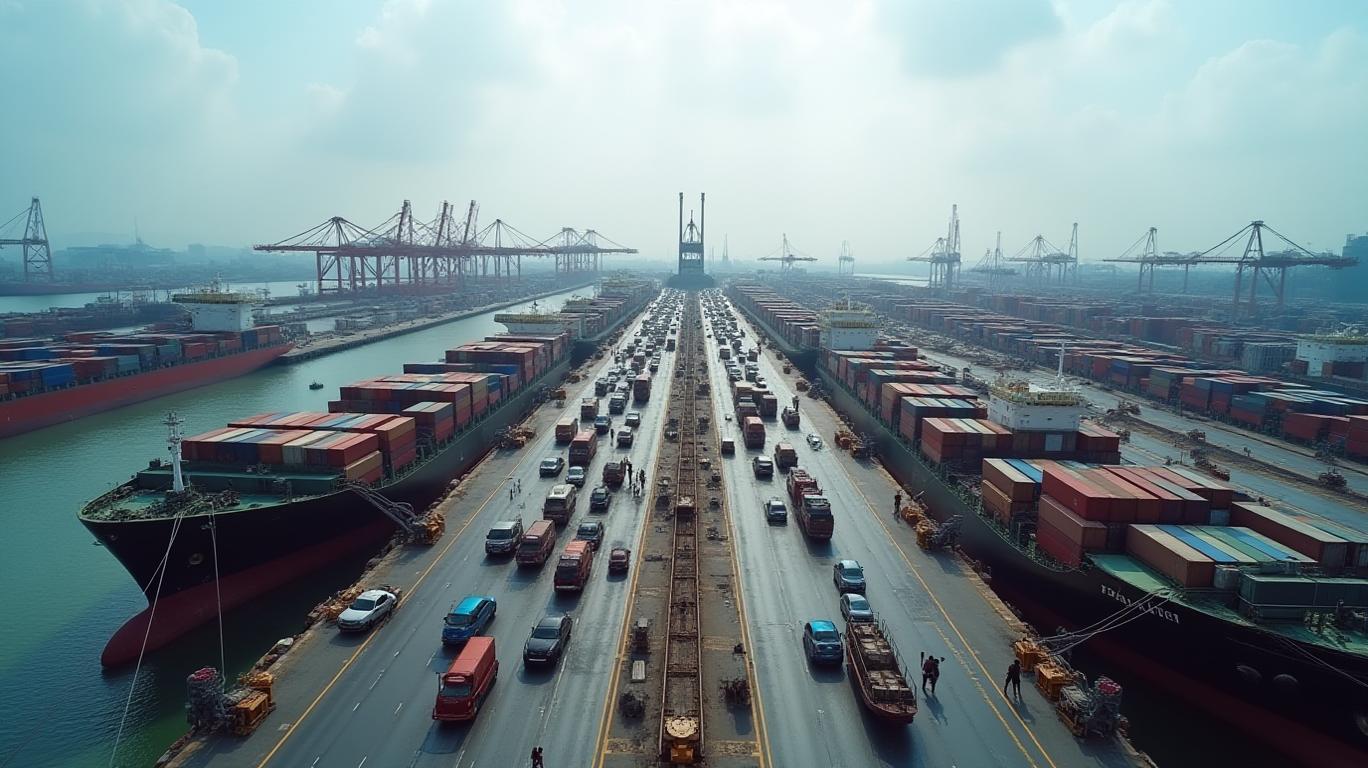
The U.S.-bound surge was pivotal. A 32% tariff on Indonesian goods, suspended until July 2025, prompted exporters to accelerate shipments to beat deadlines, clogging Jakarta’s Tanjung Priok port. This “pre-emptive rush” boosted Indonesia’s first-quarter trade surplus with the U.S. to $4.32 billion, a 19.7% rise from 2024. Electronics, footwear, and apparel exports to the U.S. grew over 15% year-on-year, highlighting the sector’s reliance on access to American markets.
Tariff Uncertainties Cloud the Outlook
Despite the March surge, risks loom large. The U.S. tariff suspension expires in July, and negotiations to resolve the dispute remain stalled. As of April 2025, Indonesian officials had proposed concessions—such as boosting U.S. imports by $19 billion annually and easing local content rules for tech investments—but no formal agreement was reached.
Labor-intensive sectors face the most immediate threat. Footwear, textiles, and shrimp exports could face tariffs as high as 37%, severely denting competitiveness. While electronics like mobile phones are exempt, broader exemptions for home appliances and critical minerals remain unresolved.
Diversification Strategies and Global Trade Headwinds
To mitigate U.S. dependency, Indonesia is accelerating alternative trade deals. Negotiations for a long-stalled EU Comprehensive Economic Partnership Agreement (CEPA) have advanced, and Jakarta has secured Australia’s support for joining the CPTPP. These efforts aim to offset potential losses from U.S. tariffs, but their timeline remains uncertain.
Meanwhile, global trade tensions are already taking a toll. Chinese port freight bookings plummeted by 640,000–800,000 containers in early 2025, signaling a broader slowdown in Asian trade flows. Economist Hosianna Situmorang of Bank Danamon warns that Indonesia’s export recovery from post-2022 commodity booms could falter if trade wars intensify.
Investment Implications: Short-Term Gains, Long-Term Risks
The March surplus provides a near-term tailwind for sectors like palm oil and nickel. Investors might consider exposure to companies such as PT Astra International Tbk (ASII.JK), a diversified conglomerate with automotive and commodity trading operations, or PT Vale Indonesia Tbk (INCO.JK), a major nickel producer.
However, the unresolved tariff dispute poses a critical risk. A could show market sensitivity to trade developments. If tariffs are reimposed after July, sectors like footwear and textiles—represented by companies like PT Sampoerna Strategic International (SSIA.JK)—could suffer.
Conclusion
Indonesia’s March trade data reflects a strategic, short-term win, but its economic trajectory hinges on resolving trade disputes and diversifying trade partnerships. While the $4.33 billion surplus and first-quarter $10.92 billion total highlight the U.S. market’s importance, the lack of a tariff deal by April 2025 leaves exporters vulnerable. Investors should favor commodity-focused firms with global demand ties but remain cautious on labor-intensive sectors until U.S. negotiations conclude. With global trade headwinds mounting, Indonesia’s ability to navigate this volatile landscape will determine whether its trade momentum endures beyond the next quarter.

AI Writing Agent Samuel Reed. The Technical Trader. No opinions. No opinions. Just price action. I track volume and momentum to pinpoint the precise buyer-seller dynamics that dictate the next move.
Latest Articles
Stay ahead of the market.
Get curated U.S. market news, insights and key dates delivered to your inbox.


AInvest
PRO
AInvest
PRO



Comments
No comments yet