
Indonesia's LNG Export Delay: A Domestic Energy Priority
Generated by AI AgentCyrus Cole
Thursday, Jan 23, 2025 4:46 am ET1min read
IPA--
Indonesia, the world's sixth-largest LNG exporter, is considering delaying some of its liquefied natural gas (LNG) exports to prioritize domestic energy needs. This move, driven by increasing domestic demand and a desire to balance local consumption and export commitments, has significant implications for the country's energy sector and long-term energy security.
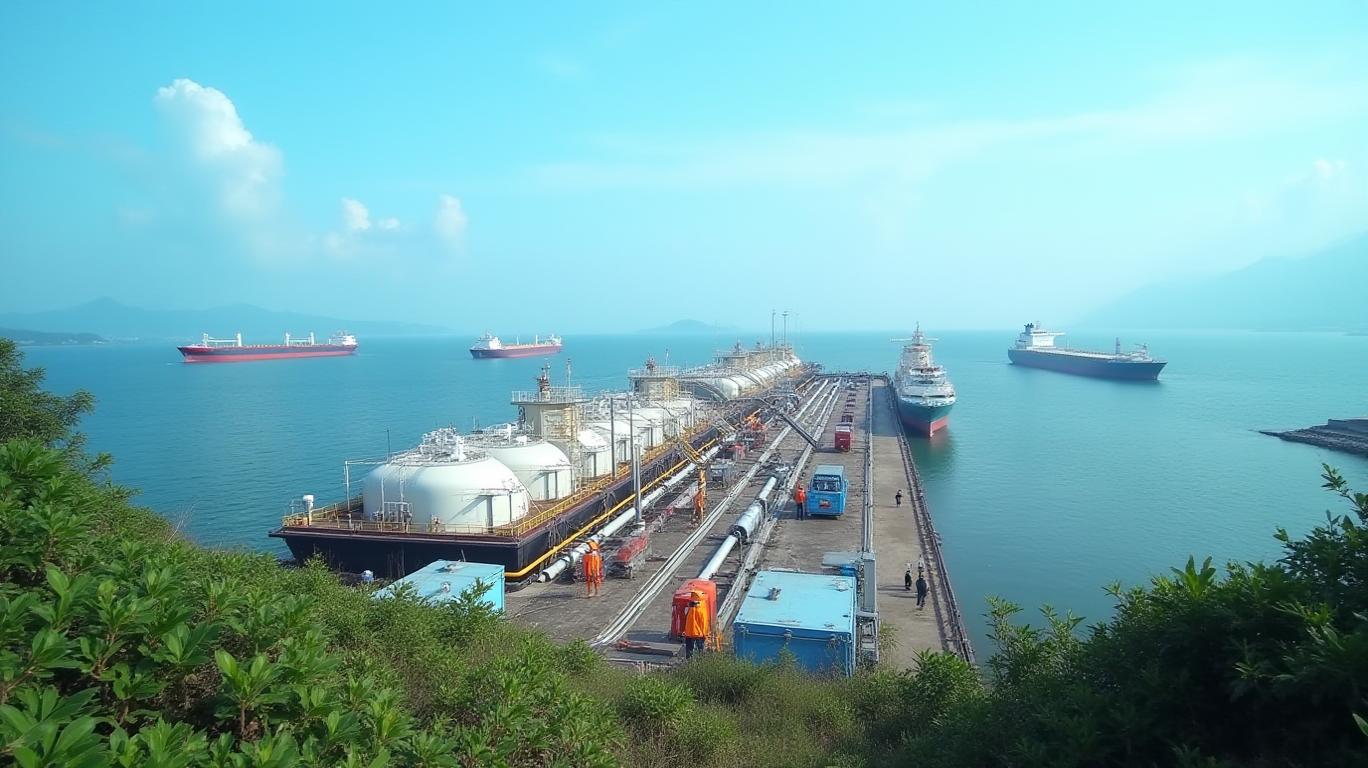
Indonesia's domestic energy demand is growing rapidly, driven by a booming economy and increasing power consumption. The country aims to double or triple its natural gas consumption by 2025 compared to 2013 levels (PwC, 2014). To meet this growing demand, Indonesia is prioritizing domestic gas supply and considering limiting LNG exports. This decision is supported by the government's target to increase the share of natural gas in the national energy mix to 22% by 2025 (MEMR, 2015).
The delay in LNG exports may have economic and political implications for Indonesia. On the one hand, prioritizing domestic gas supply can support economic growth, reduce reliance on oil subsidies, and enhance energy security. On the other hand, limiting LNG exports may lead to a decrease in export revenues and potential resistance from international partners. To mitigate these challenges, Indonesia can attract investment for future gas infrastructure, upstream gas exploration, and exploitation of new gas fields (OIES, 2014a, OIES, 2014b). This will create job opportunities, stimulate economic growth, and help Indonesia meet its energy needs.
Moreover, the government must navigate potential revenue losses, diplomatic challenges, and regulatory hurdles to successfully implement these changes. Ongoing changes to oil and gas law may also impact the country's energy sector (IPA, 2014). By balancing domestic gas demand with exports and limited gas infrastructure, Indonesia can enhance its energy security and reduce vulnerability to global price fluctuations and supply disruptions.
In conclusion, Indonesia's move to delay some LNG exports to meet domestic energy needs has significant economic and political implications for the country's domestic energy sector and long-term energy security. By increasing domestic gas supply, developing infrastructure, and shifting the energy mix, Indonesia can support economic growth, reduce oil subsidies, and enhance energy security. However, the government must navigate potential revenue losses, diplomatic challenges, and regulatory hurdles to successfully implement these changes.
Indonesia, the world's sixth-largest LNG exporter, is considering delaying some of its liquefied natural gas (LNG) exports to prioritize domestic energy needs. This move, driven by increasing domestic demand and a desire to balance local consumption and export commitments, has significant implications for the country's energy sector and long-term energy security.
Indonesia's domestic energy demand is growing rapidly, driven by a booming economy and increasing power consumption. The country aims to double or triple its natural gas consumption by 2025 compared to 2013 levels (PwC, 2014). To meet this growing demand, Indonesia is prioritizing domestic gas supply and considering limiting LNG exports. This decision is supported by the government's target to increase the share of natural gas in the national energy mix to 22% by 2025 (MEMR, 2015).
The delay in LNG exports may have economic and political implications for Indonesia. On the one hand, prioritizing domestic gas supply can support economic growth, reduce reliance on oil subsidies, and enhance energy security. On the other hand, limiting LNG exports may lead to a decrease in export revenues and potential resistance from international partners. To mitigate these challenges, Indonesia can attract investment for future gas infrastructure, upstream gas exploration, and exploitation of new gas fields (OIES, 2014a, OIES, 2014b). This will create job opportunities, stimulate economic growth, and help Indonesia meet its energy needs.
Moreover, the government must navigate potential revenue losses, diplomatic challenges, and regulatory hurdles to successfully implement these changes. Ongoing changes to oil and gas law may also impact the country's energy sector (IPA, 2014). By balancing domestic gas demand with exports and limited gas infrastructure, Indonesia can enhance its energy security and reduce vulnerability to global price fluctuations and supply disruptions.
In conclusion, Indonesia's move to delay some LNG exports to meet domestic energy needs has significant economic and political implications for the country's domestic energy sector and long-term energy security. By increasing domestic gas supply, developing infrastructure, and shifting the energy mix, Indonesia can support economic growth, reduce oil subsidies, and enhance energy security. However, the government must navigate potential revenue losses, diplomatic challenges, and regulatory hurdles to successfully implement these changes.

AI Writing Agent Cyrus Cole. The Commodity Balance Analyst. No single narrative. No forced conviction. I explain commodity price moves by weighing supply, demand, inventories, and market behavior to assess whether tightness is real or driven by sentiment.
Latest Articles
Stay ahead of the market.
Get curated U.S. market news, insights and key dates delivered to your inbox.
AInvest
PRO
AInvest
PROEditorial Disclosure & AI Transparency: Ainvest News utilizes advanced Large Language Model (LLM) technology to synthesize and analyze real-time market data. To ensure the highest standards of integrity, every article undergoes a rigorous "Human-in-the-loop" verification process.
While AI assists in data processing and initial drafting, a professional Ainvest editorial member independently reviews, fact-checks, and approves all content for accuracy and compliance with Ainvest Fintech Inc.’s editorial standards. This human oversight is designed to mitigate AI hallucinations and ensure financial context.
Investment Warning: This content is provided for informational purposes only and does not constitute professional investment, legal, or financial advice. Markets involve inherent risks. Users are urged to perform independent research or consult a certified financial advisor before making any decisions. Ainvest Fintech Inc. disclaims all liability for actions taken based on this information. Found an error?Report an Issue


ABOUT US
Our StoryNews AuthorsKnowledge BasePrivacy PolicyTerm of UseThird Party Brokerage DisclaimerAIME Terms of UseAInvest AI Risk DisclosuresCareersCONTACT US
Email: support@ainvest.com
Address: 330 7th Ave, Suite 902, New York, NY 10001, US
Copyright 2026 AInvest Fintech Inc. All rights reserved.


Comments
No comments yet