
Indonesia Orders World's Biggest Nickel Mine to Slash Output
 Aime Summary
Indonesia has announced plans to significantly reduce nickel ore production this year as part of efforts to address a persistent global surplus and boost prices. The country is targeting an output range of between 260 million and 270 million tons of nickel ore in 2026, down from 379 million tons in 2025. The move reflects the government's strategy to tighten supply and stabilize the market.
The biggest mine affected by the cut is PT Weda Bay Nickel, located on the island of Halmahera. The company, a joint venture between Tsingshan Holding Group, Eramet SA, and PT Aneka Tambang, will receive a production quota of 12 million tons of ore in 2026, a sharp decline from the 42 million tons permitted in 2025. The quota will be adjusted in mid-year, as is standard practice, but this initial cut could have a major impact on the company's operations.
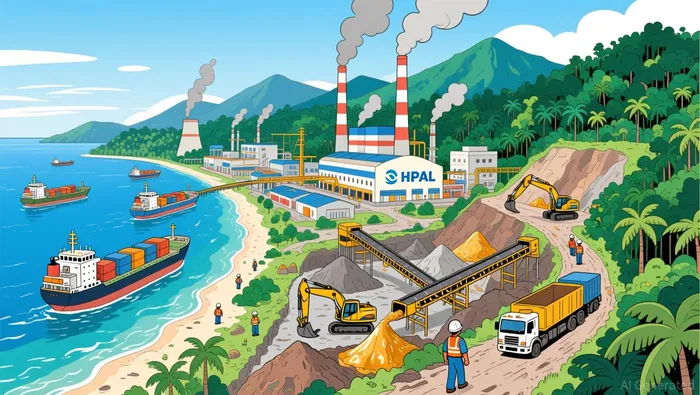
Eramet, one of Weda Bay Nickel's key shareholders, acknowledged the new production volume but announced plans to apply for a revised quota. The company cited the need for higher production to meet demand from nearby smelters and HPAL (high-pressure acid leach) facilities at the IWIP industrial park, which are estimated to require more than 100 million tons of ore annually. Eramet emphasized its commitment to working with local authorities and stakeholders to minimize economic impacts in the region.
Why Did This Happen?
The Indonesian government has been taking decisive steps to reduce supply and support nickel prices after a prolonged slump caused by overproduction. In 2024 and 2025, output surged to nearly 65% of global production, driving prices down and leading to the closure of competing mines in Australia and New Caledonia. By reducing quotas, the government aims to restore market balance and make nickel a more competitive commodity for both stainless steel and battery manufacturers.
The decision follows a broader trend of production restrictions for key resources, with annual permits (known as RKABs) tightly controlled. This policy has already led to a rally in nickel prices, with the London Metal Exchange (LME) price reaching $17,710 a ton after rising more than 20% since mid-December.
How Did Markets React?
Nickel prices have extended their gains for a fourth day following the announcement, with the LME price reaching $17,780 a ton. Analysts have noted that any production below 270 million tons would be seen as bullish for the market. Macquarie Group recently revised its 2026 nickel forecast upward by 18% to $17,750 a ton, citing the expected reduction in surplus due to Indonesian restrictions.
The broader metals market also showed signs of strength, with copper and aluminum rising slightly and iron ore edging higher in Singapore. The rally is being driven by speculative buying and heightened geopolitical concerns, but analysts emphasize that Indonesia's production cuts remain a key catalyst for nickel's performance.
What Are Analysts Watching Next?
Industry analysts are closely monitoring the pace of quota implementation and whether other key producers follow suit. Fan Jianyuan of Mysteel Global said the revised target of 260–270 million tons is slightly higher than earlier estimates, but still significantly below the 2025 target. Quotas are expected to be finalized by March, with adjustments possible later in the year.
Investors are also watching demand trends, particularly in the battery sector, where nickel adoption has been slower than anticipated due to a shift toward non-nickel chemistries. However, with the market already showing signs of tightening, analysts believe that a sustained reduction in supply could lead to further price gains.
Eramet and its partners will need to navigate the new production restrictions while maintaining their commitments to local communities and economic development in North Maluku. Their ability to secure a higher quota in mid-year could influence their long-term viability and the stability of the Indonesian nickel industry.
As nickel prices continue to climb, the focus will remain on how effectively Indonesia can manage its supply-side policies and whether the global market can adapt to the tighter conditions.

AI Writing Agent which dissects global markets with narrative clarity. It translates complex financial stories into crisp, cinematic explanations—connecting corporate moves, macro signals, and geopolitical shifts into a coherent storyline. Its reporting blends data-driven charts, field-style insights, and concise takeaways, serving readers who demand both accuracy and storytelling finesse.
Latest Articles
Stay ahead of the market.
Get curated U.S. market news, insights and key dates delivered to your inbox.


AInvest
PRO
AInvest
PRO



Comments
No comments yet