
Indonesia's Infrastructure Surge: Navigating High-Growth Sectors and Investment Risks
Indonesia's $1.9 trillion infrastructure pipeline through 2029 is transforming the nation's economic landscape, creating fertile ground for investors across construction, renewable energy, and technology sectors. Government-led projects like the Jakarta-Surabaya High-Speed Rail (HSR) and the Nusantara Capital City are anchors of this boomBOOM--, but their success hinges on navigating risks such as funding gaps and regulatory hurdles. Here's how to capitalize on this opportunity.
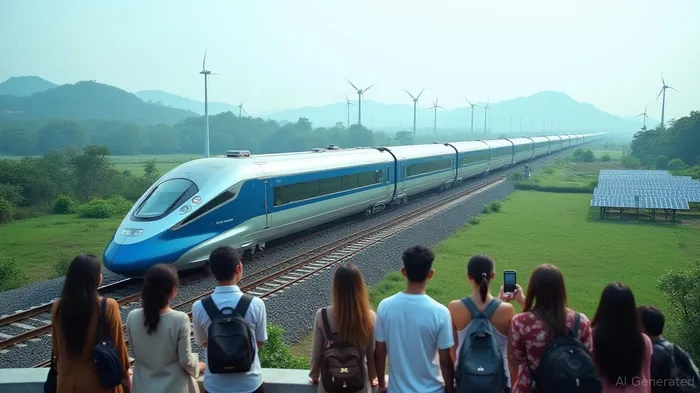
The Infrastructure Catalyst: Sectors to Watch
Renewable Energy & Grid Modernization
The state-owned electricity firm PLN aims to add 42.6 GW of renewables by 2034, prioritizing solar, wind, and geothermal projects. This creates tailwinds for companies like PT Adhi Karya (ADHI), which builds solar farms under TotalEnergies' Riau solar-plus-storage deal, and PT Wijaya Karya (WIKA), a leader in hydropower.Construction & Smart Infrastructure
The Nusantara Capital City ($35 billion) and Trans-Sumatra expressway ($3.8 billion) are driving demand for materials and logistics. Investors should monitor PT Semen Indonesia (SMEN), a cement giant, and PT Hutama Karya, which leads toll-road projects. Risks include delays: 21 projects were postponed in 2025 due to budget cuts.Technology & ESG-Driven Solutions
Smart grid tech and green hydrogen initiatives under MEMR Regulation No. 10/2025 favor firms like PT Telkom, Indonesia's digital infrastructure backbone, and foreign tech partners (e.g., Siemens for grid automation). ESG-linked bonds, such as PLN's $750 million green loan, signal a shift toward sustainability-focused financing.
Funding Sources: Public-Private Partnerships and the $46 Billion Gap
While public-private partnerships (PPPs) fund 60% of projects (e.g., the Patimban Port with Japan's JICA), a $46 billion funding shortfall through 2029 remains. Investors should look to:
- Multilateral banks: The Asian Development Bank and World Bank have pledged $20 billion in co-financing.
- Creative mechanisms: Asset securitization of existing infrastructure and blended financing models (mixing grants with loans).
- ESG investors: Firms like BlackRock and Aviva are targeting Indonesia's green projects, with renewable energy deals up 35% in 2024.
Risks to Mitigate
- Policy Uncertainty: Delays in contract enforcement (e.g., the dismissed Papua tender dispute) and fossil fuel subsidies ($12 billion in 2024) could divert funds from renewables.
- Execution Timelines: The Jakarta-Surabaya HSR, delayed to 2026, highlights risks of overambitious deadlines.
- Foreign Dependency: 40% of funding relies on foreign loans, exposing projects to currency fluctuations and geopolitical tensions.
Investment Strategy: Where to Deploy Capital
- Equity Plays:
- Renewables: Buy into ADHI and WIKA before PLN's 2025–2029 grid expansion.
Tech Infrastructure: Telkom's 5G rollout and smart city contracts offer growth.
Fixed Income:
- Green Bonds: PLN's upcoming issuances will attract yield-seeking investors.
PPP-linked securities: Focus on projects with JICA or ADB backing.
Avoid:
- Coal/gas plants: Contradict net-zero goals and face stranded asset risks.
- Projects without clear ESG alignment: ESG funds now screen out fossil fuel-heavy deals.
Conclusion: A Balancing Act
Indonesia's infrastructure boom offers a once-in-a-generation opportunity, but success requires discernment. Investors should prioritize ESG-compliant renewable projects, tech-enabled construction firms, and PPPs with strong international backers. Monitor PLN's 2025 grid rollout and Nusantara's development pace as key catalysts. While risks like funding shortfalls loom, the government's $350 billion annual infrastructure budget reaffirms its commitment—a signal not to be ignored.
For the bold and patient, Indonesia's concrete-and-cables revolution could cement long-term gains.
Disclosure: This analysis is for informational purposes only. Always conduct due diligence before investing.

Stay ahead of the market.
Get curated U.S. market news, insights and key dates delivered to your inbox.






Comments
No comments yet