
Indonesia Exports Plunge, Raising Questions About Global Demand
 Aime Summary
Indonesia's export growth has long been a barometer for the country's integration into global supply chains and manufacturing activity. The recent sharp slowdown raises questions about the sustainability of the nation's trade surplus and the extent to which it remains insulated from the broader global slowdown. The export sector, which has historically contributed to Indonesia's economic growth, is now showing signs of strain, particularly as manufacturing activity in key export regions like electronics and textiles faces headwinds. This could have implications for the country's central bank, the Bank of Indonesia, as it weighs the trade-off between domestic inflation and external demand.
What Does Indonesia's Export Growth Signal About Global Demand?
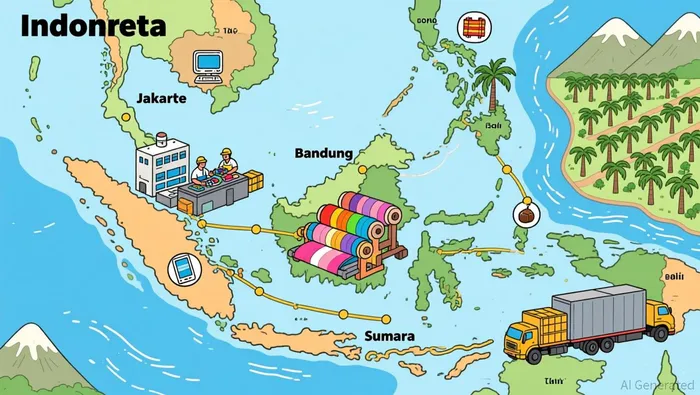
Indonesia's export figures often serve as a leading indicator of global manufacturing and consumption trends. A slowdown in exports may reflect weaker demand from key markets such as the United States, the European Union, and China—markets that together account for a significant portion of Indonesia's export basket. In particular, the export of goods like electronics, textiles, and palm oil—sectors that are highly sensitive to global demand—has shown signs of softening.
The global economic backdrop is also playing a role. As the U.S. and Eurozone continue to adjust to tighter monetary policy, global trade volumes have moderated. This has created a drag on emerging market economies that rely heavily on external demand to drive growth. Indonesia's export performance is thus a microcosm of this broader trend, and may signal a more cautious outlook for global trade in the near term.
Why Are Investors Watching Indonesia's Export Data Now?
Investors are paying close attention to Indonesia's export data for two main reasons: its implications for global trade and its potential influence on central bank policy. First, as an emerging market economy with a large trade surplus, Indonesia's export growth is a critical input for global trade dynamics. A continued slowdown may signal a broader deceleration in global trade and manufacturing, which could weigh on equity markets and commodity prices.
Second, the data could influence the Bank of Indonesia's monetary policy stance. While the central bank has been cautious in its response to inflationary pressures, a weaker external outlook may provide room for a more accommodative approach. This could, in turn, affect the rupiah and Indonesia's sovereign debt market, making the data relevant to both regional and global investors.
In the near term, the key will be to monitor whether the slowdown in exports is a temporary correction or a more structural shift. Upcoming data on imports and the trade balance will be particularly informative. If the trade surplus remains resilient despite weaker export growth, it may suggest that the domestic economy is absorbing some of the external slack. On the other hand, a tightening trade balance could signal a broader slowdown in economic activity.
What comes next will also depend on how global trade trends evolve in the coming months. With the U.S. and Eurozone still adjusting to higher interest rates and China's recovery remaining uneven, the outlook for global trade remains uncertain. For Indonesia, the challenge will be to maintain its competitive position in key markets while adapting to a more challenging global environment according to economic analysis.

Stay ahead of the market.
Get curated U.S. market news, insights and key dates delivered to your inbox.


AInvest
PRO
AInvest
PRO



Comments
No comments yet