
IndiGo's Strategic Global Expansion and MRO Partnership: A Catalyst for Aviation Sector Growth
 Aime Summary
India's aviation sector is on the cusp of a transformative phase, driven by IndiGo's aggressive international expansion and operational efficiency initiatives. As the country's largest low-cost carrier, IndiGo's strategic moves are not only reshaping its own trajectory but also creating a ripple effect that could unlock long-term value for the broader aviation industry. For investors, the question is no longer if to invest in Indian aviation, but how to capitalize on the accelerating momentum.
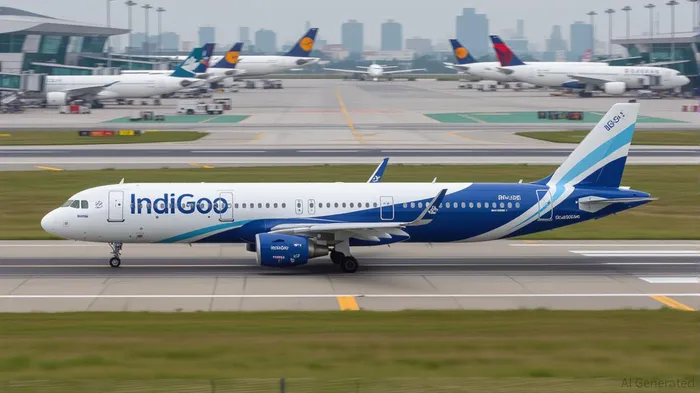
The Globalization Play: From Domestic Dominance to International Powerhouse
IndiGo's FY 2024–25 annual report outlines a bold vision: increasing international capacity from 28% to 40% by 2030. This is not a mere incremental shift—it's a strategic repositioning. By introducing long-haul aircraft like the A321XLR and A350-900, and leveraging leased BoeingBA-- 787s for routes to Manchester and Amsterdam, IndiGo is transitioning from a domestic-centric model to a global player.
The airline's international footprint is expanding at an unprecedented pace. In FY 2025 alone, it plans to add 10 new destinations, including London, Athens, and Central Asian hubs. These routes are not just about volume—they're about capturing high-growth markets and diversifying revenue streams. For instance, the Manchester route, IndiGo's first long-haul service, opens a direct link to the UK's $1.5 trillion aviation market, a sector expected to grow by 4% annually over the next decade.
Investment Implication: IndiGo's international expansion reduces its reliance on the domestic market, which, while robust, is more susceptible to cyclical demand fluctuations. By diversifying geographically, the airline is insulating its earnings from macroeconomic volatility in India—a critical consideration for long-term investors.
Operational Efficiency: The MRO Strategy as a Game Changer
Airlines are only as strong as their maintenance infrastructure. IndiGo's MRO partnerships and in-house investments are a masterclass in balancing cost efficiency with scalability.
The airline's partnership with Lufthansa Technik is a standout move. By outsourcing base maintenance to Lufthansa's facilities in Bulgaria and the Philippines, and single-component maintenance in Germany, IndiGo is leveraging global expertise to ensure fleet readiness. This partnership is critical for managing the technical complexities of its rapidly growing fleet, which adds nearly one aircraft per week.
Simultaneously, IndiGo is building a 31-acre MRO hub in Bengaluru, a project expected to reduce turnaround times by 20–30% and cut maintenance costs by 8–10%. This dual strategy—outsourcing for flexibility and in-sourcing for control—ensures the airline can maintain its operational edge even as it scales.
Investment Implication: Efficient maintenance is a silent driver of profitability. By minimizing downtime and optimizing costs, IndiGo's MRO strategy directly enhances its margin resilience. For investors, this means the airline is better positioned to sustain its low-cost model in a competitive sector.
The Sector-Wide Impact: A Boon for Indian Aviation
IndiGo's expansion isn't just about its own success—it's a catalyst for the entire Indian aviation ecosystem.
- Infrastructure Development: The Bengaluru MRO facility is a boon for India's aviation infrastructure. As the country's airports and maintenance hubs modernize, ancillary industries—ranging from parts suppliers to logistics providers—stand to benefit.
- Talent and Ecosystem Growth: IndiGo's global ambitions will require a skilled workforce, from pilots to ground staff, creating a multiplier effect for employment and training institutions.
- Competitive Pressure and Innovation: IndiGo's low-cost model and efficiency benchmarks are forcing rivals to innovate, driving down costs and improving service quality across the sector.
Financial Resilience: A Strong Foundation for Growth
IndiGo's FY 2025 results underscore its financial strength. With $10 billion in annual revenue and 118 million passengers, the airline is demonstrating that scale and profitability can coexist. Its fleet order book, including 60 A350-900s and A321XLRs, is a vote of confidence in its long-term strategy.
Risks and Mitigants
No investment is without risk. Fuel prices, regulatory shifts, and geopolitical tensions could impact IndiGo's margins. However, the airline's hedging strategies, diversified route network, and cost discipline mitigate these risks. For example, its MRO partnerships reduce exposure to supply chain bottlenecks, while its international expansion spreads demand risk across geographies.
The Investment Thesis
For long-term investors, the Indian aviation sector offers a compelling case:
- IndiGo as a bellwether: Its success signals a healthy sector. A rising tide lifts all boats.
- Infrastructure tailwinds: India's $100 billion aviation infrastructure pipeline will benefit from IndiGo's expansion.
- Demographic tailwinds: With 1.4 billion people and rising middle-class incomes, India's air travel demand is set to double by 2030.
Conclusion: A Sector Poised for Takeoff
IndiGo's strategic global expansion and MRO partnerships are more than operational tweaks—they're a masterplan for sector-wide transformation. For investors, the message is clear: the Indian aviation sector is no longer a speculative bet but a high-conviction opportunity. By aligning with IndiGo's trajectory, investors can tap into a growth story that spans airlines, infrastructure, and ancillary industries.
The time to act is now. As IndiGo soars into new markets, the entire sector is taking flight with it.

Delivering real-time insights and analysis on emerging financial trends and market movements.
Latest Articles
Stay ahead of the market.
Get curated U.S. market news, insights and key dates delivered to your inbox.
AInvest
PRO
AInvest
PRO



Comments
No comments yet