
IndiGo's Strategic Global Expansion and MRO Investment: A Blueprint for Sustainable Growth in the Aviation Sector
 Aime Summary
In the rapidly evolving aviation industry, few stories are as compelling as IndiGo's transformation from a domestic low-cost carrier to a global aviation powerhouse. With its aggressive international expansion and strategic investments in maintenance, repair, and overhaul (MRO) infrastructure, IndiGo is redefining operational efficiency while positioning itself to capitalize on high-growth markets. For investors, the airline's 2025 initiatives offer a rare combination of scalability, cost discipline, and long-term vision.
The Global Expansion Playbook: Precision and Timing
IndiGo's international route additions in 2025 are not arbitrary—they are meticulously designed to exploit high-growth corridors. The airline's non-stop services to Manchester and Amsterdam, for instance, tap into the India-Europe route, a segment projected to grow at 15% annually. By leveraging BoeingBA-- 787-9s on wet-lease from Norse Atlantic Airways, IndiGo mitigates capital expenditure while maintaining flexibility. Meanwhile, the deployment of Airbus A321XLRs to Athens and other Central Asian destinations like Almaty and Tashkent underscores its ability to serve long-haul markets with narrow-body aircraft, reducing reliance on costly wide-body aircraft for mid-range routes.
The strategic value of these moves lies in their alignment with global travel trends. As India's middle class expands and outbound tourism surges, IndiGo is capturing demand in underserved regions. For example, its new flights to Siem Reap and Hanoi in Southeast Asia cater to the growing interest in cultural tourism, while routes to London and Copenhagen during peak winter seasons align with business and leisure travel patterns. By 2026, the airline's international destinations are expected to exceed 50, a 20% increase from its current footprint, with international capacity set to rise from 30% to 40% by 2030.
MRO Investments: The Unsung Driver of Cost Leadership
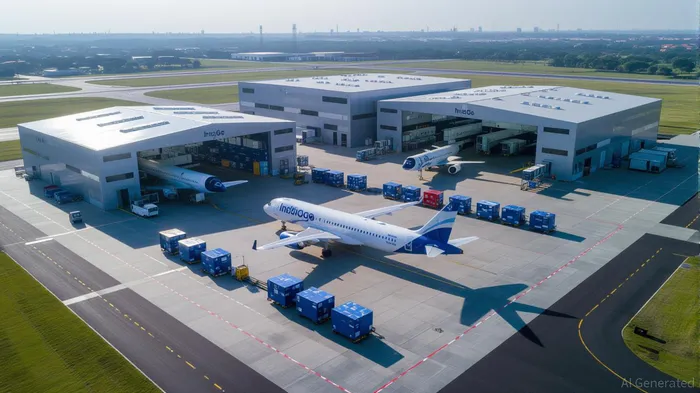
While route expansion grabs headlines, IndiGo's MRO strategy is the backbone of its operational efficiency. The airline's 31-acre Bengaluru MRO facility, developed in partnership with Bangalore International Airport Limited (BIAL), is a game-changer. Capable of servicing both narrow-body and wide-body aircraft, this facility is expected to cut turnaround times and reduce operational costs by 8–10%. For a carrier adding one aircraft per week to its 400-plane fleet, such efficiency is critical to maintaining its low-cost model.
The partnership with Lufthansa Technik further strengthens this foundation. By outsourcing base maintenance to global hubs in Sofia, Bulgaria, and the Philippines, and single-component maintenance to Hamburg, IndiGo ensures access to world-class technical expertise without overburdening its domestic infrastructure. This hybrid approach—combining localized and international MRO capabilities—insulates the airline from supply chain disruptions and allows it to scale seamlessly as it introduces new aircraft like the A350-900.
Financial Resilience and Strategic Partnerships
IndiGo's FY25 financials—INR 841 billion in revenue and a 9% net margin—demonstrate its ability to grow without sacrificing profitability. This is no small feat in an industry plagued by fuel volatility and economic cycles. The airline's damp leasing strategies and strategic OEM agreements further bolster its balance sheet, mitigating risks associated with aircraft acquisitions and maintenance.
Partnerships with Delta Air LinesDAL--, Air France-KLM, and Virgin Atlantic are equally significant. These alliances enable IndiGo to tap into transatlantic and transpacific routes without the need for expensive interline agreements. Additionally, codeshare partnerships with Jetstar and Garuda Indonesia create seamless connectivity to Australia, New Zealand, and Indonesia, enhancing the airline's global reach with minimal capital outlay.
Investment Implications: A High-Conviction Play
For investors, IndiGo's 2025 strategy represents a high-conviction opportunity. The airline's ability to balance aggressive expansion with cost discipline is rare in the aviation sector. Its MRO investments ensure that operational efficiency keeps pace with fleet growth, while its international route network is poised to benefit from India's demographic dividend and global travel demand.
However, risks remain. Geopolitical tensions, such as the recent Pakistan airspace closure, can disrupt Central Asian routes. Similarly, fuel price volatility and interest rate movements could pressure margins. Yet, IndiGo's financial resilience—evidenced by its Q4 2025 profit of INR 30,675 million—and its proactive hedging strategies mitigate these concerns.
Conclusion: A Model for Sustainable Aviation Growth
IndiGo's dual focus on global expansion and MRO innovation sets a new benchmark for low-cost carriers. By investing in infrastructure, technology, and strategic partnerships, the airline is not just surviving in a competitive market—it's redefining the rules. For investors with a long-term horizon, IndiGo's journey offers a compelling case study in how operational efficiency and strategic foresight can drive sustainable growth. As the airline inches closer to its 2030 goal of becoming a global aviation leader, the rewards for early adopters could be substantial.

Delivering real-time insights and analysis on emerging financial trends and market movements.
Latest Articles
Stay ahead of the market.
Get curated U.S. market news, insights and key dates delivered to your inbox.
AInvest
PRO
AInvest
PRO



Comments
No comments yet