
IndiGo's Strategic A321neo and A321XLR Expansion: A Game Changer for India's Aviation Sector
 Aime Summary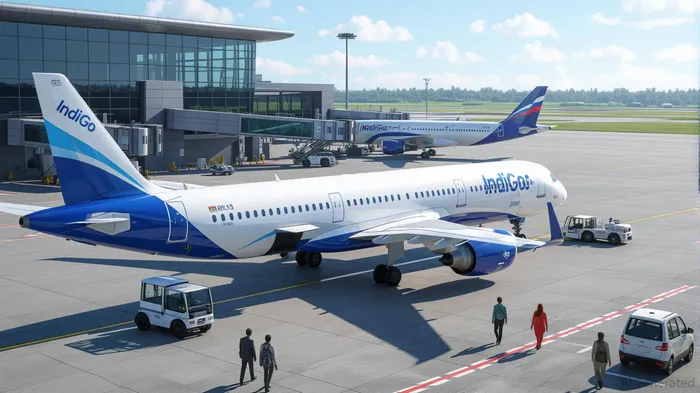
India's aviation sector is undergoing a seismic shift, driven by the aggressive expansion of IndiGo, the country's largest low-cost carrier. At the heart of this transformation lies IndiGo's strategic procurement of Airbus A321neo and A321XLR aircraft—a move that not only underscores its ambition to dominate domestic markets but also positions it as a formidable player in the global aviation landscape. This article evaluates the operational and financial viability of IndiGo's fleet modernization and international expansion, offering insights for investors navigating the post-pandemic recovery era.
Operational Viability: Fuel Efficiency and Fleet Modernization
IndiGo's fleet strategy is a masterclass in operational efficiency. By prioritizing the Airbus A320neo and A321neo families, the airline has slashed fuel consumption per available seat-kilometre (CASK) by 6.6% in Q4 FY2025, reducing it to INR 1.66. These aircraft, equipped with LEAP engines and aerodynamic enhancements, offer a 15% improvement in fuel efficiency compared to older models. This is critical in an industry where fuel costs account for up to 30% of operating expenses.
The A321XLR, with its 8,700 km range, further amplifies IndiGo's cost advantages. Unlike traditional wide-body aircraft, the XLR's narrow-body design reduces maintenance costs while enabling direct flights to destinations like London, Amsterdam, and Nairobi. For example, a Delhi-to-Amsterdam route previously requiring a wide-body BoeingBA-- 777 can now be operated with a single A321XLR, cutting fuel costs by up to 20% and improving profitability.
Financial Resilience: Post-Pandemic Recovery and Debt Management
IndiGo's financial health post-pandemic is a testament to its disciplined cost management. In FY2023, the airline reported a net profit of INR 72,584 crore (USD 873.5 million), the highest in Indian aviation history. This was driven by a 77.1% year-over-year revenue surge to INR 40,230 crore, fueled by robust demand in both passenger and cargo segments. Despite a debt-to-equity ratio of 2.2—higher than the industry average—IndiGo's EBITDAR margin reached 31.4% in Q4 FY2025, and its free cash reserves stood at INR 331,531 crore (USD 3.99 billion), providing ample liquidity for expansion.
The airline's debt is strategically managed, with a focus on long-term financing. Its interest coverage ratio of over 2.0 ensures it can service obligations even amid rising fuel prices. Analysts project a 15% CAGR in revenue over the next five years, supported by IndiGo's ability to scale capacity via a mix of owned and leased aircraft.
Strategic Expansion: Global Aspirations and Market Positioning
IndiGo's A321XLR fleet is a cornerstone of its global ambitions. By 2026, the airline plans to launch 14 new international destinations, including London (LHR), Manchester (MAN), and Seoul (ICN). These routes leverage India's geographic centrality, enabling IndiGo to serve 65% of the global population within 5–6 hours. Partnerships with Delta, Air France-KLM, and Virgin Atlantic further extend its reach through codeshare agreements, creating a virtual global network without the costs of hub-and-spoke infrastructure.
The A321XLR's role in this strategy is pivotal. For instance, a direct Delhi-to-Madrid route using the XLR could reduce airfares by 15–20% compared to connecting flights, making India a more attractive origin for European travelers. This price competitiveness aligns with IndiGo's low-cost model and could capture market share from legacy carriers like British Airways and Air France.
Risks and Mitigation
While IndiGo's expansion is compelling, risks persist. Fuel price volatility, regulatory hurdles in international markets, and intense competition from regional players like Vistara and SpiceJet could pressure margins. However, IndiGo's hedging strategies and fleet modernization—such as its order for 30 A350-900 wide-body aircraft—mitigate these risks. The A350's fuel efficiency and passenger comfort will further differentiate IndiGo on long-haul routes, ensuring profitability in a crowded market.
Investment Outlook
For investors, IndiGo represents a high-conviction opportunity in the post-pandemic aviation sector. Its strategic fleet orders, operational discipline, and international expansion plans position it to capitalize on India's growing middle class and the rebound in global travel demand. However, caution is warranted regarding its debt load. Investors should monitor IndiGo's liquidity ratios and fuel hedge coverage, which currently stand at 60% of expected needs for FY2026.
Conclusion
IndiGo's A321neo and A321XLR expansion is not merely a fleet upgrade—it is a calculated move to redefine India's role in global aviation. By combining fuel efficiency, operational agility, and strategic route planning, the airline is poised to outperform peers in both domestic and international markets. For investors with a medium-term horizon, IndiGo offers a compelling blend of growth and resilience, provided macroeconomic risks like fuel prices and interest rates remain manageable. As the airline prepares to deliver its first A321XLR in December 2025, the aviation sector—and investors—will be watching closely.

Delivering real-time insights and analysis on emerging financial trends and market movements.
Latest Articles
Stay ahead of the market.
Get curated U.S. market news, insights and key dates delivered to your inbox.


AInvest
PRO
AInvest
PRO



Comments
No comments yet