
IndiGo's Global Expansion and MRO Strategy: A Catalyst for Long-Term Airline Sector Growth
 Aime Summary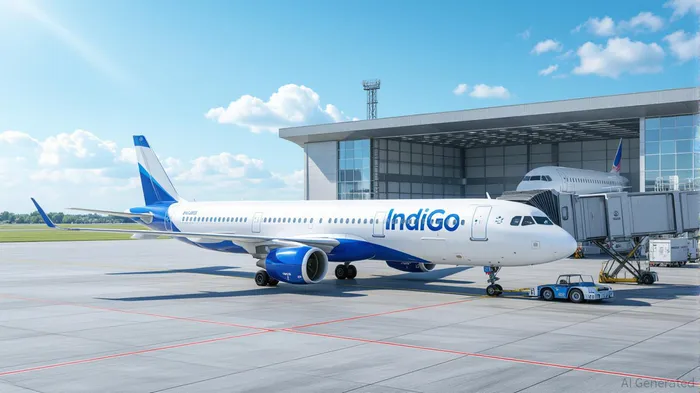
IndiGo, India's largest low-cost carrier, is reshaping the global aviation landscape with a dual-pronged strategy centered on its A321XLR fleet and in-house Maintenance, Repair, and Overhaul (MRO) capabilities. For investors in the aviation and aerospace sectors, these moves represent a compelling case study in operational discipline, fleet modernization, and cost optimization. As the airline transitions from a purely low-cost model to a hybrid operator with long-haul ambitions, its financial and operational decisions could serve as a blueprint for sustainable growth in an industry still grappling with post-pandemic recovery and inflationary pressures.
The A321XLR: A Strategic Leap in Fleet Modernization
IndiGo's order of 69 Airbus A321XLR aircraft—set to begin deliveries in late 2025—is a cornerstone of its international expansion. With a range of 8,700 kilometers, the A321XLR will enable nonstop flights to previously inaccessible destinations like Seoul, Athens, and Nairobi, bypassing the need for intermediate stops. This capability not only enhances passenger convenience but also positions IndiGo to capitalize on India's geographic centrality, where 65% of the global population lies within a 5–6-hour flight radius.
The financial implications of this order are significant. At an estimated list price of $142 million per unit (as of 2024), the 69 aircraft represent a capital expenditure of roughly $9.7 billion. However, IndiGo's disciplined approach to fleet planning mitigates risks. By prioritizing routes that balance range and passenger load—such as Delhi to Jeddah or Mumbai to Athens—the airline avoids the payload restrictions that could arise from overemphasizing range. Additionally, the A321XLR serves as a transitional bridge to IndiGo's future wide-body A350 fleet (scheduled for 2027), ensuring a seamless evolution of its long-haul capabilities.
Investors should also consider the competitive advantages of the A321XLR. Its 30% lower fuel burn per seat compared to older-generation aircraft aligns with IndiGo's cost-per-available-seat-kilometer (CASK) strategy. Even as fuel prices remain volatile, the A321XLR's efficiency could help the airline maintain profitability. For context, IndiGo reported a net profit of INR 27,288 million ($333 million) in Q1 FY2025 despite rising fuel costs, a testament to its operational rigor.
MRO Investments: A Game Changer for Cost Efficiency
While fleet modernization captures headlines, IndiGo's under-the-radar MRO strategy is equally transformative. The airline is developing a 31-acre in-house MRO facility in Bengaluru, projected to reduce maintenance costs by 8–10% and cut turnaround times by up to 30%. By centralizing maintenance operations, IndiGo minimizes reliance on third-party providers and mitigates risks associated with external bottlenecks.
This vertical integration is particularly valuable in a sector where unplanned downtime can erode margins. For example, the MRO facility's advanced diagnostics and predictive maintenance tools could reduce unscheduled repairs, ensuring higher aircraft availability. Investors should note that such operational efficiencies are rare in the low-cost airline model, where cost-cutting often comes at the expense of infrastructure. IndiGo's approach, however, suggests a long-term commitment to balancing cost discipline with reliability.
Risks and Mitigants: Navigating a Volatile Landscape
Despite its strategic advantages, IndiGo faces headwinds. Supply chain disruptions and Airbus's production challenges could delay A321XLR deliveries, pushing back the timeline for new route launches. However, the airline's multi-hub strategy—allocating Mumbai for West Asia, Delhi for Central Asia, and Hyderabad for regional routes—provides flexibility to redeploy aircraft efficiently. Additionally, IndiGo's exploration of interim solutions, such as wet-lease BoeingBA-- 787s, demonstrates its agility in addressing short-term gaps.
For investors, the key takeaway is IndiGo's ability to adapt. Its codeshare partnerships with Delta, Air France-KLM, and Japan Airlines further diversify its network, reducing dependence on single hubs. These alliances, combined with the A321XLR's range, position IndiGo to compete with traditional long-haul carriers in markets like Europe and Northeast Asia.
Investment Implications: A Sector-Wide Catalyst
IndiGo's initiatives have broader implications for the aviation and aerospace sectors. The demand for A321XLRs and similar long-range narrow-body aircraft is likely to surge as other airlines follow IndiGo's playbook. This trend could benefit Airbus and its suppliers, including CFM International (for LEAP-1A engines) and Thales (for avionics).
From an investment standpoint, IndiGo's success hinges on its ability to maintain CASK ex-fuel at INR 2.86 while scaling international operations. If the airline achieves this, it could outperform peers in the low-cost sector. For aerospace investors, the A321XLR order highlights the importance of investing in manufacturers with strong backlogs and regional growth exposure.
Conclusion: A Model for Sustainable Growth
IndiGo's A321XLR fleet and MRO investments exemplify a forward-looking strategy that balances ambition with pragmatism. By leveraging India's geographic advantage, optimizing maintenance costs, and adopting a hybrid operational model, the airline is poised to redefine long-haul connectivity in emerging markets. For investors, this represents not just a bet on IndiGo, but on a sector-wide shift toward efficiency-driven, regionally anchored aviation. As the airline's A321XLRs begin to roll out in late 2025, the market will likely reward those who recognize the long-term value of its strategic bets.

Delivering real-time insights and analysis on emerging financial trends and market movements.
Latest Articles
Stay ahead of the market.
Get curated U.S. market news, insights and key dates delivered to your inbox.


AInvest
PRO
AInvest
PRO



Comments
No comments yet