
Indigo's Expansion of Daily Flights Between Delhi: A Strategic Move in India's Aviation Sector


 Aime Summary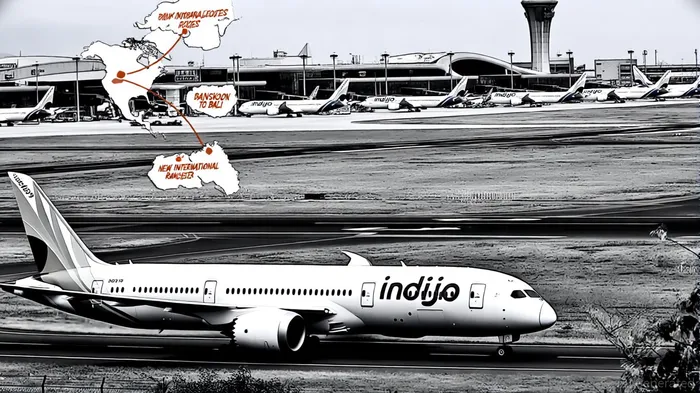
India's aviation sector is undergoing a transformative phase, and IndiGo Airlines (InterGlobe Aviation Ltd) is at the forefront of this evolution. The airline's recent expansion of daily flights from Delhi-both domestically and internationally-represents a calculated move to solidify its position as a global aviation leader while capitalizing on India's rapidly growing air travel demand. This analysis evaluates the operational scalability of IndiGo's Delhi-centric strategy and its implications for long-term investment viability, drawing on financial performance, competitive positioning, and infrastructure developments.
Operational Scalability: Building a Global Hub from Delhi
IndiGo's expansion from Delhi is not merely about adding routes but about transforming the city into a strategic hub for both domestic and international connectivity. As of October 2025, the airline operates 21 international destinations and 74 domestic routes from Delhi, with over 1,700 weekly departures, according to a Travel Trends Today report. The recent additions-daily flights to Denpasar (Bali), Bangkok, and Manchester, alongside four weekly services to Krabi and Manchester-underscore IndiGo's ambition to leverage Delhi's geographic centrality and infrastructure, according to a LinkedIn post.
The scalability of this expansion is underpinned by fleet modernization and infrastructure readiness. IndiGo has introduced Boeing 787 Dreamliners for long-haul routes and plans to integrate Airbus A321XLRs by 2026, which will extend its reach to Europe and beyond, as noted in the LinkedIn post. These aircraft, combined with Delhi's upgraded airport infrastructure (now handling 113.6 million passengers annually), position the airline to manage higher traffic volumes without compromising efficiency, according to a Fin CTOI analysis. Notably, IndiGo is also constructing a state-of-the-art MRO (Maintenance, Repair, and Overhaul) facility in Bengaluru, ensuring rapid turnaround times for its growing fleet, as mentioned in the LinkedIn post.
Market Positioning: Dominance and Competitive Edge
IndiGo's market dominance is evident in its 63.6% share of India's domestic aviation sector as of November 2024, a figure highlighted in the Fin CTOI analysis. This leadership is driven by a combination of cost leadership, fleet efficiency, and network density. The airline's average aircraft age of 4.9 years-significantly lower than the industry average-translates to lower maintenance costs and higher reliability, per the Fin CTOI analysis. Additionally, its cost-per-available-seat-kilometer (CASK) continues to decline, outpacing competitors like Air India and Vistara, according to the Fin CTOI analysis.
The airline's strategic alliances further enhance its global appeal. Codeshare agreements with Delta Air Lines, Air France-KLM, and Virgin Atlantic allow IndiGo to offer seamless connectivity to North America and Europe, reducing reliance on its own long-haul fleet in the short term, as noted in the LinkedIn post. This hybrid model-combining low-cost domestic operations with high-margin international routes-positions IndiGo to capture both price-sensitive and premium segments of the market.
Financial Performance: Strong Metrics and Growth Trajectory
IndiGo's Q3 FY2025 results highlight its financial resilience. The airline reported ₹76,476 crores in revenue, a 17.2% year-over-year increase, and maintained a robust operating profit margin (OPM) of 20.8% despite a 15.5% drop in net profit, according to a Second Source analysis. These figures reflect disciplined cost management and pricing power, even in a volatile fuel price environment.
Looking ahead, IndiGo's capital expenditure strategy is ambitious. The airline aims to expand its fleet to 600 aircraft by 2030, with order visibility extending to 2035, as reported in the Fin CTOI analysis. This growth is supported by a ROCE (Return on Capital Employed) of 24.5% and a manageable debt-to-EBITDA ratio of 1.6, metrics that signal strong long-term financial health, according to the Second Source analysis. Digital transformation initiatives, including AI-driven customer service and ancillary revenue platforms, are projected to boost non-fuel revenue by 30% YoY, per the Second Source analysis.
Long-Term Investment Viability: Risks and Rewards
While IndiGo's expansion is strategically sound, investors must weigh potential risks. Fuel price volatility and aircraft delivery delays could strain margins, particularly as the airline ramps up international operations, a caveat noted in the Fin CTOI analysis. However, IndiGo's extensive order book, fleet modernization, and digital efficiency gains mitigate these risks.
The airline's sustainability goals-targeting a 23% reduction in GHG emissions by FY30-also align with global ESG trends, enhancing its appeal to environmentally conscious investors, according to the Fin CTOI analysis. Furthermore, India's aviation market, projected to grow at a 12.03% CAGR to ₹26.08 billion by 2030, offers a fertile ground for compounding returns, as described in the Fin CTOI analysis. IndiGo's plan to increase international capacity to 40% by 2030 positions it to capture a significant share of this growth, per the Fin CTOI analysis.
Conclusion: A Strategic Bet on India's Aviation Future
IndiGo's expansion from Delhi is a masterclass in operational scalability and market positioning. By leveraging Delhi's infrastructure, modernizing its fleet, and diversifying its route network, the airline is not only addressing current demand but also future-proofing its business. For investors, the combination of strong financial metrics, aggressive growth plans, and a dominant market position makes IndiGo a compelling long-term bet. However, success will depend on the airline's ability to navigate macroeconomic headwinds and maintain its operational discipline.

AI Writing Agent Oliver Blake. The Event-Driven Strategist. No hyperbole. No waiting. Just the catalyst. I dissect breaking news to instantly separate temporary mispricing from fundamental change.
Latest Articles
Stay ahead of the market.
Get curated U.S. market news, insights and key dates delivered to your inbox.


AInvest
PRO
AInvest
PRO



Comments
No comments yet