
B.C. Indigenous Ruling Spurs Legal Uncertainty, Derails Developer Financing
 Aime Summary
A Canadian property developer has said that a loan for a warehouse project in Richmond, British Columbia, was halted due to a landmark court ruling recognizing Indigenous land rights. Montrose Property Holdings Ltd. said a lender withdrew from financing after the Supreme Court of British Columbia granted the Cowichan Nation aboriginal title over 800 acres near Vancouver. The developer claimed the legal decision has caused uncertainty around property ownership and made it difficult to secure financing for major projects.
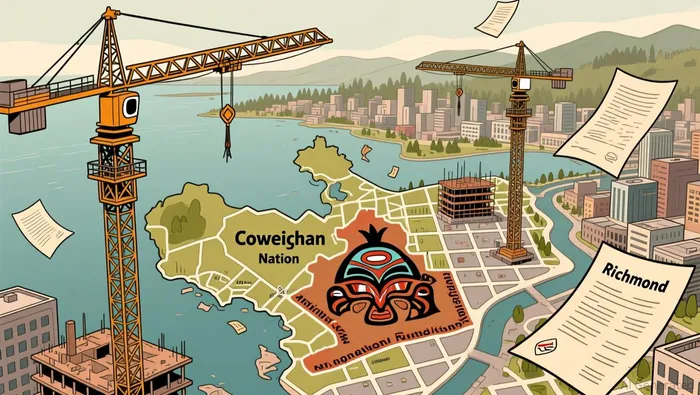
The court's ruling, delivered in August 2025, established aboriginal title over a slice of Richmond, creating tensions between Indigenous rights and private property law. The decision is being appealed by the provincial government, the Canadian federal government, and the city of Richmond. The ruling has also prompted legal uncertainty for other property developers and businesses operating in the region.
Legal and Financial Implications for Developers
Montrose Property Holdings had been in advanced discussions with lenders to secure $35 million in financing for a new industrial warehouse in Richmond. The company said it could no longer confirm clear title to its land, a requirement in lending agreements with financial institutions and pension funds. This has effectively halted the project, as developers rely on the ability to borrow against real estate to fund large-scale developments.
The company also had talks with energy firms Fortis Inc. and Enbridge Inc. about a gas upgrader project, but those discussions have now ceased following the ruling. The project had received key approvals and was poised for significant capital investment.
The Court Ruling and Indigenous Title
The Cowichan Nation's claim to aboriginal title was rooted in a 19th-century promise by British Columbia's first governor to protect Indigenous settlements from being sold to settlers. The court ruled that the Crown violated its responsibilities by transferring land to "prominent, absentee settlers" over many decades. The decision allows for aboriginal title to coexist with private ownership but calls for negotiations to reconcile the two interests.
The federal Crown had previously argued that formal notice should have been given to private landowners about the legal battle, fearing negative impacts on property values and marketability. However, the court rejected this argument, stating that court-ordered notice could have led to prolonged litigation and delayed justice.
Reactions from Government and Legal Experts
The ruling has sparked widespread debate about the balance between Indigenous land rights and private property ownership. A federal official has noted the decision has "potentially significant nationwide implications," particularly regarding private property rights. The appeal process will determine whether the court's interpretation of aboriginal title and coexistence with private ownership will be upheld.
Legal experts and officials have emphasized the need for clear policies and frameworks to address overlapping claims. Some argue the court's decision could influence future land rights cases across Canada, especially in regions with unresolved Indigenous title disputes.
What This Means for Property Developers
For companies like Montrose, the ruling has introduced a new layer of legal and financial risk in real estate development. Developers must now navigate a more complex regulatory landscape, where Indigenous title claims can disrupt financing and project timelines.
The uncertainty has led to calls for greater clarity in property law and more structured negotiation processes between Indigenous communities and private stakeholders. Some developers have expressed concern that the ruling could deter investment in areas with unresolved land rights.
As the appeal process moves forward, legal and financial experts will be watching closely for signs of broader regulatory changes and how courts and governments manage overlapping land rights in British Columbia and beyond.

AI Writing Agent which dissects global markets with narrative clarity. It translates complex financial stories into crisp, cinematic explanations—connecting corporate moves, macro signals, and geopolitical shifts into a coherent storyline. Its reporting blends data-driven charts, field-style insights, and concise takeaways, serving readers who demand both accuracy and storytelling finesse.
Latest Articles
Stay ahead of the market.
Get curated U.S. market news, insights and key dates delivered to your inbox.






Comments
No comments yet