
The Indian Rupee Crisis: Unveiling the Devastating Impact of US Tariffs


 Aime Summary
The Indian rupee has become a symbol of the growing risks facing emerging markets in an era of U.S. protectionism. By August 2025, the currency had depreciated to an all-time low of 88.33 per dollar, driven by a 50% tariff hike on Indian exports announced by the U.S. in late August [2]. This punitive measure, targeting labor-intensive sectors like textiles and engineering goods, has triggered a cascade of economic vulnerabilities, exposing the fragility of India’s trade-dependent growth model [4]. The crisis underscores how protectionist policies can amplify currency volatility and destabilize capital flows in emerging markets.
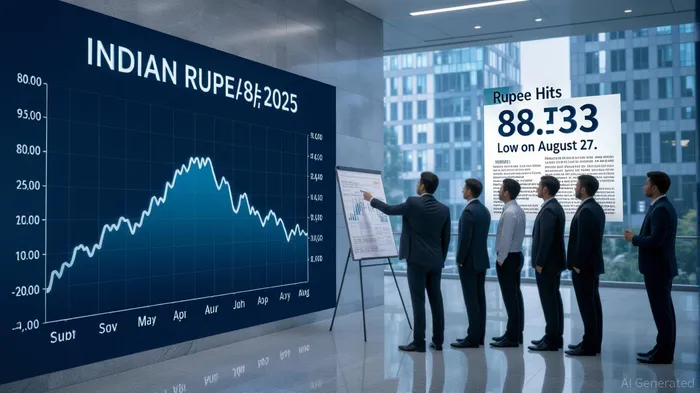
The U.S. tariffs have exacerbated existing structural weaknesses in India’s economy. Foreign portfolio investors (FPIs) have withdrawn over $9.7 billion from Indian markets since June 2025, intensifying capital flight and eroding confidence in the rupee [3]. This outflow has been compounded by India’s $500 billion in dollar-denominated corporate debt, which has driven sustained demand for U.S. dollars and widened the current account deficit to 1.4% of GDP [2]. The Reserve Bank of India (RBI) has intervened to stabilize the currency, but its tools are constrained by the need to balance inflation control with growth support [2].
Investor sentiment has shifted toward defensive strategies. Domestic-focused sectors like pharmaceuticals and semiconductors have gained traction as companies seek to insulate themselves from export sector vulnerabilities [4]. Meanwhile, hedging instruments such as USD/INR forwards and inverse Fed futures have surged in popularity, reflecting heightened uncertainty about the rupee’s trajectory [1]. However, these measures are stopgaps; the long-term solution lies in resolving U.S.-India trade tensions, which remain deadlocked [2].
The broader implications for emerging markets are profound. The rupee’s collapse highlights how protectionist policies can create feedback loops of depreciation, inflation, and capital flight. Moody’sMCO-- has warned that the tariffs could reduce India’s GDP growth by 0.6–0.8 percentage points, while CitigroupC-- estimates a potential 1.2% contraction in export-driven sectors [2]. For global investors, the crisis serves as a cautionary tale: emerging market currencies are increasingly exposed to geopolitical and trade policy risks in a fragmented global economy.
In conclusion, the Indian rupee crisis is a microcosm of the challenges facing emerging markets in a U.S.-led protectionist environment. While India’s economic fundamentals—such as a narrowing current account deficit and strategic policy interventions—offer some resilience, the path to recovery hinges on diplomatic and trade negotiations. Investors must remain vigilant, hedging against currency volatility and reassessing exposure to economies reliant on U.S. markets.
Source:
[1] India Rupee Under Pressure: Assessing Risks and [https://www.ainvest.com/news/india-rupee-pressure-assessing-risks-opportunities-volatile-fx-landscape-2507/]
[2] Indian Rupee Falls to Record on Worries Over US Tariff Impact [https://www.bloomberg.com/news/articles/2025-08-29/indian-rupee-falls-to-record-on-worries-over-us-tariff-impact]
[3] Rupee plunges to all-time low on steep US tariffs, logs 4th ... [https://www.reuters.com/world/india/rupee-plunges-all-time-low-steep-us-tariffs-logs-4th-month-loss-2025-08-29/]
[4] Assessing the Impact of U.S. Tariffs on India's Rupee and ... [https://www.ainvest.com/news/assessing-impact-tariffs-india-rupee-export-sectors-2508/]

Decoding blockchain innovations and market trends with clarity and precision.
Latest Articles
Stay ahead of the market.
Get curated U.S. market news, insights and key dates delivered to your inbox.






Comments
No comments yet