
India-US Trade Tensions: Navigating Risks and Opportunities in Emerging Market Exports


 Aime Summary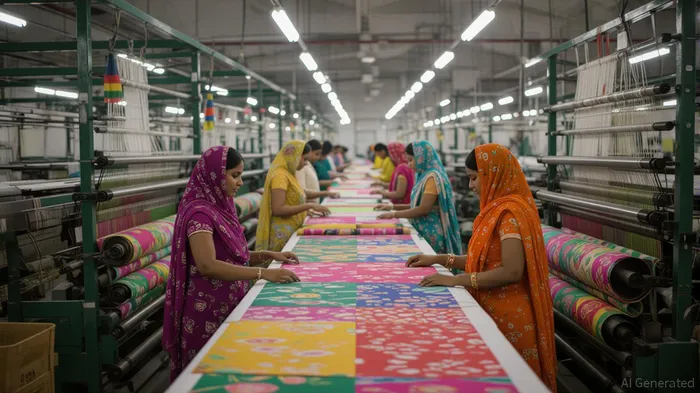
The India-US trade relationship has entered a volatile phase in 2025, marked by escalating tariffs and geopolitical maneuvering. For investors in India's manufacturing and commodity export sectors, this tension presents a dual-edged sword: immediate risks from protectionist policies and long-term opportunities from forced adaptation. Understanding this dynamic is critical for capitalizing on emerging market resilience while mitigating exposure to short-term shocks.
The Tariff Landscape: Sector-Specific Impacts
The U.S. has imposed a 25% “reciprocal” tariff on Indian exports, with a second 25% levy targeting India's Russian oil imports, pushing total tariffs to 50% in key sectors. Textiles, gems and jewelry, auto components, and aquaculture—accounting for over 30% of India's total exports to the U.S.—are particularly vulnerable. For example, the carpet-making industry in Uttar Pradesh, which exports 60% of its output to the U.S., faces existential threats. Similarly, shrimp farmers in Andhra Pradesh and Tamil Nadu report a 20% drop in export volumes since August 2024.
However, not all sectors are equally exposed. Pharmaceuticals and electronics remain exempt for now, though the Trump administration has signaled future tariffs of 150–250% on Indian generic drugs. This creates a paradox: while some industries face immediate headwinds, others may benefit from forced innovation or redirected demand.
Investor Sentiment: Short-Term Pain, Long-Term Gains
Foreign portfolio investors (FPIs) have already withdrawn $2 billion from Indian equities in August 2025, contributing to a $248 billion decline in equity market value since July. Sectors like textiles and marine productsMPX-- have seen sharp sell-offs, with the Nifty Textiles Index down 18% year-to-date. Yet, local institutional investors and domestic IPOs have injected $6 billion into the market over three months, signaling confidence in India's structural reforms.
The key question for investors is whether to bet on short-term volatility or long-term resilience. While U.S. tariffs reduce India's merchandise exports by an estimated $30–35 billion and shave 1% off GDP growth, the government's 10-point mitigation plan offers a roadmap for recovery.
Mitigation Strategies: Turning Adversity into Opportunity
India's response to U.S. pressure includes a strategic pivot toward Russia and a push for self-reliance. Bilateral trade with Russia has surged to $15 billion in 2025, with plans to expand pharmaceutical and textile exports. Meanwhile, Prime Minister Modi's emphasis on “self-reliance” (Atmanirbhar Bharat) has spurred reforms in infrastructure, labor laws, and agriculture.
For investors, this creates opportunities in three areas:
1. Infrastructure Upgrades: Every rupee invested in infrastructure generates ₹2.5–3.5 in GDP. Modernizing ports (e.g., Jawaharlal Nehru Port Trust) and logistics parks could reduce costs and enhance competitiveness.
2. Export Diversification: Shifting focus to Africa, the Gulf, and Latin America could offset U.S. losses. India's Global Capability Centres (GCCs) and Business Process Outsourcing (BPO) hubs are already generating $12 billion annually in foreign exchange.
3. Structural Reforms: Streamlining GST, easing land acquisition, and adopting AI in mining could unlock $50 billion in foreign direct investment by 2030.
Geopolitical Leverage and Strategic Alliances
The U.S. is using tariffs as a tool to influence India's foreign policy, particularly its reliance on Russian oil. However, India's strategic deepening of ties with Russia—coupled with its neutral stance in the Russia-Ukraine conflict—suggests a recalibration of global alliances. For investors, this means hedging against U.S. policy shifts by diversifying into sectors less tied to Western markets, such as renewable energy and agro-processing.
Investment Advice: A Balanced Approach
- Sector Rotation: Overweight infrastructure and services (e.g., IT, BPO) while underweighting tariff-sensitive sectors like textiles.
- Long-Term Exposure: Invest in companies benefiting from India's export diversification, such as pharmaceuticals (e.g., Cipla, Dr. Reddy's) and renewable energy (e.g., Adani Green Energy).
- Risk Mitigation: Hedge against currency volatility by investing in rupee-denominated bonds or dollar-hedged ETFs.
Conclusion
The India-US trade tensions are reshaping global supply chains and investor strategies. While U.S. tariffs pose immediate risks to India's export-dependent sectors, they also catalyze structural reforms and strategic realignments. For investors, the path forward lies in balancing short-term caution with long-term optimism—capitalizing on India's demographic dividend, digital transformation, and geopolitical agility. As the Trump-Modi summit in September 2025 approaches, the resolution of these tensions could unlock new opportunities for those prepared to navigate the evolving landscape.


Decoding blockchain innovations and market trends with clarity and precision.
Latest Articles
Stay ahead of the market.
Get curated U.S. market news, insights and key dates delivered to your inbox.


AInvest
PRO
AInvest
PRO



Comments
No comments yet