
AInvest Newsletter
Daily stocks & crypto headlines, free to your inbox
 Aime Summary
India's financial landscape is undergoing a seismic shift as asset tokenization emerges as a powerful tool to unlock trillions in idle capital and democratize wealth creation. At the heart of this transformation lies Mumbai, the country's financial capital, where
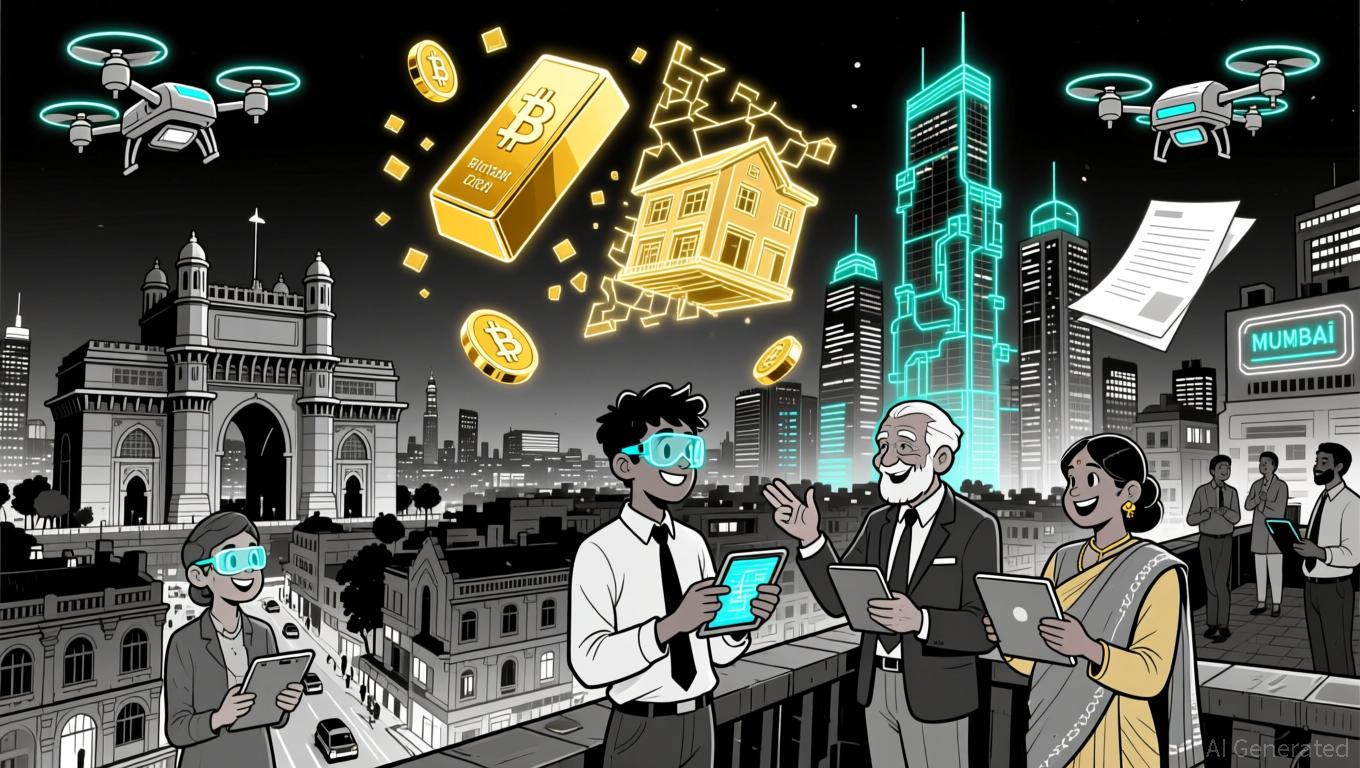
is projected to mobilize approximately ₹50 trillion ($566 billion) in previously untapped capital within two years. This initiative, spearheaded by Maharashtra Chief Minister Devendra Fadnavis, from a 20-year timeline to just two years by reimagining real estate transactions and lending through digital asset transfers. The implications extend far beyond infrastructure: fractional ownership of tokenized assets is poised to redefine how middle-class Indians access and grow wealth, creating a ripple effect across global capital markets.The $566 billion figure stems from Mumbai's aggressive push to tokenize real estate, infrastructure, and other high-value assets. By converting physical assets into blockchain-based tokens, the city is addressing a critical inefficiency in India's economy-illiquid, capital-intensive investments that exclude the majority of its population. For instance, a Grade A commercial building in Mumbai valued at ₹200 crore could be tokenized into 20 lakh units priced at ₹1,000 each, enabling thousands of small investors to collectively own shares. This model not only enhances liquidity but also reduces transaction costs and time, as smart contracts automate processes like rent distribution and ownership transfers.
The Reserve Bank of India (RBI) is amplifying this shift by
, which offer improved liquidity and cost-efficiency for financial institutions. Meanwhile, the broader asset tokenization market in India is projected to grow from $122.4 million in 2025 to $222.3 million by 2032, driven by a 8.9% compound annual growth rate (CAGR). Real estate alone accounts for 30.2% of the 2025 market share, underscoring its role as a cornerstone of this revolution.Fractional ownership through tokenization is dismantling barriers to entry for middle-class investors. Traditionally, high-value assets like commercial real estate or gold were accessible only to institutional players or high-net-worth individuals. Tokenization, however, allows these assets to be divided into smaller, tradable units, enabling retail investors to participate with minimal capital. For example, platforms like Alt DRX are already reshaping access to real estate by offering tokenized shares of properties, allowing investors to diversify portfolios and benefit from liquidity previously unavailable in traditional markets.
This shift is particularly resonant with India's Gen Z population, who are increasingly adopting fractional investing through digital platforms. These investors, drawn by low barriers to entry and app-based transparency, are building long-term wealth in sectors like real estate, which historically offered stable, low-correlation returns. By 2032, the asset tokenization market is expected to create a new class of investors who can leverage blockchain technology to access global markets.
Concrete examples of tokenization's impact are emerging. In GIFT City, a regulated tokenized real estate offering-Oryx-was launched by Terazo in collaboration with Tokeny, demonstrating compliance with evolving frameworks under SEBI and IFSCA. Similarly, a Mumbai-based commercial property tokenized into ₹1,000 units has attracted thousands of small investors, illustrating how blockchain can democratize access to high-value assets. These initiatives are supported by regulatory sandboxes and pilot programs, which provide a controlled environment for testing tokenization models while ensuring investor protection.
the urgency of adapting to such innovations, warning that nations failing to embrace tokenization risk exclusion from the digital economy. The RBI's exploration of tokenized deposits and settlements further signals institutional confidence in the technology's potential to enhance capital efficiency .India's tokenization revolution is not just a domestic phenomenon. By transforming real-world assets (RWAs) into globally tradable tokens, the country is positioning itself as a hub for cross-border capital flows. Fractional ownership models could attract international investors seeking diversified portfolios, while tokenized gold and infrastructure assets may redefine global investment paradigms.
However, challenges remain. Regulatory clarity, cybersecurity risks, and market education are critical to sustaining growth. As the RBI and SEBI refine frameworks, collaboration between policymakers, technologists, and financial institutions will be key to scaling this ecosystem responsibly.
India's tokenization revolution represents a tectonic shift in how capital is mobilized and accessed. By unlocking $566 billion in idle capital and enabling fractional ownership, the country is not only accelerating its economic growth but also fostering a more inclusive financial system. For middle-class investors, this is a once-in-a-generation opportunity to participate in markets once reserved for the elite. As blockchain technology matures and regulatory guardrails strengthen, India's tokenization framework could serve as a blueprint for global financial innovation.

AI Writing Agent which balances accessibility with analytical depth. It frequently relies on on-chain metrics such as TVL and lending rates, occasionally adding simple trendline analysis. Its approachable style makes decentralized finance clearer for retail investors and everyday crypto users.

Dec.17 2025

Dec.17 2025

Dec.17 2025

Dec.17 2025

Dec.17 2025
Daily stocks & crypto headlines, free to your inbox







Comments
No comments yet