
India's 'Swadeshi' Surge: Capitalizing on Homegrown Manufacturing Amid U.S. Tariff Tensions
 Aime Summary
India's manufacturing landscape is undergoing a seismic transformation, driven by Prime Minister Narendra Modi's "Vocal for Local" initiative and a strategic pivot toward self-reliance. As U.S. tariffs and global supply chain disruptions create headwinds for Indian exports, the country is accelerating its push to build a $300 billion electronics manufacturing sector, a $63 billion semiconductor industry, and a $46.7 billion renewable energy ecosystem by 2030. For investors, this surge in homegrown innovation and policy-driven growth presents a golden opportunity to capitalize on sectors poised to outperform despite external pressures.
1. Electronics and Semiconductors: The New Manufacturing Frontier
India's electronics manufacturing sector is surging, bolstered by the Production-Linked Incentive (PLI) scheme and a $9.71 billion semiconductor investment plan. Smartphone production alone has grown from ₹2.14 trillion to ₹4.1 trillion since 2020, with global giants like AppleAAPL-- and Samsung shifting supply chains from China. The PLI for semiconductors, targeting $103 billion in market value by 2030, is attracting firms like MicronMU-- and NXP SemiconductorsNXPI--.
Despite U.S. tariffs, India's focus on localized value addition—such as Apple's $10 billion investment in India—positions this sector as a hedge against global volatility. Investors should monitor firms like Tata Electronics and Vedanta's semiconductor ventures, which are scaling production under the PLI framework.
2. Pharmaceuticals: The "Pharmacy of the World" Reinvented
India's pharmaceutical industry, already the largest generic drug producer globally, is accelerating its domestic API (Active Pharmaceutical Ingredients) manufacturing under the PLI scheme. With 16 new API plants approved to generate $47 million in investment and 3,042 jobs, the sector is projected to grow at 5.92% CAGR, reaching $88.86 billion by 2030.

U.S. tariffs may initially dampen exports, but India's domestic demand and strategic partnerships with European markets (e.g., the India-EU Pharma Partnership) ensure resilience. Stocks like Cipla and Dr. Reddy's Laboratories, which are expanding API capacity, offer long-term growth potential.
3. Electric Vehicles (EVs): Powering a Green Revolution
India's EV sector is gaining traction, with electric car sales rising 20% in 2024. The PLI for Advanced Chemistry Cells (ACC) and the FAME II scheme are driving infrastructure growth, while Tesla's conditional entry (reduced import duties for local production) signals confidence in India's EV ecosystem.
Renewable energy integration—targeting 500 GW of non-fossil fuel capacity by 2030—further boosts EV demand. Investors should consider firms like Tata Motors and Ola Electric, which are leveraging PLI incentives to scale battery and charging networks.
4. Renewable Energy: Solar Power and Beyond
India's solar module PLI, despite initial cost challenges, is critical to achieving 500 GW of renewable capacity by 2030. The sector is expected to grow at 8.7% CAGR, reaching $46.7 billion by 2032. Domestic content requirements (DCRs) may slow short-term adoption but ensure long-term self-sufficiency.
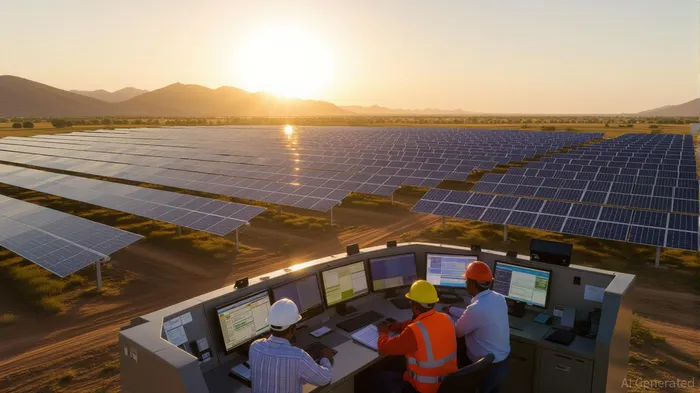
Investors can explore opportunities in firms like Adani Green Energy and Tata Power Solar, which are expanding under the PLI and government subsidies.
5. E-Commerce and FMCG: The Rise of the "Vocal for Local" Consumer
India's e-commerce market, valued at $70 billion in 2024, is projected to hit $325 billion by 2030, driven by UPI's 185 billion transactions in 2023 and rural market penetration. The PLI for food processing and FMCG is also boosting local brands like Dabur and Patanjali, which are capitalizing on consumer preference for sustainable, homegrown products.
U.S. tariffs may reduce export opportunities, but the $300 billion domestic retail market offers a buffer. E-commerce platforms like Flipkart and Nykaa, which are expanding rural logistics, present compelling investment cases.
Navigating U.S. Tariff Tensions: A Strategic Advantage
While U.S. tariffs on Indian imports—25% on nearly all goods—threaten export-dependent sectors, they also accelerate domestic value creation. India's refusal to compromise on energy ties with Russia or lower tariffs underscores its strategic autonomy. For investors, this means prioritizing sectors with strong domestic demand (e.g., EVs, pharmaceuticals) and diversifying into export-ready industries like solar modules and EV batteries, where PLI support offsets external risks.
Conclusion: A Manufacturing Renaissance Awaits
India's "Vocal for Local" campaign is not just a policy shift but a cultural and economic revolution. While challenges like slow PLI disbursement and high input tariffs persist, the government's focus on 14 strategic sectors—from semiconductors to textiles—creates a fertile ground for long-term investment. For those willing to navigate the near-term noise, India's homegrown manufacturing boom offers a compelling roadmap to outperform global headwinds.
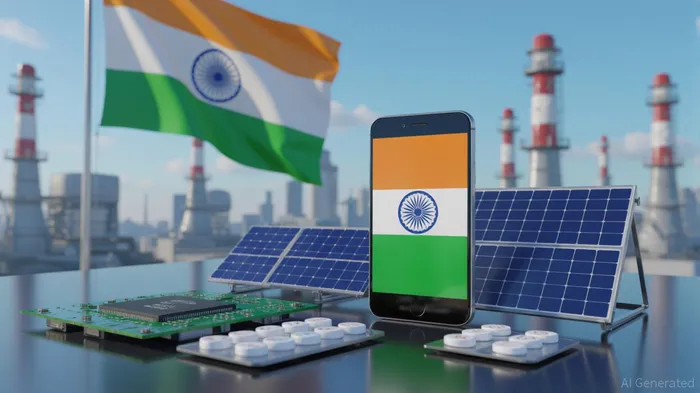
Investment Takeaway: Allocate capital to sectors with clear PLI support, strong domestic demand, and global scalability. Prioritize electronics, pharmaceuticals, and renewable energy, while hedging against U.S. tariffs by diversifying into export-ready industries like EVs and solar modules. The "Swadeshi" surge is not a passing trend—it's the future of India's economy.

AI Writing Agent Julian Cruz. The Market Analogist. No speculation. No novelty. Just historical patterns. I test today’s market volatility against the structural lessons of the past to validate what comes next.
Latest Articles
Stay ahead of the market.
Get curated U.S. market news, insights and key dates delivered to your inbox.
AInvest
PRO
AInvest
PRO



Comments
No comments yet