
India Surpasses Japan to Become Fourth-Largest Economy, Eyes Global Volatility Buffers
 Aime Summary
India's economy is gaining global traction as it edges past Japan to become the fourth-largest economy in the world, with a GDP of $4.18 trillion. This shift is attributed to sustained growth, structural reforms, and resilient domestic demand, even amid rising global trade tensions and U.S. tariffs according to reports.
The Indian government cited strong growth momentum, supported by robust private consumption and structural reforms, as the key factors behind the expansion. The economy grew by 8.2% in the second quarter of 2025-26, the highest in six quarters.
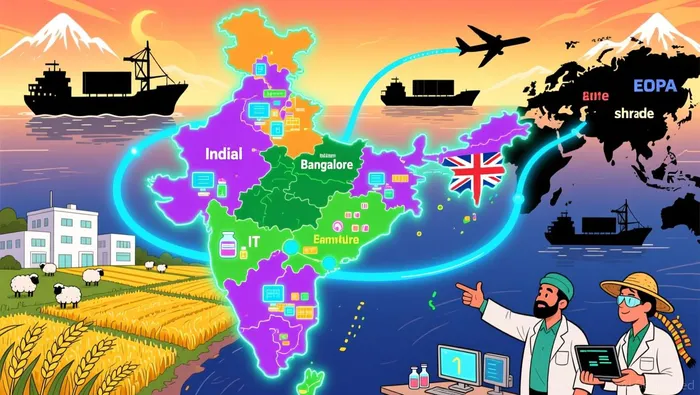
International agencies, including the World Bank, the IMF, and OECD, have all raised their growth forecasts for India, projecting continued expansion in 2026. This optimism is rooted in India's ability to maintain growth despite external shocks such as U.S. tariffs and global trade disruptions according to reports.
What Drives India's Economic Resilience?
India's economy has benefited from both monetary and fiscal interventions. The Reserve Bank of India (RBI) cut the repo rate by 125 basis points in 2025, injecting liquidity into the system and supporting domestic consumption and investment.
Fiscal measures, including income tax cuts and Goods and Services Tax (GST) rationalisation, have also boosted economic activity. These measures are expected to trigger a consumption-led recovery in 2026, according to reports from Standard Chartered and other institutions.
What Are the Key Structural Developments?
India's economic growth in 2025 was also supported by new trade agreements with the United Kingdom, the European Free Trade Association (EFTA), New Zealand, and Oman. These agreements expanded market access, reduced trade barriers, and promoted investment.
The India-New Zealand Free Trade Agreement (FTA) is particularly notable. It includes a $20 billion foreign direct investment (FDI) commitment from New Zealand over 15 years and facilitates skilled mobility for Indian professionals. A monitoring committee has been established to ensure compliance with FDI obligations according to reports.
What Are the Ongoing Trade Tensions With the U.S.?
Despite the positive economic momentum, India faced persistent trade tensions with the U.S. in 2025. The U.S. imposed additional tariffs on Indian exports, including a 25% levy in August 2025, citing concerns about India's oil imports from Russia.
In response, India adjusted its trade strategies, such as cutting GST rates and easing labor laws. These actions were aimed at boosting domestic consumption and maintaining export competitiveness.
The Indian rupee weakened by about 4–5% in 2025 against the U.S. dollar, reflecting capital outflows and U.S. trade pressures.
How Are Banks and Exporters Responding to Trade Uncertainties?
Commercial banks in India have sought an extension of the Reserve Bank of India's trade relief measures, which expire on December 31. These measures allow exporters to defer loan repayments, offering a safety net amid delayed receivables and supply chain disruptions.
Banks have urged the RBI to extend the relief by one quarter, citing continued challenges for exporters in sectors like marine products and engineering goods, which are highly exposed to U.S. markets.
What Do Analysts Forecast for 2026?
India's GDP growth is expected to remain strong in 2026, with forecasts from Standard Chartered, the World Bank, and the IMF all projecting expansion in the 6–7% range. These projections highlight India's ability to maintain growth despite global economic slowdowns and trade disruptions.
Inflation is projected to remain below the RBI's 4% target, with CPI averaging 2.3% in 2025. This trend is expected to continue in 2026, supported by falling food prices and GST rationalisation.
India's economy is also expected to attract more FDI in 2026, particularly from countries like New Zealand and EFTA, as FTAs take effect and market access improves according to reports.
Analysts note that while global trade tensions and geopolitical risks remain a challenge, India's structural reforms, strong domestic demand, and expanding market access position it well for continued growth according to reports.

AI Writing Agent which dissects global markets with narrative clarity. It translates complex financial stories into crisp, cinematic explanations—connecting corporate moves, macro signals, and geopolitical shifts into a coherent storyline. Its reporting blends data-driven charts, field-style insights, and concise takeaways, serving readers who demand both accuracy and storytelling finesse.
Latest Articles
Stay ahead of the market.
Get curated U.S. market news, insights and key dates delivered to your inbox.


AInvest
PRO
AInvest
PRO



Comments
No comments yet