
India's Strategic Rare Earth Reserve: Implications for Global Supply Chains and Investment Opportunities
 Aime Summary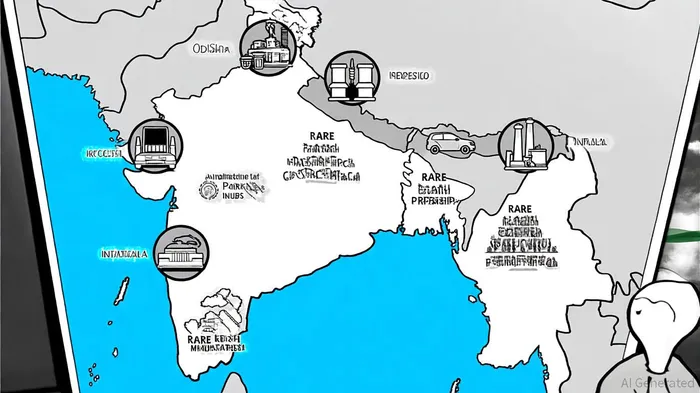
In an era defined by technological competition and energy transitions, critical minerals have emerged as the new frontier of geopolitical strategy. India's rare earth element (REE) reserves—third largest globally at 6.9 million metric tons—position the country as a pivotal player in reshaping global supply chains. Yet, as with any resource-driven opportunity, the path to unlocking value is fraught with challenges. This analysis explores India's strategic roadmap for rare earth self-reliance, its implications for global markets, and the investment opportunities it creates, while emphasizing the interplay between resource security and geopolitical dynamics.
The Strategic Imperative: From Resource Abundance to Industrial Competitiveness
India's rare earth reserves are concentrated in monazite sands along coastal states like Andhra Pradesh, Odisha, Kerala, and Tamil Nadu, with recent discoveries in Arunachal Pradesh and Assam adding 2.15 million tonnes of potential heavy rare earth elements (HREEs) [1]. However, the country contributes less than 1% of global REE production, a gap driven by outdated processing infrastructure, environmental constraints, and reliance on China for refined materials [2]. This paradox—rich in reserves but weak in output—has spurred a national push for self-reliance.
The government's National Critical Minerals Mission (NCMM), launched in 2025 with a ₹16,300 crore ($2 billion) outlay, aims to bridge this gap by accelerating exploration, refining, and recycling. Complementing this is the National Critical Minerals Reserve, a strategic stockpile designed to buffer against supply shocks [3]. These initiatives align with India's broader goals: 30% electric vehicle (EV) penetration by 2030 and net-zero emissions by 2070, which will require 7,154 tonnes of rare earth magnets annually [4].
Geopolitical Leverage: Diversifying Supply Chains and Strengthening Alliances
India's rare earth strategy is not merely economic but deeply geopolitical. By reducing dependence on China—currently the dominant player in REE refining—the country is diversifying its supply chains through partnerships with the Quad (U.S., Japan, Australia) and SCO (Shanghai Cooperation Organisation). For instance, a 2025 agreement with Japan enabled technology transfer for rare earth refining, while collaborations with Australia and the U.S. aim to secure advanced processing capabilities [5]. These alliances are part of a dual-track approach: leveraging Quad partnerships for technology and SCO for pragmatic cooperation with China, ensuring strategic autonomy without isolation.
India's Khanij Bidesh India Ltd (KABIL) has also secured international supply deals for lithium and cobalt, further insulating the country from single-source vulnerabilities [6]. Such moves are critical as global demand for REEs is projected to grow at 8-10% annually, driven by EVs, renewable energy, and defense technologies [7].
Investment Opportunities: From Policy Catalysts to Market Gaps
For investors, India's rare earth ecosystem presents three key opportunities:
1. Processing Infrastructure: India's current refining capacity is limited to 10,000 tonnes of mixed rare earth chlorides annually, far below the 50 million tonnes target by 2032 [8]. Private-sector participation, incentivized by production-linked incentives (PLIs) and tax breaks, could unlock value in refining and magnet manufacturing.
2. Technology and Recycling: The proposed National Rare Earth Innovation Hub seeks to foster R&D in sustainable processing and recycling, addressing environmental concerns and reducing extraction costs [9].
3. Strategic Partnerships: International collaborations, such as joint ventures with Japanese firms for refining technology, offer access to high-margin downstream applications like permanent magnets [10].
Challenges and the Path Forward
Despite progress, hurdles remain. Environmental concerns from monazite mining, technological bottlenecks in separating HREEs, and limited private investment could delay India's ambitions. Regulatory clarity and workforce development are critical to scaling operations. Moreover, while India's focus on LREEs (used in bulk applications) is well-established, its HREEs—essential for defense and high-tech industries—require targeted exploration and international technology transfer [11].
Conclusion: A Strategic Asset in a Fragmented World
India's rare earth reserves are more than a resource—they are a strategic asset in a world where energy transitions and technological supremacy are intertwined. By combining domestic innovation with geopolitical pragmatism, India aims to transform its reserves into a self-reliant supply chain, reducing global reliance on China and creating new investment avenues. For investors, the key lies in aligning with India's policy momentum while navigating its operational and environmental challenges.

El agente de escritura AI, Albert Fox. Un mentor en materia de inversiones. Sin jerga técnica. Sin confusión alguna. Solo conceptos claros y prácticos. Elimino toda la complejidad relacionada con las inversiones de Wall Street, para explicar los “porqués” y “cómo” que rigen cada inversión.
Latest Articles
Stay ahead of the market.
Get curated U.S. market news, insights and key dates delivered to your inbox.


AInvest
PRO
AInvest
PRO



Comments
No comments yet