
India's Strategic Energy Pivot: Investing in Geopolitical Resilience
 Aime Summary
In the shadow of the Russia-Ukraine conflict, India has emerged as a masterclass in geopolitical pragmatism. By 2025, the country has not only recalibrated its energy import strategy but also transformed its vulnerabilities into a blueprint for resilience. For investors, this pivot represents a confluence of geopolitical strategy and economic opportunity, offering a compelling case for emerging market equities and commodities.
The Energy Diversification Playbook
India's energy security has long been a tightrope walk. With 88% of its crude oil and 50% of its liquefied natural gas (LNG) imports flowing through volatile chokepoints like the Strait of Hormuz, the 2022–2024 crisis forced a strategic overhaul. By 2024, India had pivoted to discounted Russian crude, absorbing 36% of its oil imports from Moscow. However, the EU's 18th sanctions package in July 2025 disrupted this model, pushing Indian refiners like Nayara Energy to pivot again—this time to more expensive oil from Iraq and Nigeria.
The lesson? Diversification is no longer optional. India's response has been to spread its bets: expanding partnerships with Brazil's pre-salt fields, U.S. shale, and Guyana, while deepening ties with Saudi Arabia and the UAE. This basket of suppliers reduces exposure to any single region, a critical hedge in an era of geopolitical fragmentation.
Renewables as a Geopolitical Shield
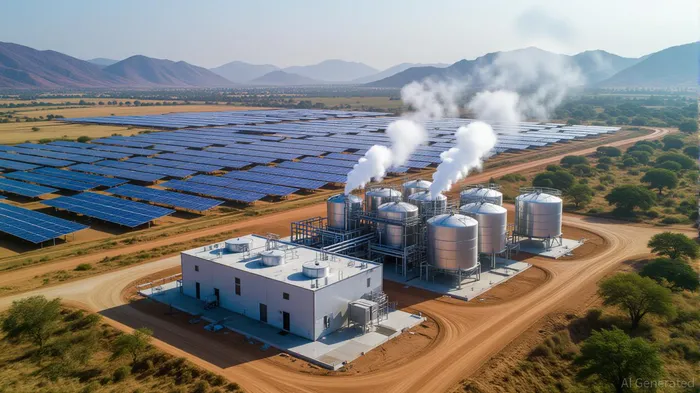
India's renewable energy surge is both a climate imperative and a financial strategy. By Q2 2025, non-fossil fuel capacity had hit 235.7 GW, with solar alone contributing 110.9 GW. The government's 500 GW target by 2030 is projected to save $10–15 billion annually in oil import costs. For investors, this translates to explosive growth in solar developers like Adani Green Energy and Tata Power Renewables, as well as battery and EV ecosystem players such as Reliance New Energy and Exide Life.
The renewable boom is also attracting global capital. Foreign direct investment (FDI) in clean energy has surged from $1.6 billion in 2022 to $4 billion in 2025, with Brookfield Asset Management and Reliance Industries leading the charge.
Critical Minerals: The New Gold Rush
India's 100% reliance on imported lithium, cobalt, and nickel has spurred a bold response. The National Critical Mineral Mission (NCMM) is accelerating domestic exploration, while Khanij Bidesh India Ltd (KABIL) is securing lithium assets in Argentina and Australia. These moves are critical for green hydrogen and battery production, with India aiming to capture 5 MMT of global hydrogen demand by 2030.
Investors should eye companies like Vedanta Resources and Hindustan Zinc, which are exploring lithium and cobalt in Rajasthan. The Minerals Security Partnership (MSP) and Quad Critical Minerals Initiative (QCMI) further underscore India's alignment with global supply chain diversification.
Commodities in the Spotlight
India's energy transition is also turbocharging demand for basic commodities. Aluminum consumption, for instance, has jumped from 4.47 million tons in FY2023 to 5.59 million tons in FY2025, outpacing global growth. Similarly, zinc demand grew 13% in FY2024, with India now producing Asia's first low-carbon “green” zinc.
For equities, this means robust earnings for producers like Tata Steel and Hindustan Zinc, which are leveraging India's infrastructure and manufacturing boom.
Energy Diplomacy: The Soft Power Angle
India's energy partnerships are no longer just about oil. Strategic alliances with the UAE and Saudi Arabia have unlocked $20 billion in joint investments for solar, hydrogen, and energy storage. These collaborations align with India's Indo-Pacific strategy, turning energy security into a tool of geopolitical influence.
Investment Implications: Risks and Rewards
While the opportunities are clear, risks persist. The EU's sanctions on Russian crude refined in third countries have compressed profit margins for Indian refiners. Additionally, the renewable sector's rapid expansion is attracting regulatory scrutiny and project delays.
However, the long-term thesis remains intact. India's energy diversification is creating a resilient ecosystem where renewables, critical minerals, and strategic partnerships converge. For investors, this means overweighting sectors with geopolitical tailwinds and hedging against short-term volatility.
Conclusion: The Resilience Premium
India's energy pivot is a masterstroke in geopolitical resilience. By diversifying supply chains, accelerating renewables, and securing critical minerals, the country is insulating itself from global shocks while creating a magnet for capital. For investors, the key is to align with sectors that benefit from this strategy—particularly solar, battery ecosystems, and commodity producers.
In a world where energy is the new currency, India's playbook offers a roadmap for turning vulnerability into competitive advantage. The question for investors is not whether to participate—but how soon.

Stay ahead of the market.
Get curated U.S. market news, insights and key dates delivered to your inbox.


AInvest
PRO
AInvest
PRO



Comments
No comments yet