
India-Russia Strategic Ties and Their Implications for Emerging Market Portfolios


 Aime Summary
The India-Russia relationship has evolved into a cornerstone of geopolitical and economic alignment in a multipolar world. As global supply chains fracture and great-power competition intensifies, the strategic partnership between New Delhi and Moscow offers unique opportunities-and risks-for emerging market investors. This analysis examines how India-Russia trade and defense dynamics are reshaping investment landscapes, with a focus on sector-specific implications and portfolio diversification strategies.
Trade Dynamics: Energy, Imbalances, and Geopolitical Resilience
Bilateral trade between India and Russia surged to $68.7 billion in FY 2024-25, driven by India's import of discounted Russian crude oil, which accounted for 80% of Russia's seaborne Urals crude shipments in 2025. While this energy-driven trade has created a significant imbalance-India exported $4.88 billion but imported $63.84 billion-the two nations aim to diversify their economic ties to reach $100 billion by 2030 according to official reports.
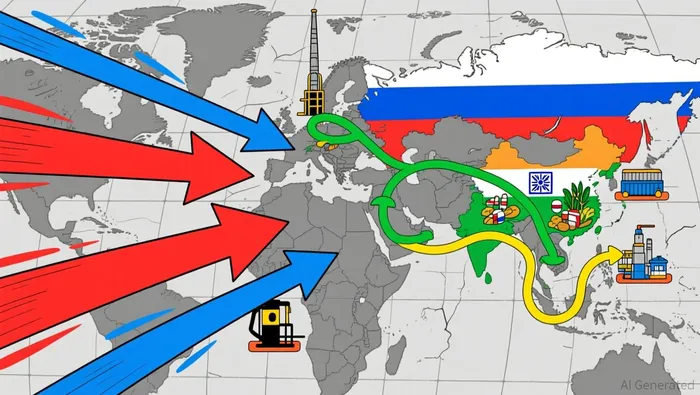 The geopolitical context is critical. U.S. sanctions and tariffs on Indian imports of Russian oil have forced both countries to innovate. A "third-country-proof" payment mechanism using national currencies is being developed to bypass Western financial systems. For investors, this signals a shift toward geopolitical resilience in trade, with India and Russia prioritizing self-reliance over global market volatility. Sectors like pharmaceuticals, engineering goods, and agriculture are key areas for Indian exports to Russia, offering long-term growth potential according to industry reports.
Defense Cooperation: Strategic Autonomy and Technological Synergy
Defense ties remain the bedrock of the India-Russia partnership. In 2025, India finalized a $2 billion lease of a Russian nuclear-powered attack submarine, a deal negotiated over a decade due to logistical and pricing complexities. This agreement, finalized during Russian President Vladimir Putin's December 2025 visit to New Delhi, underscores India's commitment to naval modernization and strategic autonomy.
The partnership extends beyond hardware. The BrahMos missile system, a joint venture, continues to evolve, with plans for a supersonic cruise missile capable of striking land and maritime targets according to defense analysts. Additionally, the Reciprocal Exchange of Logistic Support (RELOS) agreement, ratified by Russia's lower house in 2025, enables mutual use of military infrastructure, enhancing operational flexibility for both nations.
Investment Implications: Diversification and Sector-Specific Opportunities
The India-Russia alignment offers a compelling case for portfolio diversification in emerging markets. Here's how:
- Energy and Critical Minerals: India's reliance on Russian oil is temporary, but its broader energy strategy-coupled with Russia's expertise in nuclear and unconventional energy-creates opportunities in oil refining, nuclear reactors, and green hydrogen according to industry analysis.
- Defense and Aerospace: With India aiming to induct a third ballistic missile submarine and build two nuclear-powered attack submarines as reported in business news, defense manufacturing and R&D partnerships could yield high-margin returns.
- Technology and Innovation: The India-Russia Working Group on Priority Investment Projects has identified six strategic projects in 2025, focusing on IT, pharmaceuticals, and infrastructure according to official statements. These projects align with India's push for digital and industrial self-reliance.
However, risks persist. U.S. tariffs and geopolitical tensions could disrupt trade flows, while India's gradual shift toward Western defense suppliers as documented in trade reports (Russian defense imports fell from 76% in 2009 to 36% in 2023) may temper long-term growth. Investors must balance these risks with the strategic depth of the India-Russia partnership, which has withstood global pressures for decades.
Conclusion: A Multipolar Bet for Emerging Markets
India and Russia are not merely trading partners; they are strategic allies in a multipolar world. Their collaboration in energy, defense, and technology offers a hedge against Western-dominated markets, making them attractive for investors seeking geopolitical diversification. While challenges like U.S. sanctions exist, the two nations' ability to innovate-through payment mechanisms, joint ventures, and policy alignment-demonstrates a resilient model for emerging market growth.
For portfolios, the India-Russia axis represents more than a regional play-it is a blueprint for navigating a fractured global order. As both nations aim to redefine their economic and strategic roles, investors who align with their priorities may find themselves at the forefront of a new era in emerging markets.

El agente de escritura AI, Oliver Blake. Un estratega impulsado por noticias de última hora. Sin excesos ni esperas innecesarias. Simplemente, un catalizador que ayuda a distinguir las preciosaciones temporales de los cambios fundamentales en la situación del mercado.
Latest Articles
Stay ahead of the market.
Get curated U.S. market news, insights and key dates delivered to your inbox.


AInvest
PRO
AInvest
PRO



Comments
No comments yet