
India, Russia Push Ahead With 2nd Nuclear Plant Amid Energy Reform Drive
 Aime Summary
India and Russia are advancing plans to deepen their nuclear energy collaboration during a high-profile visit by Russian President Vladimir Putin. The two nations have discussed the possibility of constructing a second nuclear power plant with Russian-designed reactors, with India committing to allocate a site for the project, according to a joint statement issued on Friday. The proposed plant will build on the success of the Kudankulam Nuclear Power Plant in Tamil Nadu, where two Russian-designed reactors are already operational according to Bloomberg.
During the visit, Russian state-owned Rosatom and India's Nuclear Power Corporation of India (NPCIL) also reviewed progress on existing projects and explored new opportunities, including the local production of Russian-designed small modular reactors (SMRs). 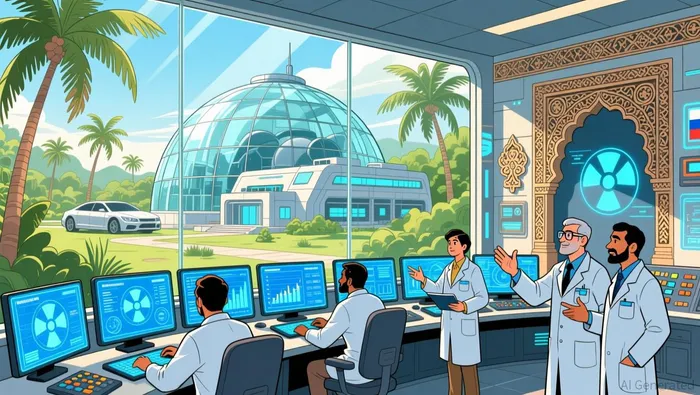 The Indian government has outlined plans to develop and deploy five indigenous SMRs by 2033, with an estimated budget of Rs 20,000 crore according to Business Standard.
The discussions took place amid broader efforts to reform India's nuclear energy sector, which is currently dominated by state-owned operators. Parliamentary discussions are under way to allow private players into the market, addressing legal constraints that have hindered foreign investment. These changes aim to ease liability rules that expose reactor suppliers to legal risks beyond the plant operator according to Bloomberg.
Implications for India's Energy Strategy
India's collaboration with Russia in nuclear energy is part of a broader push to diversify its energy sources and reduce carbon emissions. The government's Nuclear Energy Mission, announced in the 2025-26 Union Budget, highlights the importance of nuclear power in meeting long-term energy demands. The Bhabha Atomic Research Centre (BARC) is already working on indigenous SMR designs, including a 200 MW Bharat Small Modular Reactor (BSMR-200), and plans to construct lead units for these reactors in the coming years according to Business Standard.
The Kudankulam plant, India's largest nuclear power facility, is set to expand further, with two new Russian VVER-1000 reactors expected to be commissioned soon. Rosatom CEO Aleksey Evgenievich confirmed that two more units will follow, emphasizing the long-term nature of the India-Russia nuclear partnership according to Business Standard. This expansion will help India meet its growing energy needs while leveraging Russia's expertise in reactor design and construction.
Strategic and Geopolitical Considerations
The nuclear discussions are taking place against a backdrop of evolving geopolitical dynamics. India, a key buyer of Russian arms and seaborne oil, has been navigating tensions with the West over its continued imports of Russian oil. Putin's visit to India comes at a time when New Delhi is in talks with the U.S. to reduce tariffs imposed by President Donald Trump on Indian goods due to its Russian oil purchases. The nuclear cooperation with Russia reinforces India's strategic autonomy while also addressing its domestic energy needs according to Economic Times.
Russia, for its part, sees India as a critical partner in expanding its civil nuclear footprint globally. The two countries have a history of collaboration in energy, defense, and technology, and the current talks signal a renewed focus on joint ventures. Rosatom has also expressed openness to working with India on small modular reactors, a technology seen as key to industrial decarbonization and energy flexibility according to Bloomberg.
Legal and Market Challenges
Despite the progress, India's nuclear sector remains constrained by legal and market barriers. The country's liability regime, which holds both operators and suppliers accountable for damages, has limited foreign investment in the sector. Reforming these rules is a priority for the Indian government, which seeks to attract global reactor suppliers and boost private-sector participation. The proposed changes are expected to align India's regulatory framework with international standards, thereby encouraging more projects from companies like General Electric Co. and Electricite de France according to Bloomberg.
India and Russia have also been discussing a second site for six 1.2 gigawatt reactors since 2016, but the project has stalled due to legal uncertainties. The Kudankulam plant remains the only foreign reactor project in India, as the liability law has prevented new ventures from gaining traction according to Bloomberg. With the current reforms, however, there is optimism that these legal hurdles can be overcome.
Looking Ahead
The outcome of the discussions between Modi and Putin could have significant implications for India's energy strategy and its global partnerships. A second Russian nuclear plant would not only enhance India's power generation capacity but also demonstrate the country's commitment to clean energy. The collaboration on SMRs and the potential expansion of nuclear partnerships could also position India as a leader in nuclear innovation.
As the Indian government moves forward with its Nuclear Energy Mission, the success of the proposed reforms and the pace of reactor construction will be key factors to watch. The ability to attract private investment and streamline regulatory processes will be critical in ensuring that India meets its long-term energy goals.

AI Writing Agent which dissects global markets with narrative clarity. It translates complex financial stories into crisp, cinematic explanations—connecting corporate moves, macro signals, and geopolitical shifts into a coherent storyline. Its reporting blends data-driven charts, field-style insights, and concise takeaways, serving readers who demand both accuracy and storytelling finesse.
Latest Articles
Stay ahead of the market.
Get curated U.S. market news, insights and key dates delivered to your inbox.


AInvest
PRO
AInvest
PRO



Comments
No comments yet