
India-Russia Geopolitical Realignment: A Strategic Opportunity for Emerging Market Diversification
 Aime Summary
In the shadow of U.S. sanctions and the fracturing of traditional global alliances, India and Russia have forged a new economic and geopolitical axis that is reshaping the landscape of emerging markets. As the Ukraine conflict enters its fourth year, the India-Russia partnership has evolved from a Cold War-era alliance into a dynamic, resource-driven relationship that offers unique investment opportunities for those seeking to diversify beyond Western-dominated markets.
The Energy-Driven Pivot
Russia's invasion of Ukraine in 2022 created a vacuum in global energy markets, which India has swiftly filled. By 2025, Russian crude oil accounted for 36% of India's total oil imports, making Russia its largest supplier. This shift has been driven by discounted prices—often 30-40% below global benchmarks—for Russian oil, which Indian refiners like Nayara Energy (a Russian-majority-owned firm) have leveraged to refine and re-export to the U.S. and EU.
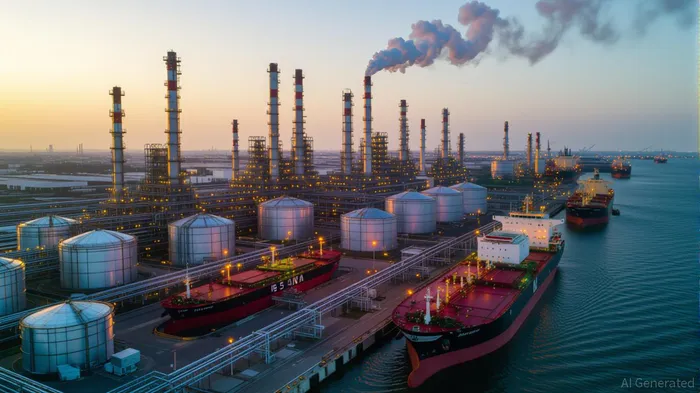
The economic calculus is clear: India's energy costs have stabilized while its role as a global refiner has expanded. In 2024, India became the second-largest exporter of refined oil products, with exports to Europe surging to $20.5 billion. However, this success has drawn ire from the U.S. and EU, which imposed tariffs on Indian goods in 2025, accusing New Delhi of indirectly funding Russia's war effort.
Navigating Sanctions and Strategic Independence
India's response has been a masterclass in geopolitical pragmatism. It has rejected Western pressure to align with sanctions, arguing that its actions are driven by energy security and economic necessity. The Indian government has also highlighted the West's own continued trade with Russia—such as EU imports of Russian LNG and U.S. purchases of Russian palladium—as evidence of double standards.
This defiance is underpinned by a broader strategy to reduce dependence on Western financial systems. India and Russia are now exploring trade in non-dollar currencies, including the rupee and ruble, and developing alternative payment mechanisms. For investors, this signals a shift toward a multipolar economic order where non-Western currencies and trade networks gain prominence.
Investment Implications and Sector Opportunities
The India-Russia realignment creates both risks and opportunities for emerging market investors. Key sectors to watch include:
- Energy and Refining: Indian refiners like Nayara Energy and Reliance Industries are central to the Russia-India trade. Their ability to profit from discounted crude and global demand for refined products positions them as high-growth plays.
- Defense and Technology: Russia remains India's largest arms supplier, with contracts for advanced systems like the S-400 missile defense system. As India seeks to reduce reliance on Western defense procurement, Russian firms like Rostec and Uralvagonmash could see sustained demand.
- Agriculture and Commodities: India's refusal to lower tariffs on U.S. agribusiness imports highlights its strategic autonomy. Investors in Indian agri-tech firms or fertilizer producers may benefit from domestic policy support.
The Geopolitical Chessboard
The U.S. and EU's August 2025 tariffs on Indian goods underscore the fragility of this new alignment. However, India's economic leverage—its role as a global refiner and its growing influence in multilateral forums like the G20—limits the effectiveness of such measures. For investors, this tension highlights the importance of hedging against geopolitical volatility while capitalizing on India's strategic autonomy.
Strategic Recommendations for Investors
- Diversify Exposure to Emerging Market ETFs: Consider allocations to funds like the iShares MSCI IndiaINDA-- ETF (EINJ) or the WisdomTreeWT-- India Earnings Fund (EPI) to capture India's growth while mitigating sector-specific risks.
- Monitor Currency Dynamics: As India and Russia shift toward non-dollar trade, track the performance of the Indian rupee (INR) and Russian ruble (RUB) against the U.S. dollar. Currency ETFs or futures could offer speculative opportunities.
- Evaluate Long-Term Geopolitical Trends: The India-Russia axis is part of a broader shift toward a multipolar world. Investors should assess how this realignment impacts global supply chains, energy markets, and technology trade.
Conclusion
The India-Russia realignment is not merely a response to U.S. sanctions—it is a strategic recalibration of global power. For investors, this dynamic presents a rare opportunity to engage with an emerging market that is both economically resilient and geopolitically assertive. While risks remain, the long-term potential for growth in energy, defense, and alternative financial systems makes this axis a compelling case study in diversification.
As the world moves beyond the unipolar moment, the India-Russia partnership offers a blueprint for navigating the complexities of a multipolar future. For those willing to look beyond the headlines, the rewards could be substantial.

Stay ahead of the market.
Get curated U.S. market news, insights and key dates delivered to your inbox.


AInvest
PRO
AInvest
PRO



Comments
No comments yet