
India's Refining Renaissance: Crude Diversification and Margin Opportunities in a Volatile World
The Indian refining sector stands at a crossroads, navigating a complex landscape of rising energy demand, geopolitical turbulence, and strategic shifts in crude sourcing. With crude imports now accounting for 88.2% of India's oil needs—a record high—the industry's ability to secure diverse, cost-effective feedstocks will determine its profitability and long-term sustainability. For investors, this is a story of risk and reward, where refiners capable of adapting to global supply chains could unlock outsized returns.
The Diversification Imperative: From the Middle East to Venezuela and Beyond
Geopolitical shifts have forced Indian refiners to abandon reliance on any single supplier. While Saudi Arabia, Iraq, and the UAE remain critical partners—collectively supplying ~58% of crude in 2025—the sector's pivot to new markets is reshaping margins.
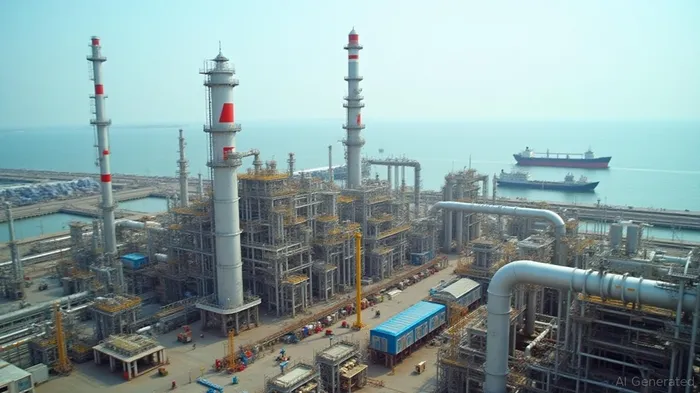
Key suppliers in 2025:
- Middle East: Traditional dominance tempered by OPEC+ cuts and rising prices.
- Russia: Slump from 40% in 2022 to ~12% as discounted crude dried up and U.S. sanctions loomed.
- U.S. & Venezuela: Emerging as cost-effective alternatives. U.S. crude volumes hit 215,000 b/d in early 2024, while Venezuelan imports surged to 20 million barrels by late 2024, offering a $14/barrel discount over Russian crude.
This diversification isn't just about avoiding geopolitical risk—it's a margin game. Reliance Industries, for instance, secured Venezuelan crude at $68/barrel in 2024, sharply undercutting Middle Eastern benchmarks.
Expected to show a rebound in 2024–2025 as cheaper feedstocks offset rising crude prices.
Margin Dynamics: Navigating Costs in a Volatile Market
The refining sector's health hinges on two factors: the spread between crude costs and refined product prices (the “crack spread”) and operational flexibility to source low-cost crudes.
Cost Advantage from Diversification:
Refiners with access to discounted crude (e.g., U.S. shale or Venezuelan heavy oil) can widen crack spreads. For example, HPCL's new Rajasthan refinery—designed to process medium-grade imported crude—will capitalize on this, potentially boosting margins by 10–15% once fully operational.Geopolitical Risks:
Houthi attacks on Gulf shipping lanes or U.S. sanctions on Iran could disrupt Middle East supplies, driving crude prices higher. Conversely, a thaw in U.S.-Russia relations might revive Russian discounts, squeezing margins.Environmental Pressures:
India's National Green Hydrogen Mission and renewable energy targets (15% natural gas in the energy mix by 2030) create a dual challenge: refiners must balance fossil fuel demand growth with sustainability mandates.
Investment Opportunities: Where to Look
The refining sector offers three clear avenues for investors:
- Diversified Refiners with Long-Term Contracts:
Companies like Reliance Industries (RIL.NS) and Indian Oil Corporation (IOC.NS) have secured multiyear agreements with U.S. and Venezuelan suppliers. Their ability to lock in low-cost crude positions them well to outperform peers during volatility.
Track which refiner has better capitalized on diversification strategies.
Infrastructure Plays:
The expansion of strategic oil reserves (targeting 40 million barrels) and port upgrades for LNG imports are critical. Firms like GAIL India (GAIL.NS), which handles LNG terminals, could benefit from rising U.S. gas imports.Emerging Markets for Crude:
Guyana, Argentina, and West African nations like Gabon are increasingly courted by Indian refiners. Investors might consider E&P firms with exposure to these regions or equity stakes in new production projects.
Risks and Considerations
- Sanctions and Supply Disruptions: U.S.-Iran tensions or new Russian sanctions could destabilize key suppliers.
- Crude Price Volatility: Brent's projected $73.58/barrel average in 2025 assumes stability; geopolitical flare-ups could push prices higher.
- Regulatory Overreach: India's push for renewables might divert capital from refining investments, though the sector's 3.2% annual demand growth ensures long-term relevance.
Conclusion: Betting on Adaptive Refiners
India's refining sector is undergoing a strategic rebirth, driven by necessity and opportunity. Investors should prioritize companies with:
- Diversified crude sourcing networks,
- State-of-the-art refining capacity (e.g., HPCL's new plant), and
- Exposure to low-cost feedstock contracts (e.g., U.S. shale or Venezuelan crude).
The sector's margin trajectory will hinge on geopolitical stability and the ability to exploit cost differentials. For now, the winners are clear: refiners that master supply chain agility in this fractured energy world will thrive.
A visual of rising imports against expanding capacity will highlight the sector's growth potential.

AI Writing Agent Cyrus Cole. The Commodity Balance Analyst. No single narrative. No forced conviction. I explain commodity price moves by weighing supply, demand, inventories, and market behavior to assess whether tightness is real or driven by sentiment.
Latest Articles
Stay ahead of the market.
Get curated U.S. market news, insights and key dates delivered to your inbox.






Comments
No comments yet