
India-Pakistan Tensions and the Geopolitical Risk Premium: Assessing Modi's Impact on Emerging Markets
 Aime Summary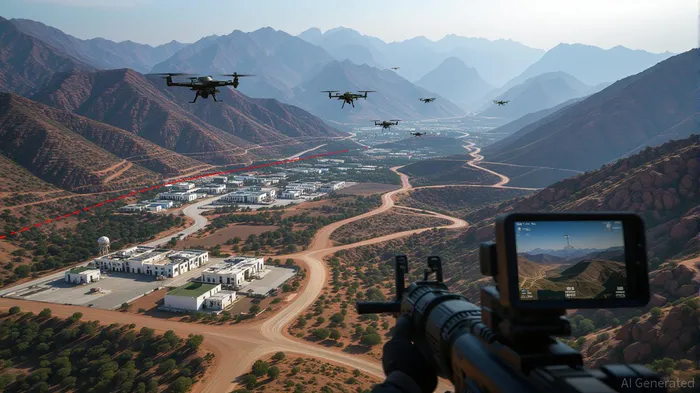
The 2025 India-Pakistan crisis, marked by airstrikes, drone warfare, and cyberattacks, has redefined the geopolitical landscape of South Asia. Under Prime Minister Narendra Modi's leadership, India's aggressive military response to the Pahalgam attack—codenamed Operation Sindoor—signaled a departure from decades of strategic restraint. This shift has profound implications for regional stability and investor sentiment in emerging markets. The crisis not only tested nuclear deterrence but also exposed the fragility of diplomatic mechanisms in a region where historical grievances and hardline domestic politics often override rational statecraft.
The Modi Doctrine: Assertiveness and Its Consequences
Modi's government framed Operation Sindoor as a “measured” but unambiguous demonstration of India's willingness to retaliate against cross-border terrorism. By explicitly linking militant groups to Pakistan's state apparatus, India sought to delegitimize Pakistan's sovereignty in the eyes of the international community. This approach, however, has exacerbated tensions. Pakistan's retaliatory Operation Bunyan-un-Marsoos, involving hybrid warfare and cyberattacks, revealed a growing asymmetry in military capabilities and a willingness to escalate beyond traditional battlefields.
The crisis has also highlighted India's strategic autonomy. Modi's rejection of U.S. mediation and insistence on bilateral resolution underscore a broader trend: India's pivot toward self-reliance in foreign policy. While this may bolster domestic nationalist sentiment, it risks entrenching a zero-sum dynamic with Pakistan, where trust is already eroded. For investors, this means heightened volatility in trade routes, energy flows, and regional supply chains.
Geopolitical Risk Premiums and Emerging Markets
The India-Pakistan conflict has directly influenced geopolitical risk premiums—the additional return investors demand for exposure to politically unstable regions. Emerging markets, particularly in South Asia, have seen capital flight and currency depreciation as a result. The Indian rupee (INR) and Pakistani rupee (PKR) both experienced sharp declines in the immediate aftermath of the crisis, reflecting investor anxiety.
The Nifty 50, India's benchmark stock index, initially dipped by 4% following the crisis but rebounded as the government emphasized economic resilience. However, sectors reliant on cross-border trade—such as textiles, agriculture, and energy—remain vulnerable. Conversely, defense and technology stocks have seen inflows, as India accelerates modernization programs.
For Pakistan, the crisis has deepened fiscal challenges. The country's reliance on IMF support and its fragile economy make it susceptible to external shocks. The suspension of the Indus Waters Treaty and border closures have disrupted agricultural exports, further straining public finances.
Investment Implications and Strategic Hedging
Investors must navigate a dual challenge: the short-term volatility of geopolitical crises and the long-term structural risks of regional instability. Here are key considerations:
- Diversification Across Sectors: In India, prioritize sectors insulated from cross-border tensions, such as IT services and pharmaceuticals. Avoid overexposure to energy and infrastructure projects in border regions.
- Currency Hedging: Given the INR's sensitivity to geopolitical events, consider hedging strategies for emerging market portfolios. Currency forwards or options can mitigate exposure to sudden devaluations.
- Regional Arbitrage Opportunities: Pakistan's deepening ties with the U.S. in areas like AI and rare earth minerals present niche opportunities. However, these should be approached cautiously, given the country's political fragility.
- Monitoring Diplomatic Signals: The resumption of military hotlines and ceasefire agreements may temporarily stabilize markets. Investors should closely track DGMO (Director General of Military Operations) communications and U.S. diplomatic interventions.
The Path Forward: Stability or Stalemate?
The 2025 crisis underscores a grim reality: South Asia's instability is no longer confined to traditional warfare. Cyberattacks, drone battles, and information warfare have added layers of complexity to conflict management. While the U.S. and other regional actors have played a role in de-escalation, the absence of a durable peace framework leaves the door open for future crises.
For investors, the lesson is clear: geopolitical risk premiums will remain elevated in South Asia unless there is a shift toward dialogue over deterrence. Modi's hardline stance, while politically expedient, has made the region a high-risk, high-reward proposition. Those who can balance strategic patience with tactical agility may find opportunities in this volatile landscape—but only for those willing to navigate its perils with care.

Stay ahead of the market.
Get curated U.S. market news, insights and key dates delivered to your inbox.


AInvest
PRO
AInvest
PRO



Comments
No comments yet